





Featherbanded Walnut Furniture
Featherbanded walnut furniture offers striking decorative banding and rich timber figures, appealing to collectors of early English cabinet-making.
Featherbanded Walnut Furniture
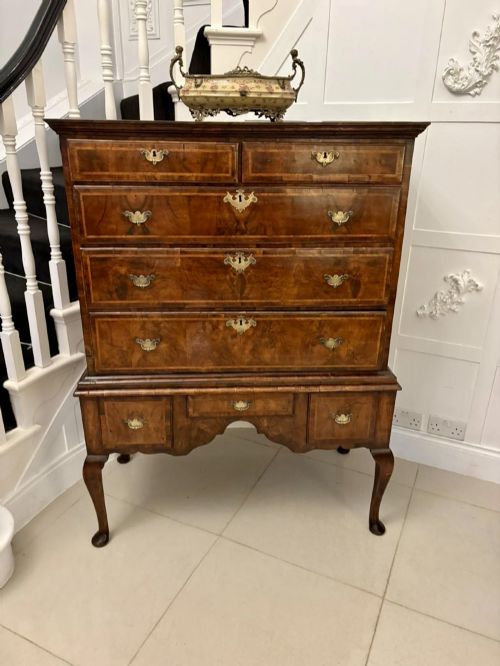
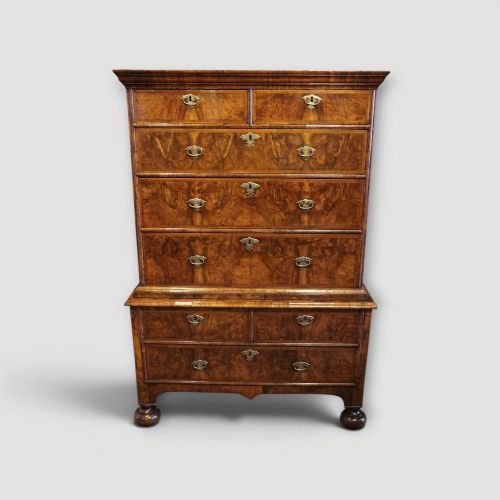
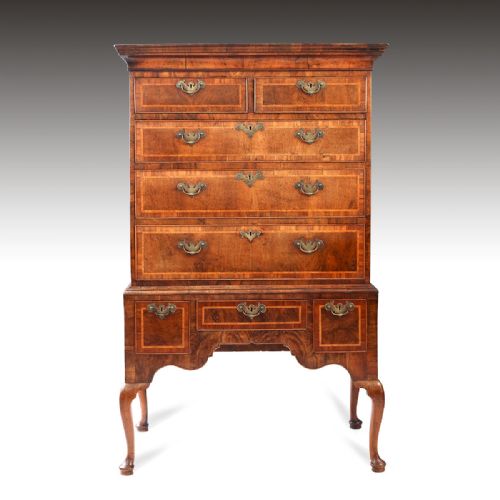
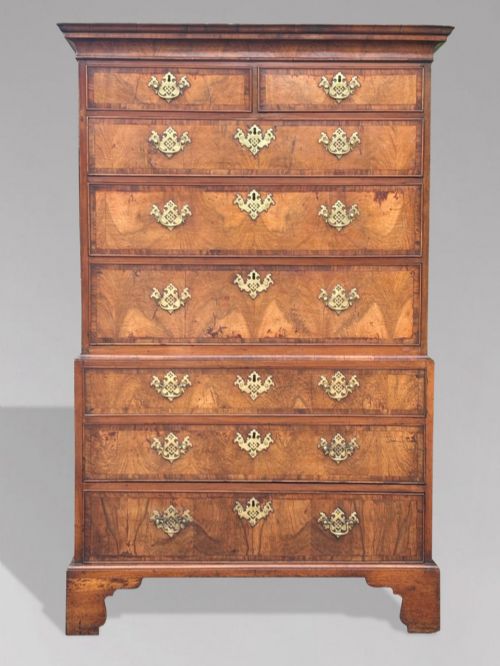
When you search for featherbanded walnut furniture, you encounter sophisticated storage pieces originating primarily from the late seventeenth and eighteenth centuries, alongside later revival examples. These items include chests of drawers, chests on chests, cabinets on chests, desks, and chests on stands.
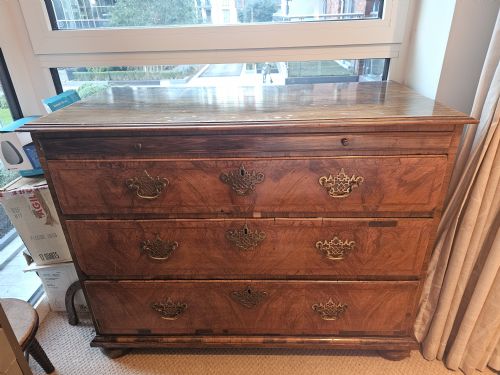
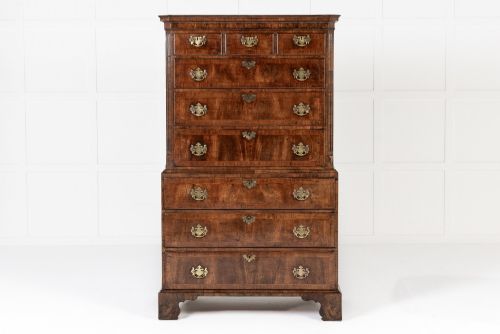
The version you are most likely to meet on this page is the walnut chest of drawers or tall chest from the eighteenth century, often displaying characteristic grain patterns across the drawer fronts and top panels.
Makers of these pieces worked during periods spanning William and Mary, Queen Anne, and George I through George II reigns, utilising native and continental timbers to construct modular forms built in multiple sections.
What varies in quality
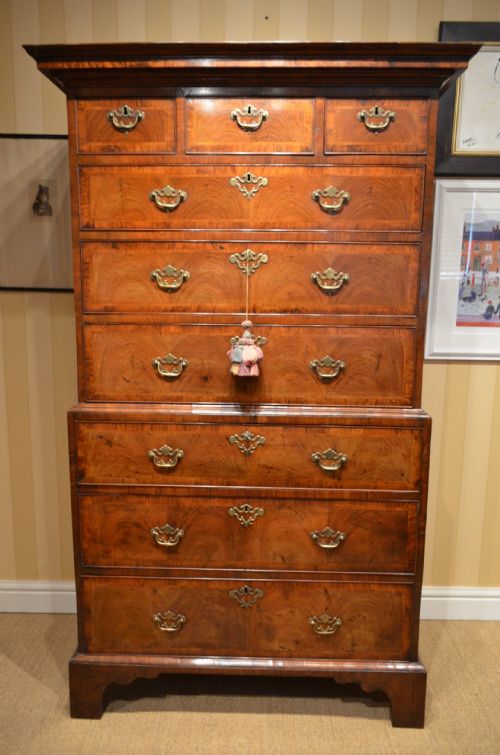
The standard of burr walnut figures and the precision of the featherbanding set individual pieces apart, reflecting the skill of the original artisan. Crispness in the execution of crossbanded borders and the preservation of original timber surfaces dictate the overall appeal of a piece.
Proportion and structural integrity, particularly in larger forms like chests on chests or cabinets on chests, determine the distinction between ordinary workshop output and finer examples from the period.
Featherbanded Walnut Furniture Retail Price Guide 2026
Typical asking prices for featherbanded walnut furniture among the pieces listed under this phrase on Sellingantiques today, from the lower quarter to the upper quarter. They describe what is for sale here now, not the wider market.
Some chests conceal sliding top panels designed to hide valuables before standard key-locking drawer mechanisms became widespread.
The Featherbanded Walnut Furniture Glossary
- Featherbanding
- A decorative inlay technique using narrow strips of veneer cut diagonally to form a herringbone pattern. This detail frames drawer fronts and top panels on period case furniture.
- Crossbanding
- A border of veneer laid with the grain running perpendicular to the surrounding surface. It provides a neat framing edge for central walnut panels.
- Chest on chest
- A tall storage form comprising an upper chest of drawers stacked upon a deeper lower section. Also known as a tallboy, it maximises vertical storage space.
- Chest on stand
- A case piece raised on legs connected by stretchers, lifting the main drawer body off the floor. This form appeared frequently during the late seventeenth and early eighteenth centuries.
- Kneehole desk
- A compact writing desk featuring a central recessed space for the legs, flanked by pedestals of small drawers. These items often incorporate fine walnut veneers.
Featherbanded Walnut Furniture: Frequently Asked Questions
What is featherbanding on furniture?
Featherbanding is a decorative inlay technique created by cutting thin strips of wood diagonally across the grain. These strips are laid side by side to form a distinctive herringbone pattern that frames drawer fronts.
Cabinet-makers used this meticulous detail to enhance the visual depth of walnut surfaces during the late seventeenth and eighteenth centuries.
How do I identify a George I walnut chest?
George I walnut furniture typically exhibits clean architectural lines, rich burr walnut veneers, and subtle crossbanding. Drawer fronts often display fine featherbanded borders paired with brass handles.
These pieces were frequently constructed in two sections to facilitate movement within grand houses of the period.
What is a walnut chest on chest?
A chest on chest consists of an upper section of smaller drawers stacked directly onto a wider lower chest. This tall storage format became popular in the early eighteenth century as a practical way to hold clothing.
Examples from this era often separate into two parts for transport and display.
Where should I place a walnut kneehole desk?
A walnut kneehole desk suits studies, libraries, or living spaces where its compact proportions can be appreciated from multiple angles. Placing it away from direct sunlight preserves the rich colour of the walnut veneer.
Ensure the room maintains stable humidity to protect historic timbers and original joints.
What is the difference between walnut and burr walnut?
Standard walnut timber displays a straight, relatively uniform grain pattern derived from the trunk of the tree. Burr walnut comes from an irregular growth on the tree, producing highly twisted, swirling patterns.
Cabinet-makers reserved burr walnut veneers for prominent display surfaces like drawer fronts and tops.