

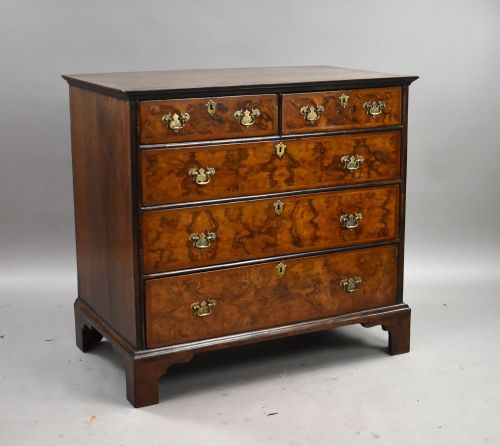


Feather Banded Furniture
Feather banded furniture brings walnut surfaces to life with contrasting grain borders, offering sophisticated storage for traditional interiors.
Feather Banded Furniture
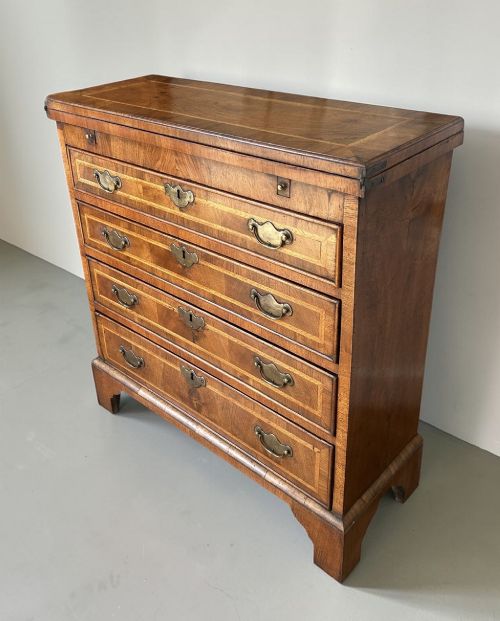
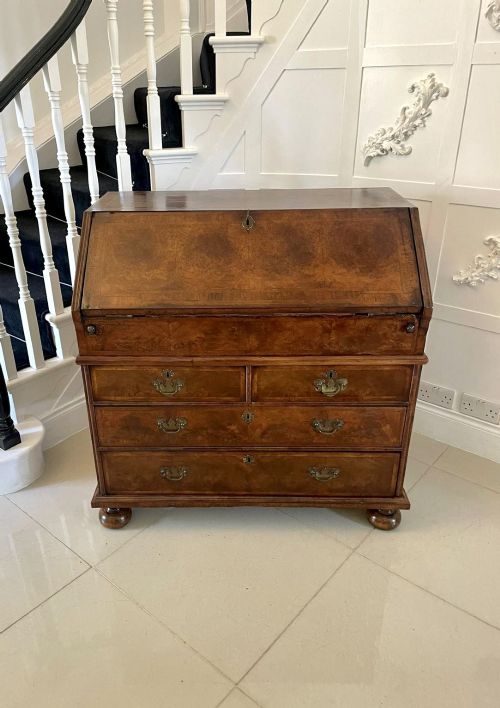
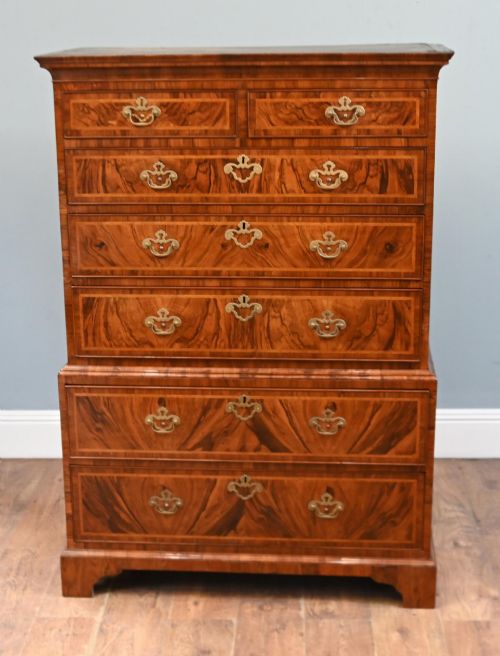
Feather banded furniture showcases striking bordered surfaces on traditional forms originating largely from the eighteenth century. When you search for feather banded furniture, you encounter sophisticated case pieces built to highlight rich timber grains.
How they were made
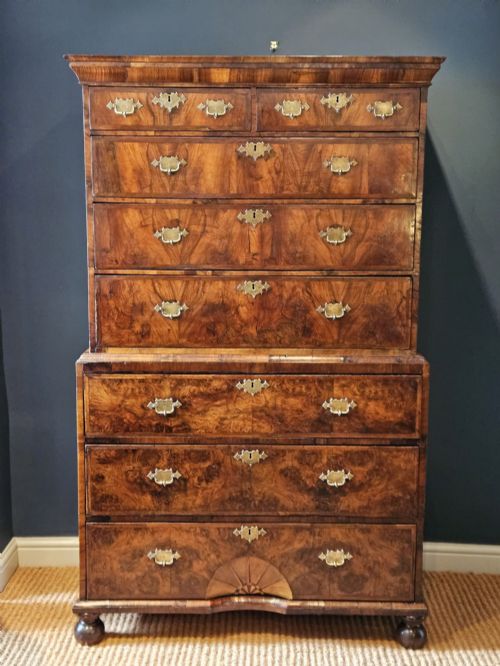
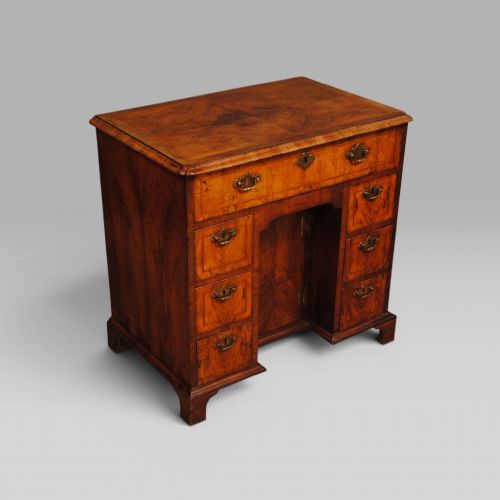
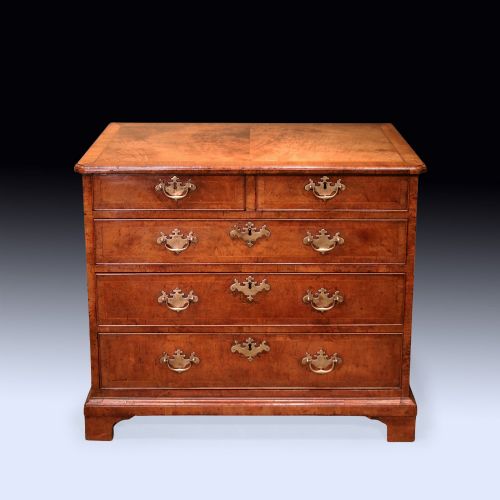
Cabinet makers constructed these pieces using solid oak or pine carcasses finished with carefully selected walnut and burr walnut veneers. Craftsmen laid thin slices of timber to create figured patterns across drawer fronts and top surfaces.
Makers applied boxwood and contrasting timber strips cut at angles to form the characteristic herringbone and feather banding around the edges. Brass hardware such as swing handles and escutcheons completed the construction, fastened securely to the drawer faces.
Feather Banded Furniture Retail Price Guide 2026
Typical asking prices for feather banded furniture among the pieces listed under this phrase on Sellingantiques today, from the lower quarter to the upper quarter. They describe what is for sale here now, not the wider market.
Listings feature walnut, burr walnut veneer, oak, and boxwood across eighteenth-century and Edwardian revival periods.
What varies in quality
Quality rests upon the selection of the walnut veneers and the precision of the decorative banding. Superior examples display deeply figured burr timbers paired with crisp, perfectly aligned banding that frames each drawer without gaps.
The integrity of the original surfaces and the subtlety of the timber patination separate standard examples from exceptional ones. Pieces retaining their early brasses and undisturbed polish demonstrate higher craftsmanship and greater preservation over centuries.
The Feather Banded Furniture Glossary
- Feather banding
- A decorative inlay technique using narrow strips of veneer cut at an angle and arranged in a V-shape to resemble a feather. This delicate border frames drawer fronts and tabletops on walnut pieces.
- Herringbone
- A pattern formed by laying parallel veneer strips at alternating oblique angles to create a zig-zag motif. It frequently appears alongside feather banding on eighteenth-century case furniture.
- Lowboy
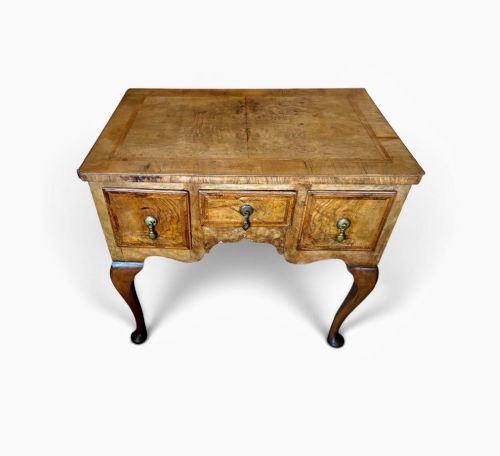
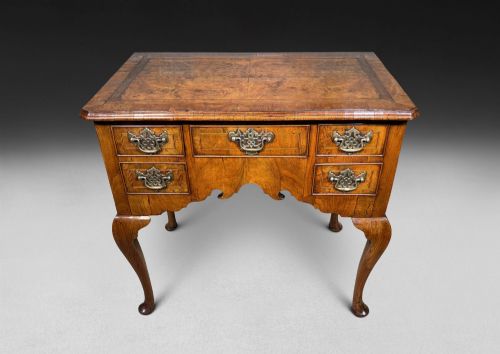
- A small table with one or more rows of drawers, commonly supported on cabriole or straight legs. These versatile pieces served as dressing tables or side tables in period homes.
- Oyster veneering
- A method of cutting thin cross-sections from small branches or roots to produce circular or oval patterns resembling oyster shells. Cabinet makers arranged these cross-banded veneers across prominent surfaces.
Feather Banded Furniture: Frequently Asked Questions
What is feather banded furniture?
Feather banded furniture refers to wooden storage pieces adorned with decorative veneer borders arranged to resemble feathers. These borders frame the drawer fronts and tabletops of walnut chests and tables.
The technique gained popularity during the Georgian and Queen Anne periods, adding visual contrast and refinement to domestic furnishings.
How do I care for walnut veneer?
Walnut veneer requires stable indoor humidity and protection from direct sunlight to prevent timber drying and lifting. Regular dusting with a soft, dry cloth maintains the polished surface without harsh chemicals.
Applying a traditional beeswax polish occasionally nourishes the timber and preserves the natural warmth of the grain.
Where were these pieces used?
Cabinet makers built these items for principal rooms and bedrooms within substantial eighteenth-century residences. Lowboys served as dressing tables or side tables, while chests of drawers and tallboys provided essential chamber storage.
Today, these forms adapt easily to living rooms, hallways, and studies as functional focal points.
How do I identify a lowboy?
A lowboy is a compact table featuring drawers beneath the work surface and four supporting legs. They typically stand lower than standard writing desks and often showcase detailed veneer work on the top.
Examples from the Georgian era frequently pair these tables with cabriole legs and shaped aprons.