

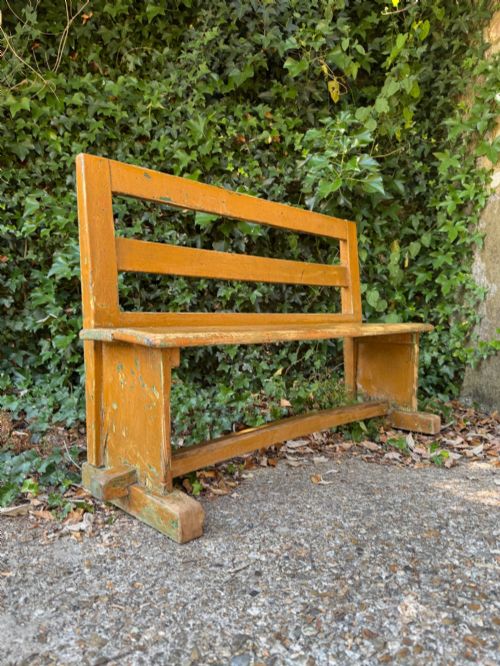
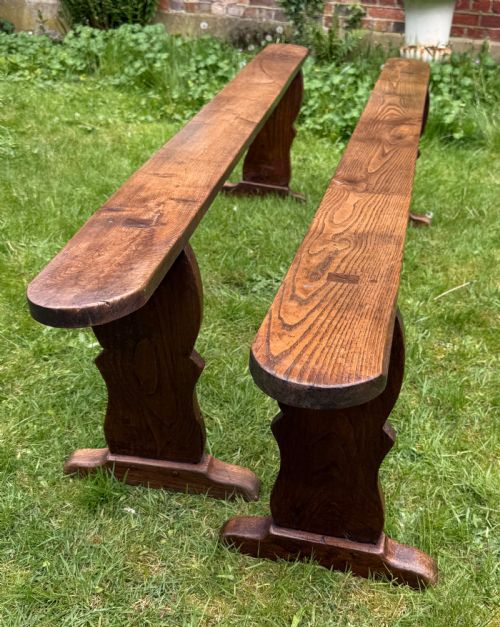


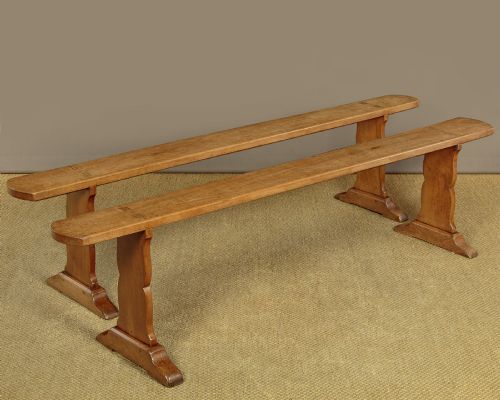
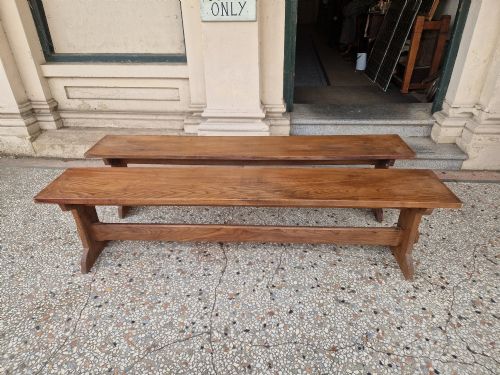
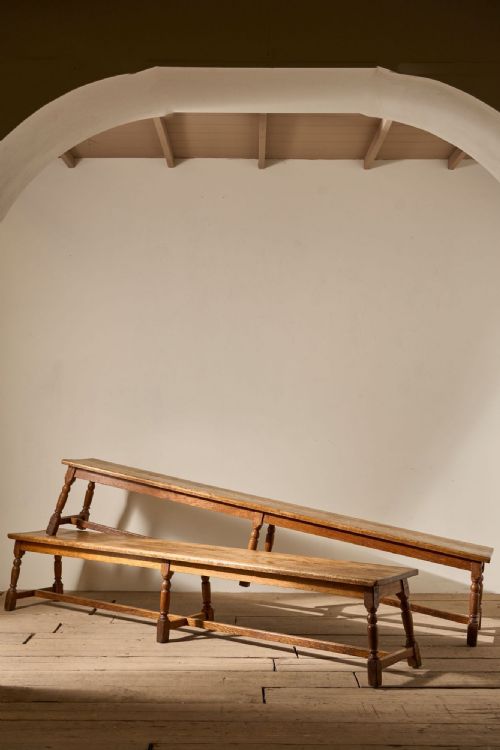


Farmhouse Wooden Dining Benches
Farmhouse wooden dining benches bring honest joinery and communal warmth to a room, offering practical daily seating rooted in rural tradition.
Farmhouse Wooden Dining Benches
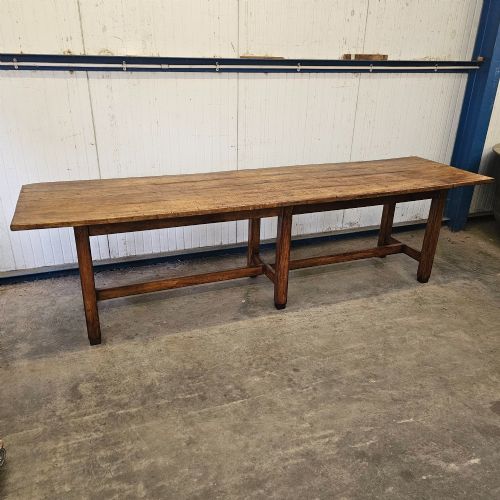
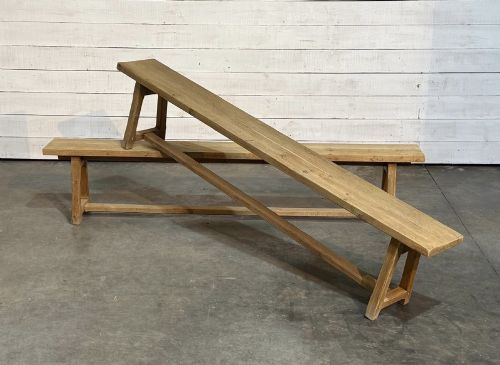
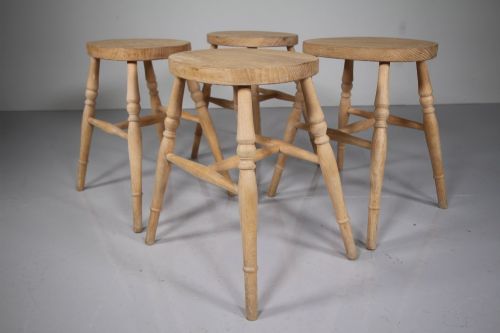
When you search for farmhouse wooden dining benches, you are looking at sturdy, utilitarian seating created for country kitchens, refectories, and halls. These pieces range from simple plank constructions to long tavern seating designed to accommodate several diners at a single table.
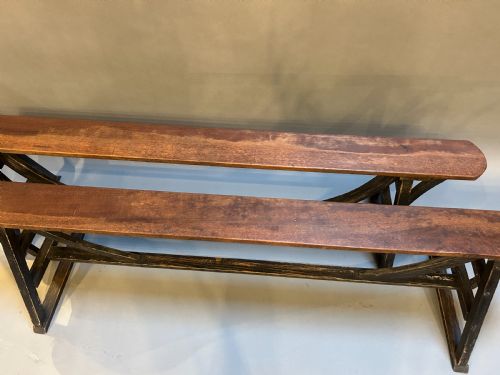
The versions you are most likely to meet on this page hail primarily from the nineteenth and early twentieth centuries, spanning Victorian, Edwardian, and various rustic country styles. They appear frequently in pairs or as long single forms suited to modern dining spaces.
Origins stretch across English, French, Welsh, and Alpine traditions, reflecting local vernacular furniture making. Forms include straightforward plank tops on trestle or four-legged bases, occasionally incorporating painted finishes or scrubbed surfaces.
Materials and Construction
Makers relied on durable domestic timbers such as pine, oak, elm, cherrywood, sycamore, and softwood to withstand heavy daily use. Hardwoods like oak and elm provided robust structural integrity for legs and stretchers, while pine and softwood often formed wide single-plank seats.
Joinery techniques prioritised strength over ornamentation, utilising pegged mortise and tenon joints, dovetails, and sturdy trestle supports. Surfaces were left natural, scrubbed clean, or treated with historic paint finishes that record decades of domestic service.
Farmhouse Wooden Dining Benches Retail Price Guide 2026
Typical asking prices for farmhouse wooden dining benches among the pieces listed under this phrase on Sellingantiques today, from the lower quarter to the upper quarter. They describe what is for sale here now, not the wider market.
Several benches carry the faint, ghostly outline of generations of elbows polished smooth into the oak.
Distinguishing Quality
Quality in these benches lies in the integrity of the timber and the honesty of the construction. Superior pieces display substantial board thickness, minimal historical timber movement, and tight, original joinery that has not been heavily altered or reinforced with modern hardware.
The character of the wood surface heavily influences desirability. Benches featuring deep patination, untouched scrubbed finishes, or well-preserved original paintwork stand apart from examples that have undergone aggressive stripping or excessive restoration.
The Farmhouse Wooden Dining Benches Glossary
- Scrubbed
- A finish achieved by vigorously washing timber surfaces with water and a stiff brush, removing accumulated grime to reveal the pale, clean grain underneath.
- Trestle
- A structural support system consisting of two or more upright frames connected by a horizontal beam, commonly found beneath long dining benches and tables.
- Plank
- A long, flat piece of timber sawn from a log, often utilised singly to form the uninterrupted top surface of a traditional bench.
- Settle
- An enclosed wooden bench featuring a high back to block drafts, often fitted with storage beneath the seat and solid armrests.
- Refectory
- A term describing long, narrow dining furniture originally built for communal eating halls in monasteries and large institutions.
Farmhouse Wooden Dining Benches: Frequently Asked Questions
How do I choose the right length?
Measure your dining table and allow sufficient clearance at both ends so the bench slides neatly underneath when not in use. Longer benches work best when flanked alongside matching refectory or trestle tables.
Consider the number of regular diners in your household, keeping in mind that backless benches offer flexible seating capacity compared to individual chairs.
Are these benches comfortable for long dinners?
Traditional wooden benches were built for utility rather than cushioned lounging, relying on ergonomic proportions and supportive foot stretchers. Many people enhance comfort by adding loose cushions or sheepskins.
The absence of backrests encourages upright posture and allows the benches to tuck completely away, saving valuable floor space in smaller dining rooms.
How do I clean a scrubbed wooden surface?
Maintain scrubbed pine, sycamore, or elm by dusting regularly with a dry cloth and wiping spills immediately with a damp sponge. Avoid harsh chemical cleaners that strip the natural oils from the historic grain.
Occasional light cleaning with mild soap and warm water is sufficient to keep the timber looking authentic without damaging its historic patination.
How can I tell an older bench from a reproduction?
Examine the underside and joints for hand-cut tool marks, pegged joinery, and natural wear patterns consistent with age. Historic timbers show shrinkage, oxidation, and colour variations that modern workshop machinery cannot replicate.
Pay attention to the fixings and nail types used, as handmade wrought iron or early cut nails indicate genuine period manufacture rather than modern assembly.