
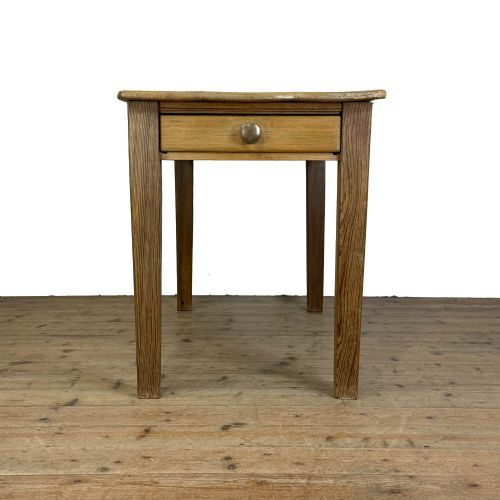
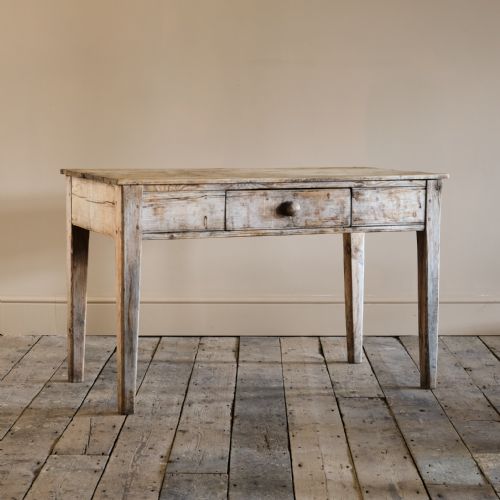

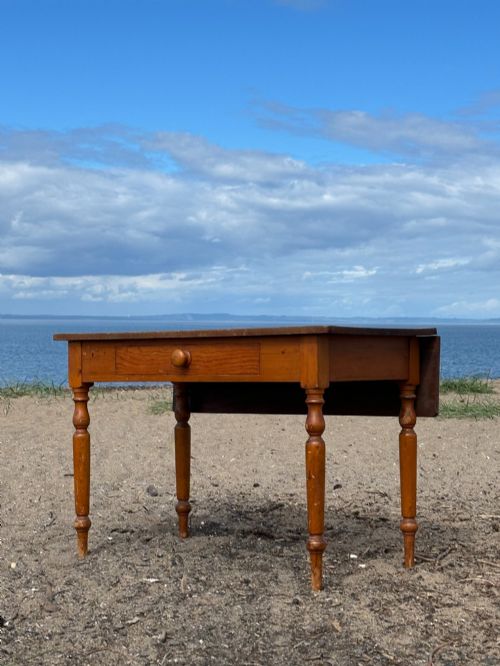
Farmhouse Pine Side Table
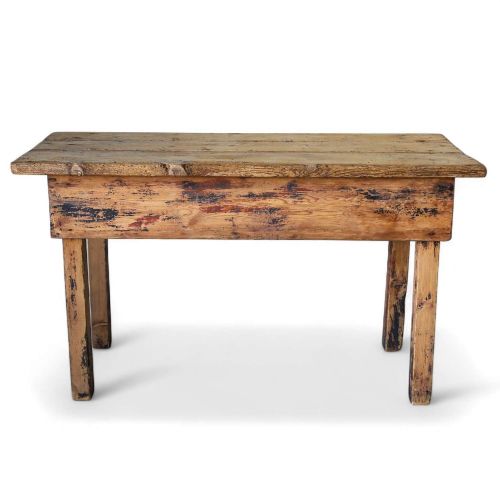
A farmhouse pine side table brings honest utility to a room, offering sturdy timber surfaces shaped by decades of everyday use.
Farmhouse Pine Side Table
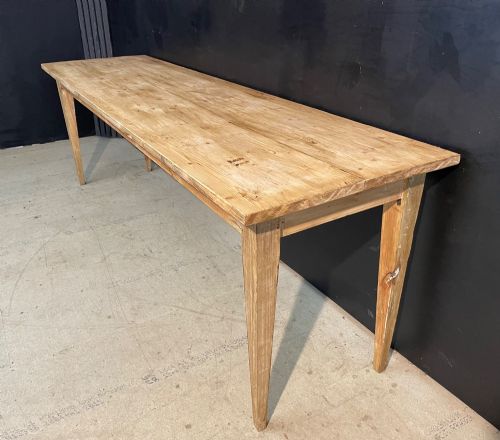
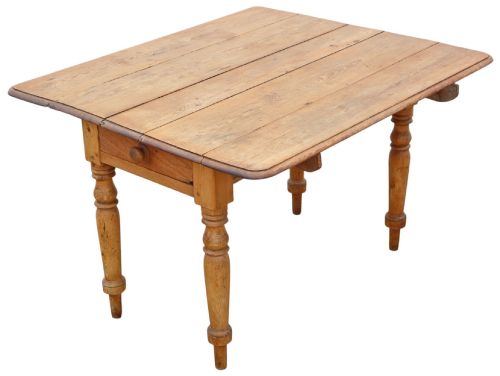
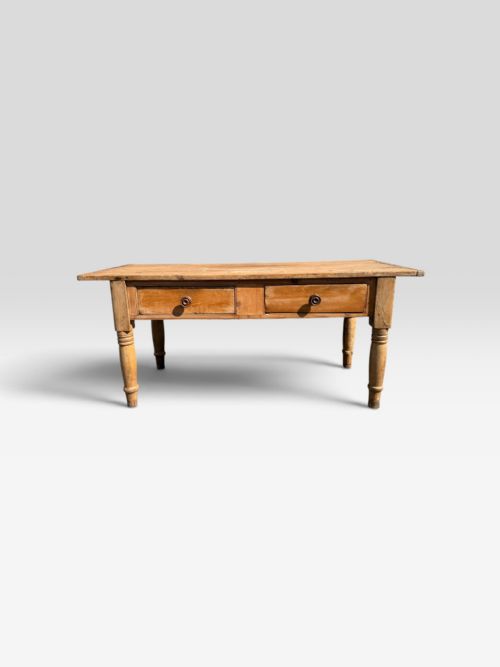
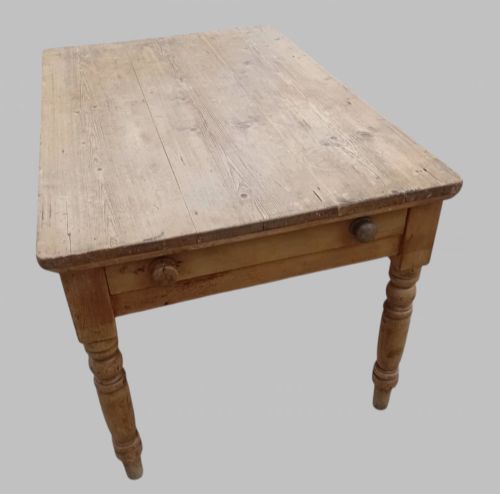
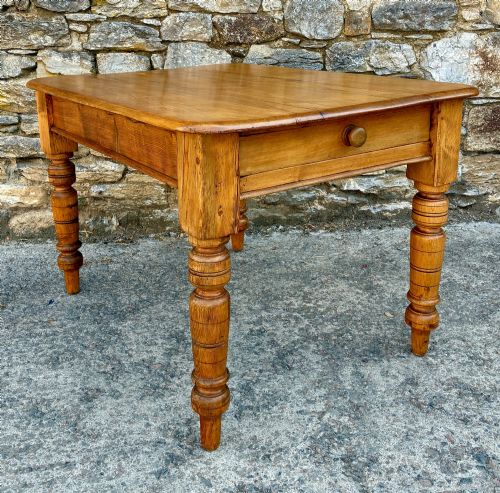
A farmhouse pine side table represents the hardworking utility furniture of domestic and working spaces from past centuries. When searching this phrase, a buyer encounters pieces designed for preparation, serving, and storage rather than formal display.
The selections span the nineteenth century into the early twentieth century, reflecting the periods noted in the evidence. These items encompass regional British, French, and Scandinavian designs built for practical service.
How they were made
Construction relies primarily on pine and pitch pine, occasionally paired with oak or elm for structural strength and contrasting tops. Woodworkers joined sturdy timber using traditional methods suited to heavy daily domestic labour.
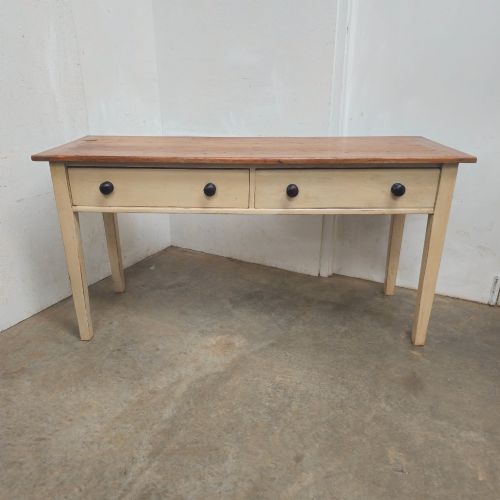
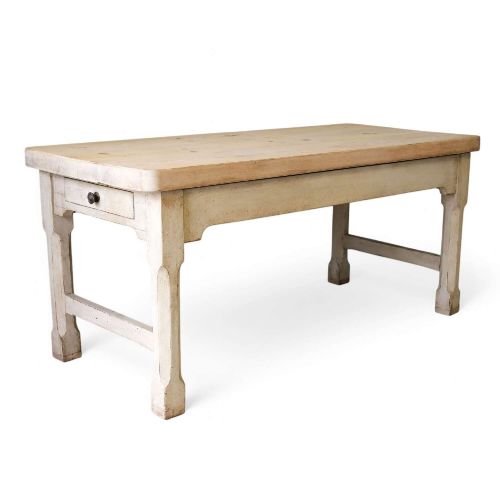
Surfaces frequently show the marks of scrubbing or retain layers of historic paint finishes, such as Swedish Falu red or later country paint schemes. Iron and metal elements appear in hinges, drawer pulls, and structural fixings.
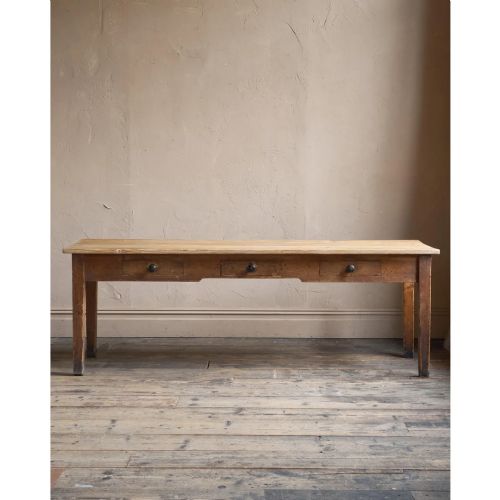
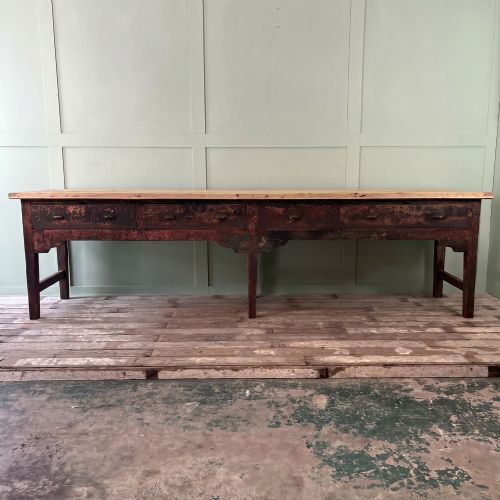
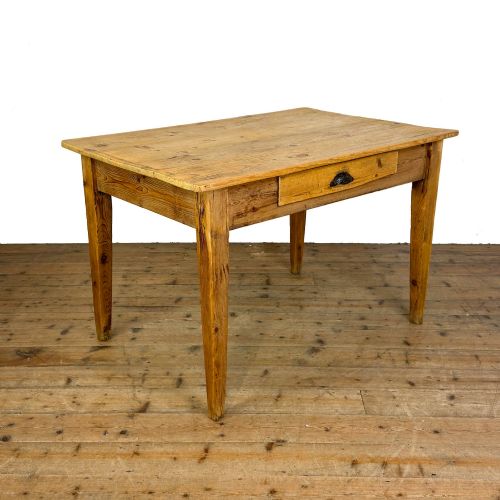
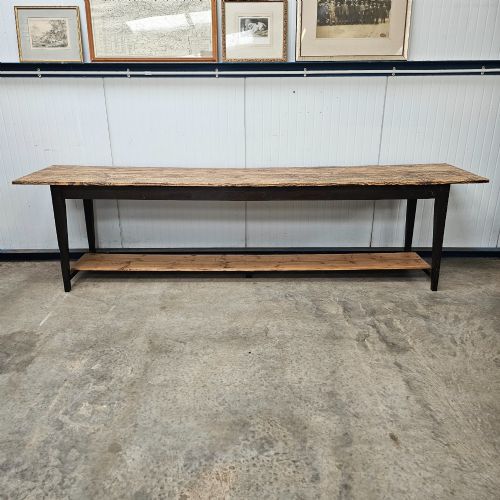
Object forms span kitchen prep tables, scullery tables, harvest tables, and console tables with single or multiple drawers.
What varies in quality
Quality rests in the integrity of the timber and the balance of proportions rather than ornamental excess. Tables with well-figured scrubbed tops and retained original painted legs hold distinct character compared to heavily altered items.
The presence of functional drawers with sound secondary timbers distinguishes finer pieces from simpler utility boards. Proportional harmony between the legs, apron, and top dictates the visual success of each item.
The Farmhouse Pine Side Table Glossary
- Scrub-top
- A wooden table top cleaned repeatedly with water and sand or stone, leaving a pale, smooth grain. This treatment creates the characteristic washed texture seen on antique prep tables.
- Pitch pine
- A resinous softwood timber valued for its durability and strong grain pattern. It appears frequently in nineteenth-century utilitarian furniture.
- Console table
- A table designed to stand against a wall, often narrow in depth. These pieces function well in hallways and living spaces.
- Prep table
- A heavy-duty work table utilised for food preparation and domestic tasks in kitchens and sculleries. They typically feature sturdy timber tops and robust frames.
Farmhouse Pine Side Table: Frequently Asked Questions
Where should I place a farmhouse pine side table?
These tables suit hallways, kitchens, and living areas where sturdy surface space is useful. Their practical proportions allow them to function effectively against walls or behind seating.
Because they originate from working environments, they bring an unpretentious character to modern domestic interiors without dominating a room.
How do I care for a scrubbed pine top?
Maintain a scrubbed timber surface by wiping spills promptly with a damp cloth and avoiding harsh chemical cleaners. Regular gentle cleaning preserves the pale, dry finish achieved through decades of use.
Applying natural wax occasionally helps protect the wood fibres from excessive dryness while maintaining the matte appearance characteristic of these pieces.
What is the difference between pitch pine and standard pine?
Pitch pine contains a higher resin content, making the timber denser, heavier, and more resistant to wear than standard softwood pine. This material often displays a more pronounced and darker grain pattern.
Furniture built from pitch pine usually dates from the nineteenth century and tends to withstand heavy utilitarian service exceptionally well.
Are painted finishes on these tables original?
Some pieces retain early or original paint finishes, such as historic regional colours applied to the legs or baseboards. Other examples show later layers of paint added during subsequent periods of domestic use.
Examining the wear patterns and underlying timber helps determine the age and history of the surface coatings.