

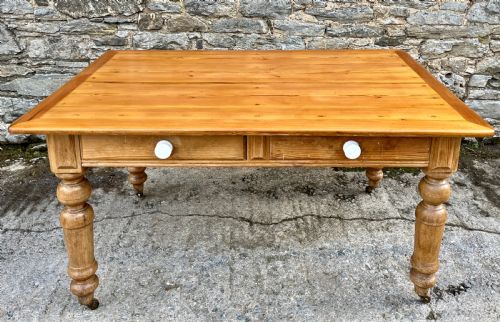


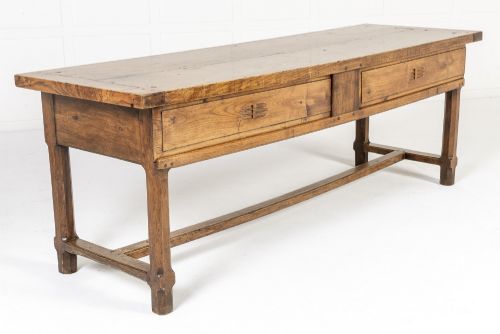


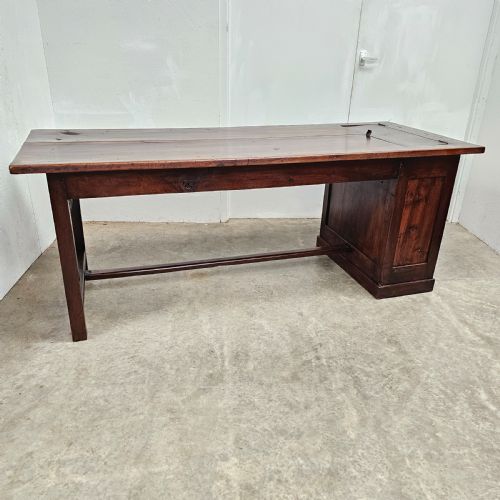
Farmhouse Kitchen Island Table
A farmhouse kitchen island table brings practical warmth and daily utility to a room through solid timber construction and honest vernacular design.
Farmhouse Kitchen Island Table
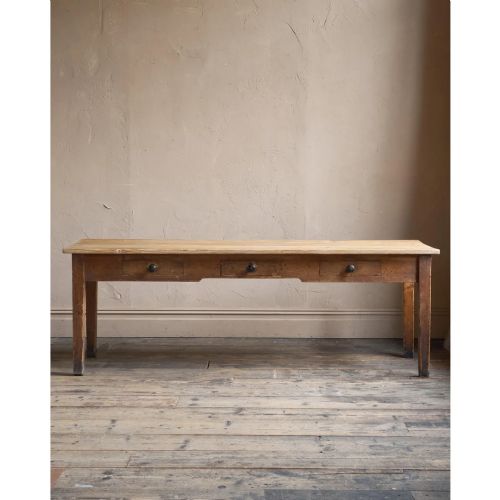
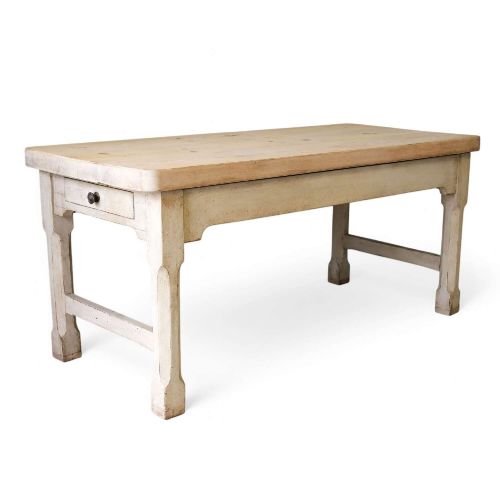
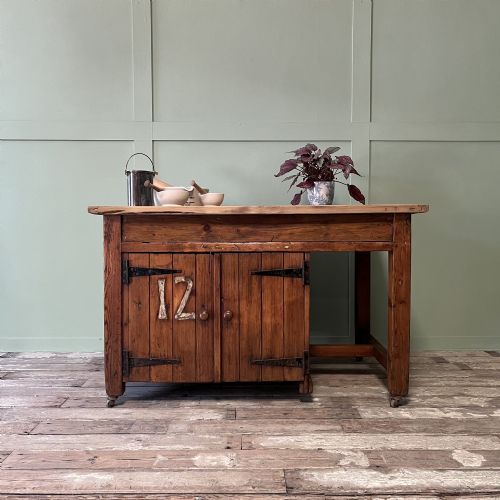
A farmhouse kitchen island table provides a sturdy surface for culinary preparation and casual gathering, rooted in historical domestic routines. When you search for a farmhouse kitchen island table, you encounter large prep surfaces, scullery tables, and work benches originating from the eighteenth, nineteenth, and early twentieth centuries.
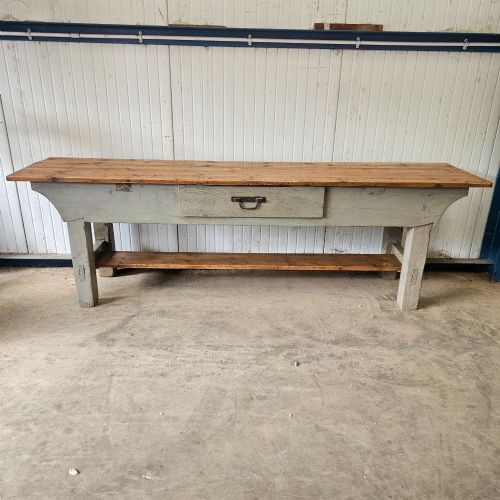
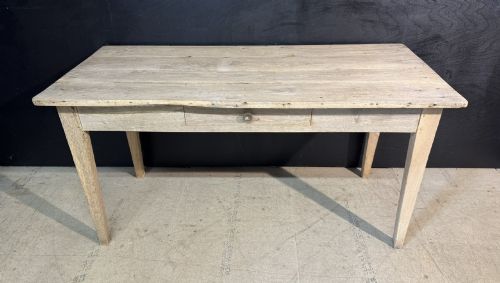
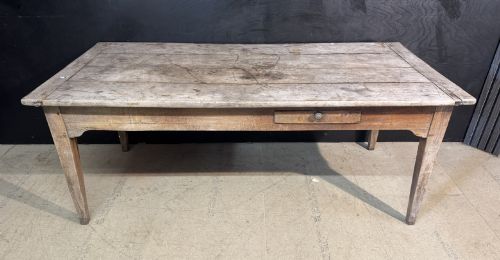
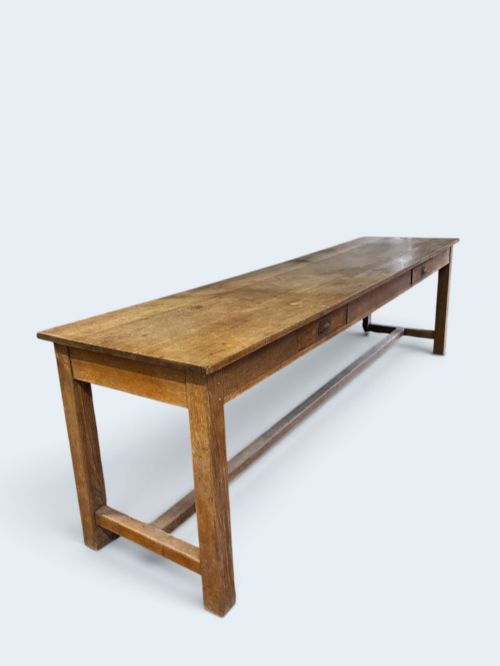
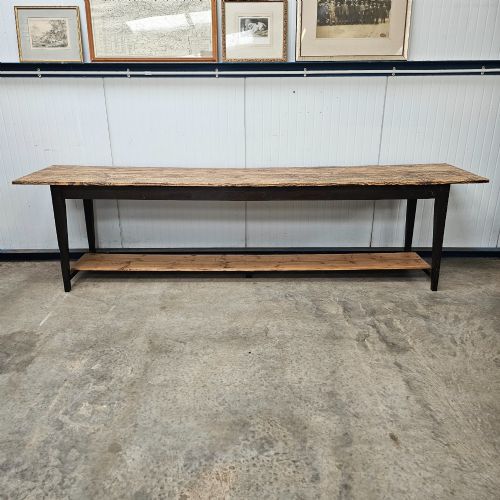
The versions most commonly met on this page span English and French country traditions, frequently built from pine or oak with generous proportions. Many examples incorporate functional drawers, pot shelves, or two-tier formats designed for heavy domestic labour.
Makers fashioned these pieces for utility in domestic kitchens, bakeries, and sculleries rather than formal display. Consequently, their forms range from rustic pine harvest tables to refined walnut bread prep tables and painted pot-shelf serving pieces.
How they were made
Carpenters constructed these tables using durable timbers such as solid oak, pine, walnut, and heavy timber boards to withstand daily culinary work. Joinery relied on robust traditional framing methods, often featuring thick multi-board tops secured to sturdy underframes.
Many tables include integrated storage elements like drawers assembled with hand-cut joints, alongside iron or brass hardware for daily operation. Surface treatments range from natural waxed grain to later applications of paint and protective finishes suited to utilitarian environments.
Farmhouse Kitchen Island Table Retail Price Guide 2026
Typical asking prices for farmhouse kitchen island table among the pieces listed under this phrase on Sellingantiques today, from the lower quarter to the upper quarter. They describe what is for sale here now, not the wider market.
What varies in quality
The standard of a farmhouse kitchen island table depends on the integrity of its structural timber and the honesty of its wear. Pieces retaining their original top boards and uncompromised joinery command greater appreciation among collectors.
Proportion and utility define the best examples, where drawers operate smoothly and the supporting stretchers remain rigid. Subtle details such as a two-board top or retained utilitarian fittings elevate an everyday work table into a notable specimen.
The Farmhouse Kitchen Island Table Glossary
- Prep table
- A low-surfaced utilitarian table designed specifically for food preparation and culinary tasks in domestic kitchens or bakeries. These pieces usually prioritise sturdy timber tops over decorative framing.
- Scullery table
- A heavy functional table historically used in the service areas of large houses for washing and food management. They frequently exhibit robust pine construction built to handle damp environments and heavy daily use.
- Pot shelf
- A low auxiliary shelf positioned beneath the main table surface to store heavy pots, pans, and kitchen utensils. This feature maximises storage space in compact vernacular kitchens.
- Vernacular
- Architecture and furniture design created from local traditions and materials rather than high academic styles. These objects reflect the practical needs of regional craftsmen and rural households.
- Harvest table
- An exceptionally long dining or work table traditionally used to feed large farm crews during seasonal gathering periods. They often measure over several feet to accommodate many diners.
Farmhouse Kitchen Island Table: Frequently Asked Questions
How do I choose the right size?
Consider the available floor space in your kitchen, ensuring enough clearance around the table for movement and open drawers.
Larger rooms accommodate long harvest or two-tier tables, whereas compact spaces benefit from standard prep or work tables.
Can these tables be used daily?
These tables were built specifically for heavy utilitarian work, making them well-suited for active modern kitchens.
Regular use and proper maintenance help preserve the character of the timber surfaces over time.
What is the difference between oak and pine?
Oak provides a dense, hardwearing surface with a distinct grain pattern suited to formal country settings.
Pine offers a lighter tone and softer texture that accumulates distinctive patination from daily culinary tasks.
How do I care for antique timber?
Protect the surface from excessive moisture and extreme temperature fluctuations by using appropriate mats and regular waxing.
Allow the natural grain to breathe while avoiding harsh chemical cleaners that strip historical patination.