





Farahan Woven Carpet
These farahan woven carpet examples bring enduring Persian heritage into a room, offering traditional motifs and dense wool pile that collectors prize.
Farahan Woven Carpet
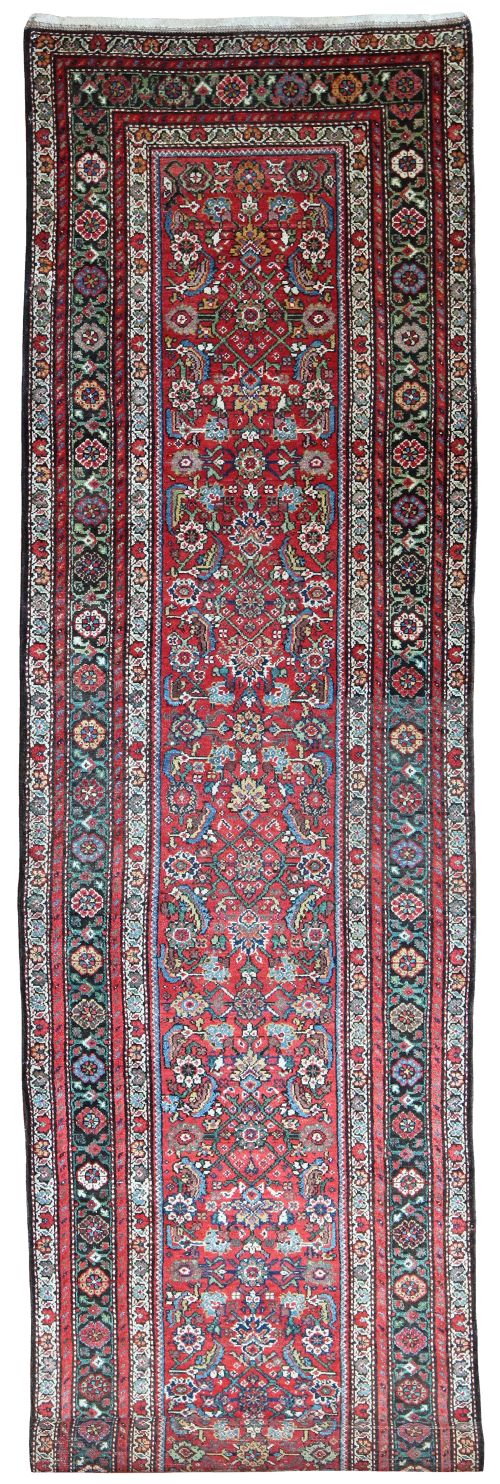
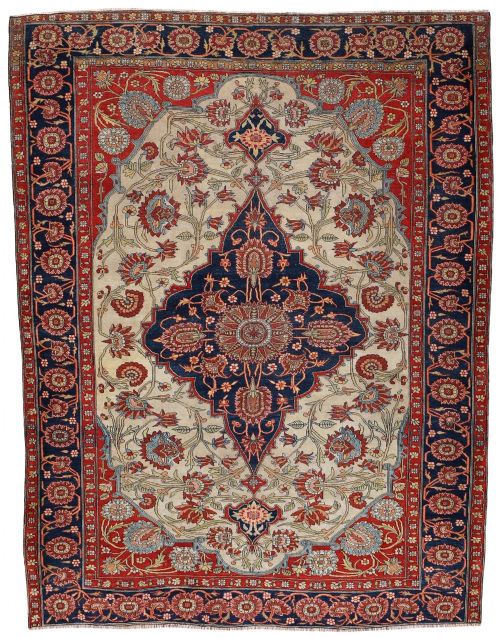
When you search for a farahan woven carpet, you are looking at floor coverings originating from Persia, specifically associated with the traditional Farahan or Ferahan district. These pieces span the nineteenth and early twentieth centuries, encompassing room-size carpets, small room-size square formats, and long runners.
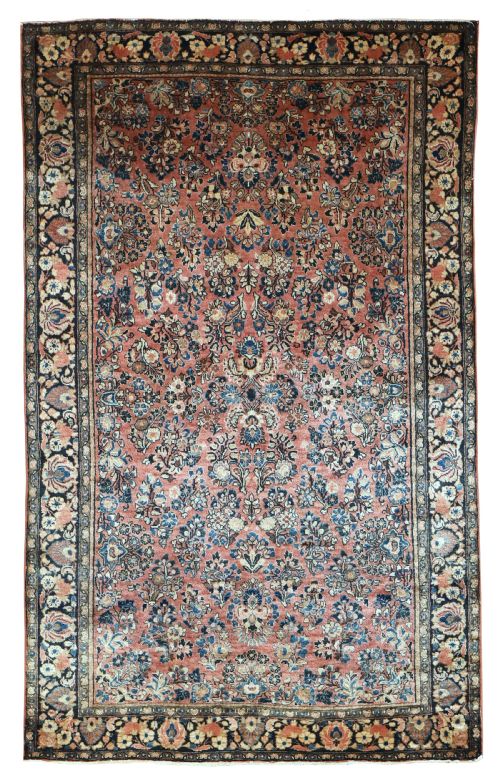
The objects listed here predominantly feature Persian styles, including classical designs and specific regional variations like Sarouk Farahan. Dating ranges from the mid-nineteenth century through to the early decades of the twentieth century, capturing distinct periods of traditional craftsmanship.
The most common formats you will encounter on this page are rugs and area carpets suited to domestic spaces. They bridge historical textile artistry and functional interior furnishing, displaying established regional patterns.
Materials and construction
A farahan woven carpet relies upon a combination of wool and cotton foundations, utilising durable natural fibres for both pile and structural elements. Wool provides the soft, dense surface texture characteristic of these traditional Persian textiles.
Makers employed careful hand-weaving techniques to produce fine weaves, resulting in sturdy rugs and carpets designed for lasting utility. The integration of cotton for foundations adds structural stability to the finished room-size carpets and runners.
Farahan Woven Carpet Retail Price Guide 2026
Typical asking prices for farahan woven carpet among the pieces listed under this phrase on Sellingantiques today, from the lower quarter to the upper quarter. They describe what is for sale here now, not the wider market.
Some carpets come with built-in mileage from serving as Persian hallway transit for over a century.
Distinctions in quality
Quality in a farahan woven carpet rests upon the fineness of the weave and the precision of the traditional Persian design execution. Denser knots and tightly packed foundations separate superior room-size carpets and smaller rugs from simpler output.
The depth and softness of the palette also define the hierarchy, alongside the overall integrity of the wool pile across large surfaces such as runners and square carpets.
The Farahan Woven Carpet Glossary
- Farahan
- A style of Persian carpet originating from the district of that name, known for traditional designs and fine construction. It represents a specific regional tradition within nineteenth-century textile production.
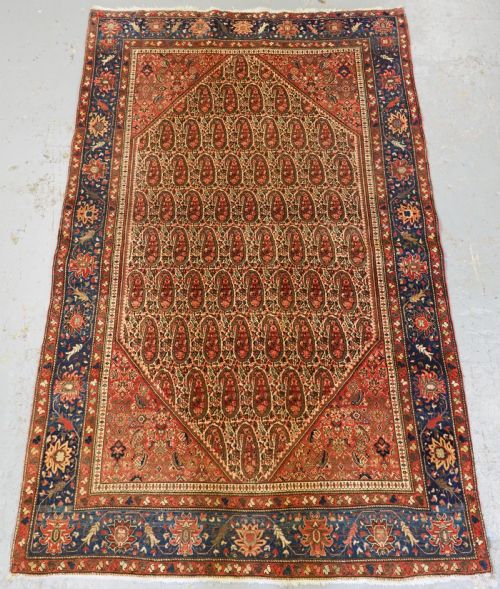
- Boteh
- A traditional almond-shaped motif with a curved upper end, frequently seen in Persian rugs. This pattern has ancient roots in textile design.
- Sarouk
- A style of Persian rug associated with a specific weaving centre, sometimes found combined with Farahan characteristics. These pieces often feature soft colours and intricate layouts.
- Runner
- A long, narrow carpet format designed primarily for hallways or corridors. This shape accommodates specific architectural spaces.
- Pile
- The upright yarn forming the usable surface of a carpet, distinct from the flat foundation structure. Wool is the standard material used for this upper layer.
Farahan Woven Carpet: Frequently Asked Questions
What is a farahan woven carpet?
A farahan woven carpet is a traditional Persian floor covering originating from the Farahan district, dating primarily from the nineteenth and early twentieth centuries.
These pieces feature wool pile on cotton foundations, displaying classic regional patterns and formats ranging from small rugs to large room-size carpets.
How do I date a farahan woven carpet?
Dating relies upon stylistic markers, structural characteristics, and period context, placing examples between the mid-nineteenth century and the 1920s.
Changes in weave density, palette choices, and regional design traits help distinguish pieces from different decades within this span.
Where were these carpets made?
These carpets were made in Persia, specifically within the Farahan region and associated weaving centres such as Sarouk.
Local artisans utilised traditional hand-weaving techniques passed down through generations to produce these distinct textiles.
How do I choose the right size?
Selecting the correct size depends on your space, with options including area rugs, square formats, and long runner rugs.
Consider the dimensions of your room and the intended placement, such as hallways or central seating areas.