

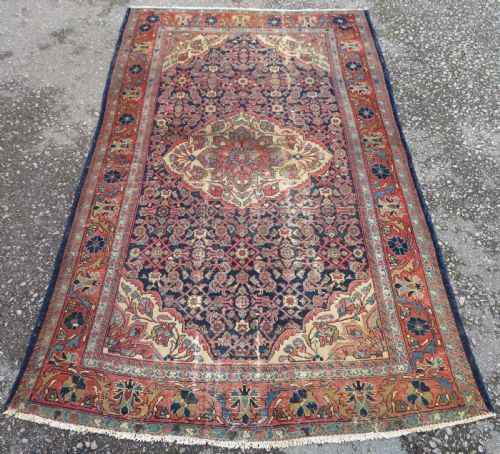
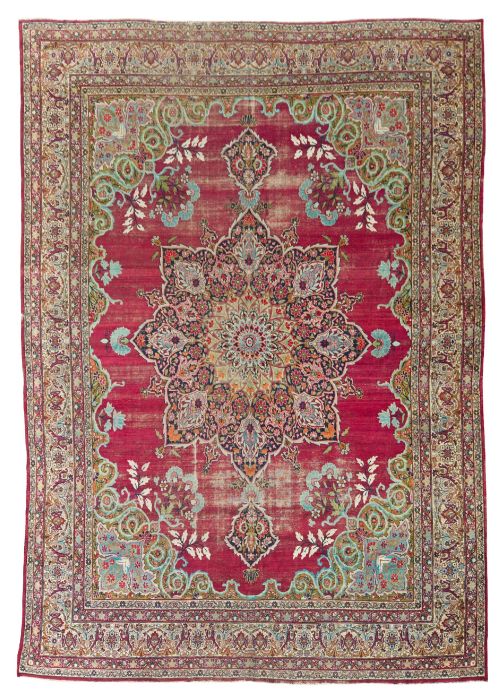
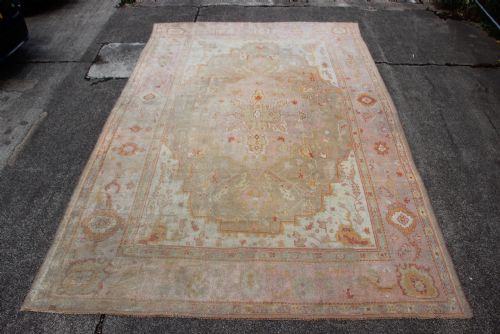



Faded Vintage Rug
A faded vintage rug brings muted tones and worn textures into a room, offering genuine historical depth underfoot.
Faded Vintage Rug
A faded vintage rug represents older floor coverings originating predominantly from Persian, Ottoman, and Anatolian traditions. These textiles span periods from the nineteenth century through the early twentieth century, encompassing styles such as Oushak, Kirman, Sarouk, and Tabriz. When searching for a faded vintage rug, buyers encounter runners, large carpets, and smaller tribal formats that have softened in colour over decades of use and exposure.
The aesthetic appeal of these pieces lies in their attenuated pigments and distressed surfaces, which integrate easily into contemporary interiors. Originating from workshops and tribal communities across Turkey, Persia, the Caucasus, and Central Asia, each piece carries distinct regional motifs and weaving structures. The selection includes grand room-sized carpets alongside narrow runners suited for hallways and landings.
How they were made
These textiles are constructed primarily from wool, cotton, and occasionally angora wool, spun by hand and dyed using traditional organic colourants. Weavers knotted these materials onto cotton or wool foundations, creating dense pile surfaces designed to withstand generations of daily wear. Over time, natural foot traffic and sunlight softened the initial saturation of the dyes, producing the characteristic pale patinas.
Larger formats, such as Oushak and Ziegler carpets, often utilise expansive open fields and large-scale floral designs executed with generous knot spacing. Smaller tribal pieces, including Qashqai and Khamseh examples, employ tighter geometric patterns and saturated wools that fade unevenly across the plane. The structural integrity depends on the quality of the wool and the tension of the foundation threads.
Faded Vintage Rug Retail Price Guide 2026
Typical asking prices for faded vintage rug among the pieces listed under this phrase on Sellingantiques today, from the lower quarter to the upper quarter. They describe what is for sale here now, not the wider market.
One surviving piece bears a woven date from the Islamic calendar corresponding to nineteen twenty-eight.
What varies in quality
Quality in these floor coverings rests upon the integrity of the foundation and the balance of the remaining pile. A superior piece retains structural soundness across the warp and weft despite surface wear, ensuring the textile remains stable on the floor. Variations emerge in the harmony of the faded palette and the finesse with which the original design transitions into its softened state.
The distinction between standard and exceptional examples often lies in the quality of the wool and the sophistication of the regional design. Finer workshops in centres like Tabriz or Kirman employed superior knot density and refined materials, whereas tribal pieces derived their character from spontaneous local wool selection and bolder geometric expression. The most successful examples achieve a uniform, luminous softness without compromising the underlying strength of the weave.
The Faded Vintage Rug Glossary
- Oushak
- A Turkish style originating from the town of Uşak, known for large-scale floral designs and soft pastel palettes. These carpets often feature relaxed geometric layouts and generous proportions.
- Kirman
- A Persian weaving style originating from the city of Kerman, recognised for intricate floral compositions and finely spun wool foundations. They frequently exhibit sophisticated medallion or all-over garden motifs.
- Kilim
- A flatwoven textile produced without a pile, created by tightly interweaving warp and weft strands. These pieces offer lightweight versatility and sharp geometric patterning.
- Warp
- The vertical foundation threads stretched tightly on the loom before knotting begins. The condition of these parallel cords determines the overall structural stability of the rug.
- Patina
- The surface appearance acquired through age, wear, and light exposure, resulting in softened colours and gentle textural degradation. In these textiles, this quality defines the visual appeal.
Faded Vintage Rug: Frequently Asked Questions
How do I clean an antique rug?
Professional dusting and gentle surface washing by specialists in historical textiles are recommended for maintaining these fragile wool pieces. Harsh chemicals and modern automated cleaning methods will damage the delicate, aged fibres.
Regular light vacuuming without the beater bar active helps remove embedded dirt from the pile. Keeping the textile out of direct, harsh sunlight prevents further uneven fading of the natural dyes.
Are these rugs suitable for hallways?
Many examples are specifically available in long runner formats designed for corridors, landings, and narrow transition spaces. The durable wool construction handles moderate foot traffic effectively when paired with a quality underlay.
Placing a cushioned pad underneath prevents slipping and absorbs the impact of footsteps. This extra layer protects the aged foundation threads from wearing against hard subfloors.
How do I identify an Oushak?
Oushak carpets typically feature looser knots, larger scale floral motifs, and characteristic pale or muted pastel colourways. They often utilise silky wool harvested in the surrounding region, giving the surface a distinct sheen.
The designs tend to be less rigid than classical Persian carpets, favouring open, expansive fields and subtle medallion arrangements.
Do these pieces work with modern decor?
The muted tones and softened patinas bridge historical craftsmanship and contemporary minimalist interiors seamlessly. Their weathered surfaces introduce warmth and texture without overwhelming a clean architectural space.
Layering a large faded carpet beneath modern furniture anchors the room while adding conversational depth. The neutral or pastel colour palette adapts easily to changing interior colour schemes.