



Faceted Stem Glass Goblet
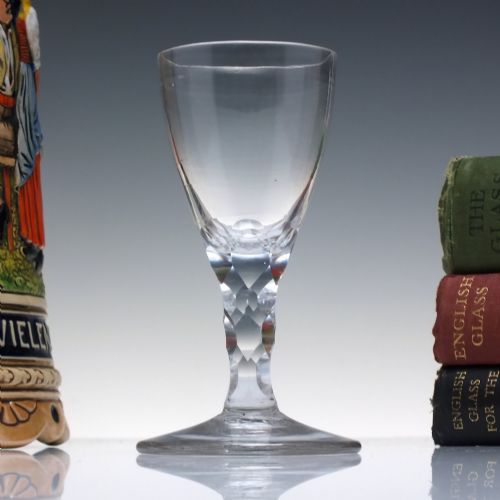
These faceted stem glass goblet examples offer the tactile cut stems and clear bowls that define Georgian and Victorian drinking vessels.
Faceted Stem Glass Goblet
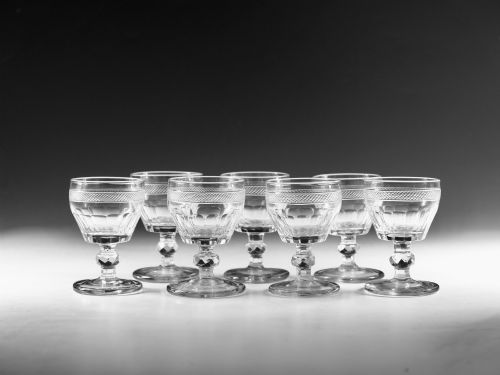
A faceted stem glass goblet represents a drinking vessel formed with geometric stem cuttings, primarily originating from the eighteenth and nineteenth centuries. These pieces appear in forms such as wine glasses, rummers, port glasses, and larger decorative goblets featuring wide foot bases and decorated bowls.
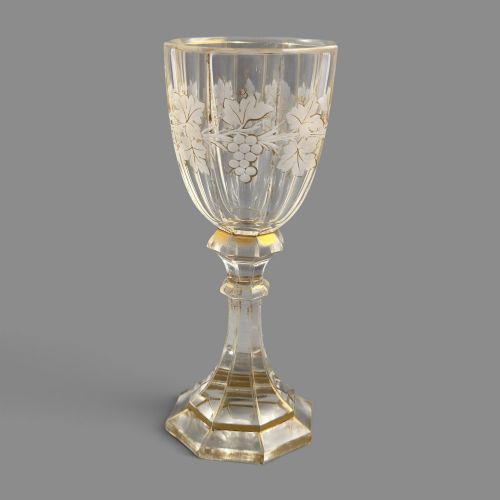
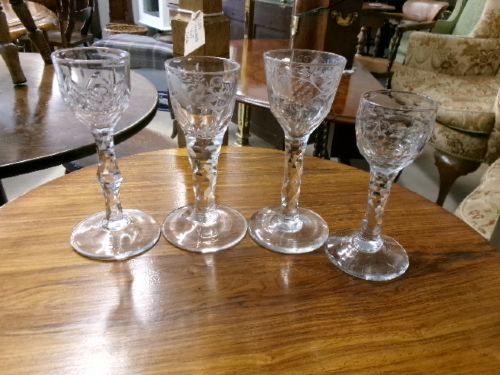
Buyers encounter English and Bohemian examples spanning the Georgian, Regency, and Victorian periods. The selection ranges from plain clear glass to gilded and engraved vessels, including specialised drinking glasses carrying Jacobite motifs.
How They Were Made
Craftsmen shaped these vessels from lead glass and lead crystal, utilising hot glass techniques before applying cold-work cutting to form the distinct facets along the stem. Master hands added surface embellishments such as wheel engraving and gilding directly onto the bowls.
The materials vary between clear glass and heavy lead crystal, which gave the earlier drinking vessels their characteristic refractive brilliance and weight in the hand.
Faceted Stem Glass Goblet Retail Price Guide 2026
Typical asking prices for faceted stem glass goblet among the pieces listed under this phrase on Sellingantiques today, from the lower quarter to the upper quarter. They describe what is for sale here now, not the wider market.
Georgian drinkers trusted faceted stems to keep a secure grip after several rounds of port.
What Varies in Quality
The crispness of the facet cuts along the stem separates standard production from superior examples, where sharp geometric edges catch the light cleanly. Engraving depth and detail on the bowl, such as specialised floral or political motifs, further distinguish the work of skilled glass-cutters and decorators.
Proportion between the bowl, the faceted stem, and the wide foot base dictates the visual balance of each piece. Purity of the crystal and minimal optical distortion in the blown glass body also influence the overall standard.
Moser·James Giles
The Faceted Stem Glass Goblet Glossary
- Facet cut
- A decorative technique involving the grinding of flat planes into the glass surface to create reflective geometric patterns. This method is predominantly found along the stems of eighteenth and nineteenth-century drinking vessels.
- Lead crystal
- A heavy glass variety containing metallic oxide that increases refractive index and workability. It provides the necessary clarity and weight for deep stem cutting.
- Rummer
- A large, wide-bowled drinking vessel designed for heavy ales or punch. These pieces frequently feature sturdy faceted stems.
- Jacobite engraving
- Decorative motifs applied to eighteenth-century glassware in support of the exiled Stuart dynasty. These designs often include roses, buds, and oak leaves.
- Pontil mark
- The rough scar left on the base of blown glassware where the pontil rod was detached. Its presence indicates traditional manufacturing methods prior to modern grinding techniques.
Faceted Stem Glass Goblet: Frequently Asked Questions
How do I date a faceted stem glass goblet?
Dating relies on stylistic clues such as bowl shape, foot profile, and the specific geometry of the stem cuttings. Eighteenth-century examples often feature narrower, bell-shaped bowls paired with distinct multi-faceted stems.
Later nineteenth-century iterations shift in proportion and frequently incorporate heavier lead crystal or coloured glass bodies. Comparing the engraving style and pontil scar characteristics helps narrow the period of manufacture.
Were these goblets used for wine or spirits?
Historical drinking vessels served various functions depending on their capacity and bowl form. Smaller variations functioned as port, sherry, or wine glasses during formal dining.
Larger vessels with wide bowls, such as rummers, accommodated heavier ales, punch, or spirits. The faceted stem provided a secure grip during circulation at the table.
What is Jacobite engraving on these glasses?
Jacobite engraving refers to covert political symbols etched onto eighteenth-century drinking glasses to show allegiance to the exiled House of Stuart. Common motifs include specific roses, oak leaves, and inscriptions tied to secret societies.
These pieces were utilised during clandestine toasts where participants passed the glass over water to represent the king over the water.
How should I clean antique glass?
Antique glass requires careful maintenance using warm water and mild detergent rather than modern dishwashers. Hand washing prevents thermal shock and protects delicate gilded or engraved surfaces on the bowl.
Storing the vessels upright on stable shelving prevents rim chipping. Avoid using abrasive cloths that might scratch the clear crystal body.