

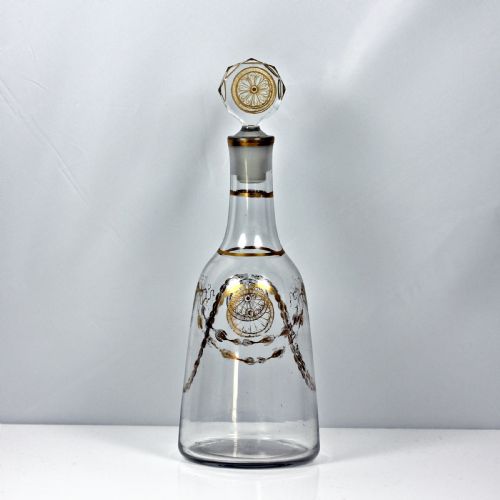


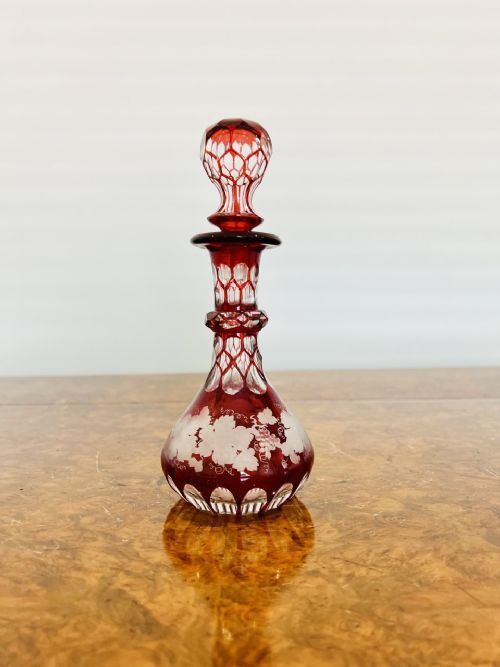


Facet Stopper Decanter
A facet stopper decanter brings heavy cut crystal and polished glass to the sideboard, catching the light across every sharply angled plane.
Facet Stopper Decanter
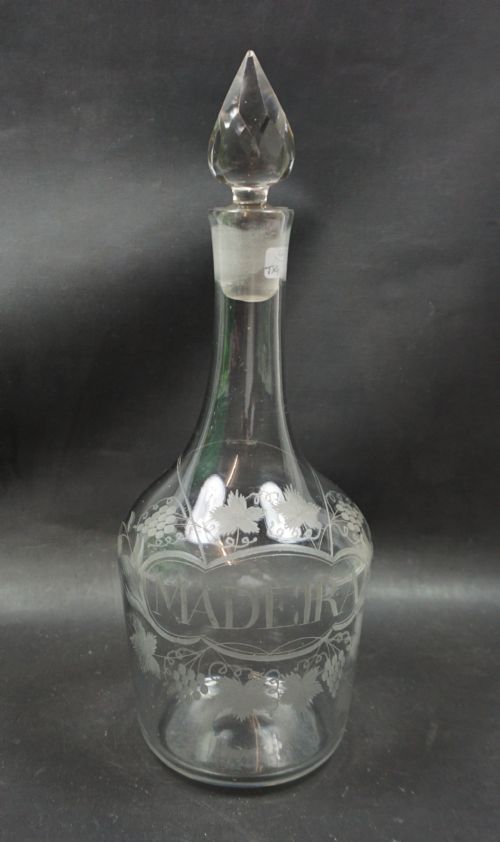
A facet stopper decanter is a serving vessel designed for spirits and wines, distinguished by a stopper cut with multiple flat polished faces. These pieces range from Georgian sugarloaf shapes to Edwardian bell forms, with Victorian cut glass examples appearing most frequently.
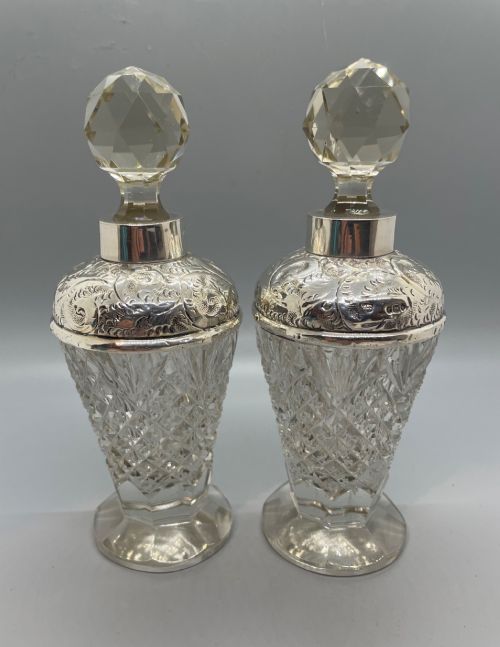
The body of the vessel often matches the stopper through geometric cutting, engraving, or sterling silver collars. Collectors encounter individual bottles as well as pairs and larger matched sets intended for the dining table or barware cabinet.
Materials and construction
Makers shaped these vessels from lead crystal, clear glass, and lead glass, utilising deep wheel-cutting to achieve sharp facets on both body and stopper. The heavier metal content of lead glass allowed artisans to grind crisp angles that refract light cleanly.
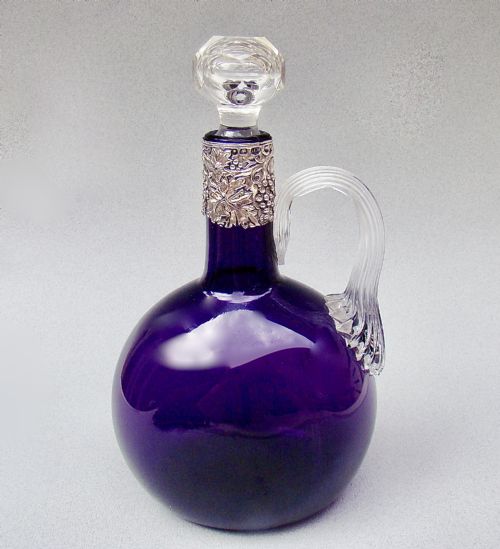
Many specimens incorporate sterling silver mounts, collars, and locking mechanisms supplied by specialist silversmiths. These metal additions required precise fitting to the glass necks to secure the contents.
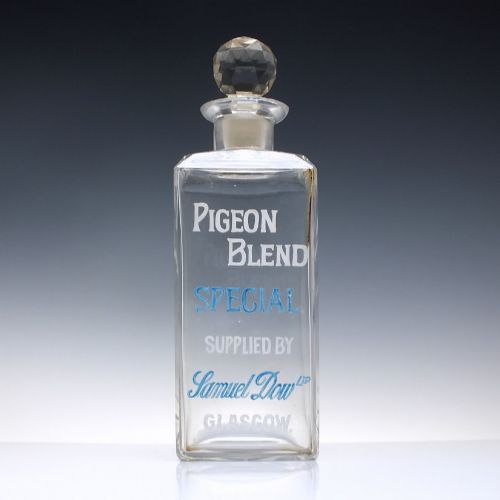
Glasgow Pigeon Blend whisky once filled these Scottish bottles, turning everyday barware into a snapshot of nineteenth-century drinking culture.
Factors of quality
The sharpness and symmetry of the cutting define the upper tier of production, where every facet meets at a clean, crisp edge without softening from excessive polishing. Weight and clarity of the metal set finer examples apart from heavier commercial output.
The integration of metalwork dictates distinction in mounted pieces, where hallmarked sterling silver collars and fitted locks by notable makers elevate the work. Matching stoppers original to the vessel carry substantial importance for the overall integrity of the piece.
Henry Matthews·Betjemann Brothers·Hukin and Heath·James Giles
The Facet Stopper Decanter Glossary
- Facet stopper
- A glass stopper ground and polished with multiple flat geometric planes. This treatment increases light reflection when fitted to the neck of the bottle.
- Sugarloaf decanter
- A heavy-based bottle form tapering toward the top, reminiscent of historical sugar loaves. This profile appears frequently among Georgian specimens.
- Lead crystal
- Glass containing a high percentage of lead oxide, which increases weight, brilliance, and workability for deep cutting. It forms the primary material for the best cut vessels.
- Sterling silver collar
- A band of silver fitted around the neck of the bottle, frequently bearing hallmarks for date and maker. It provides a secure seating for the stopper or locking mechanism.
Facet Stopper Decanter: Frequently Asked Questions
How do I date a cut glass decanter?
Dating relies on the shape of the body, the style of the cutting, and any accompanying silver hallmarks. Earlier eighteenth-century forms tend toward heavier, simpler profiles, while Victorian and Edwardian examples show denser geometric patterns.
Changes in pontil marks on the base and the presence of sterling silver date letters help narrow the decade of manufacture. Comparing the stopper fit and glass tint provides further confirmation of the period.
Are these decanters safe for holding wine?
Most antique glass vessels remain suitable for serving spirits and wine provided they are cleaned with care. Older lead crystal can leach trace amounts of lead if liquids remain stored inside for extended periods.
Decanting wine for immediate service avoids any prolonged contact with the glass. Gentle washing with warm water preserves both the interior surface and the exterior brilliance.
Why do some decanters have locking mechanisms?
Locking mechanisms on late nineteenth and early twentieth-century bottles served to restrict access to expensive spirits. Servants or guests could be prevented from tampering with the contents by a secured silver collar and key.
These locking systems were produced by specialist firms and add considerable complexity to the hardware of the piece. They remain highly sought after by collectors of barware.