


Facet Cut Glass Goblets
Facet cut glass goblets bring tactile brilliance to the table through polished stem work and clear lead crystal refraction.
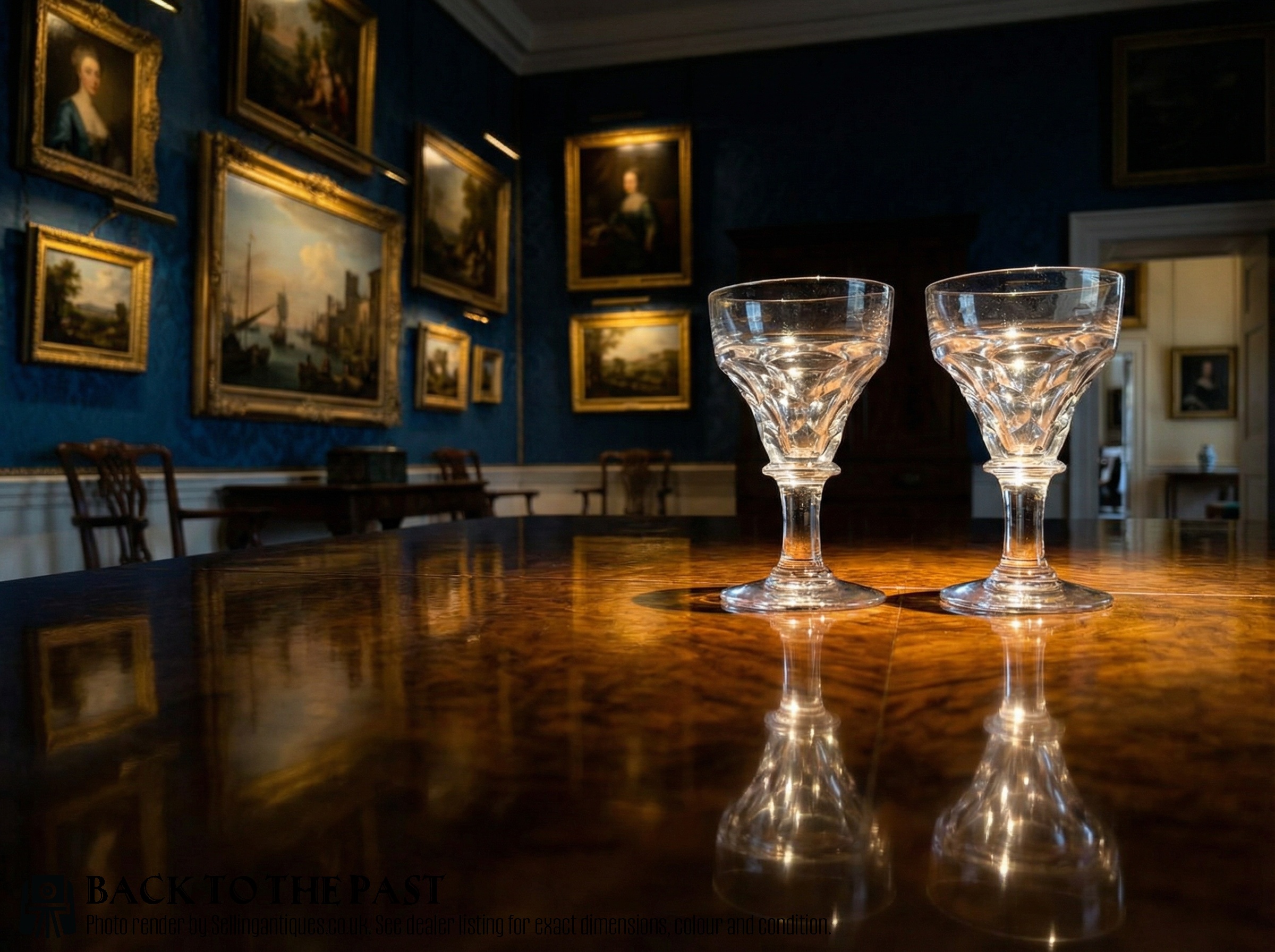
Facet Cut Glass Goblets
Facet cut glass goblets comprise drinking vessels and commemorative glassware featuring geometric stem cutting, primarily originating from Georgian and Victorian periods alongside later Bohemian and English workshops.
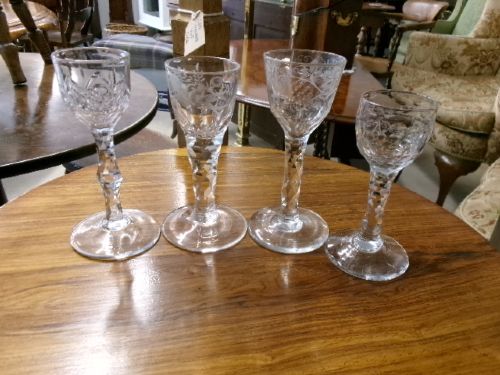
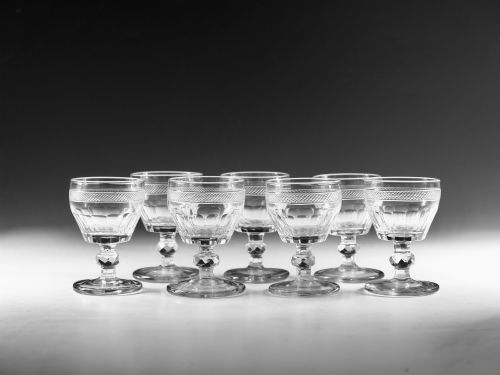
Buyers encounter eighteenth-century drinking glasses alongside nineteenth-century port glasses, wine glasses, and commemorative pieces bearing engraved decoration upon wide foot bases.
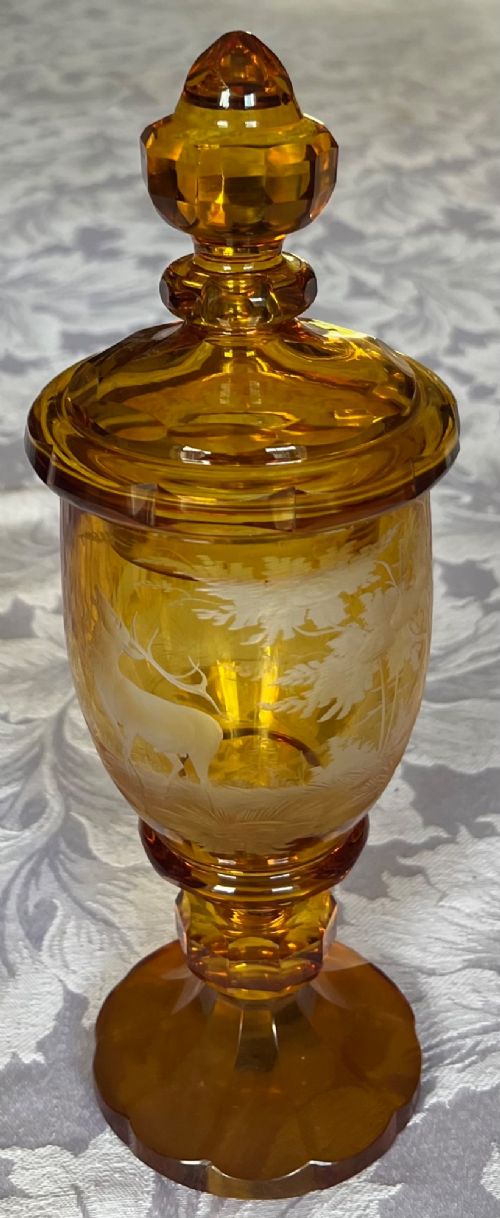
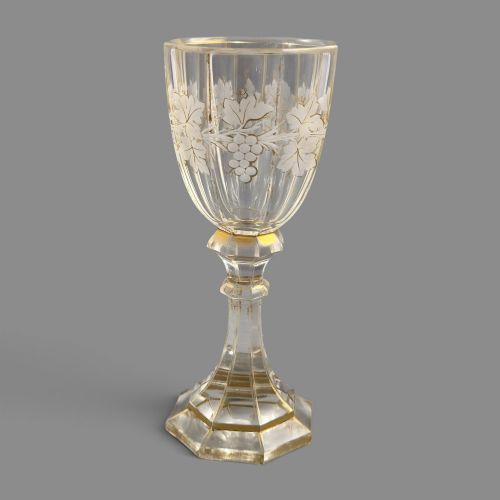
The selection ranges from early English lead glass stems to nineteenth-century Bohemian examples enriched with gilding and engraved bowls.
How they were made
Maker-craftsmen formed these objects from lead glass and lead crystal, shaping the molten material into heavy bowls and thick stems before cooling.
The characteristic facets were applied by holding the glass against rotating wheels to grind flat planes into the stems, followed by polishing to restore transparency.
Engraving and gilding were frequently added to the bowls using wheel-cutting techniques and thin gold leaf applications.
Some eighteenth-century drinkers hid secret treason in their wine, raising engraved Jacobite glasses to toast the king over the water.
What varies in quality
The crispness of the facet cutting dictates the visual sharpness of the stem, distinguishing precise geometric execution from softer, rounded polishing.
The clarity and weight of the lead crystal influence how light passes through the vessel, separating dense, brilliant metal from standard glass.
The complexity of bowl decoration, from simple Jacobite engraving to intricate gilding, marks the distinction between utilitarian drinkware and high-status presentation pieces.
Moser Bohemian·James Giles
The Facet Cut Glass Goblets Glossary
- Facet cut
- The geometric grinding of flat planes onto the stem or body of glassware to create reflective surfaces. This technique enhances the sparkle of lead crystal under candlelight.
- Lead crystal
- Glass containing a high proportion of lead oxide for increased weight, brilliance, and refractive power. It provides the heavy feel expected in historical drinking vessels.
- Jacobite engraving
- Secret political iconography etched onto eighteenth-century glassware to show loyalty to the exiled Stuart dynasty. These symbols often include roses and oak leaves.
- Römer goblet
- A traditional Germanic wine glass form featuring a wide bowl atop a decorated stem and conical foot. These often appear in coloured or clear glass with extensive surface work.
- Gilding
- The application of gold leaf or gold paint to the surface of glassware, frequently fired for permanence. This decoration highlights rims and engraved motifs on formal pieces.
Facet Cut Glass Goblets: Frequently Asked Questions
How do I date an old facet cut glass goblet?
Dating relies on examining the pontil mark on the underside of the foot, the proportions of the bowl, and the specific style of facet cutting on the stem. Eighteenth-century examples often display deep, narrow stems and irregular hand-finished pontils.
Later nineteenth-century and twentieth-century productions show greater machine uniformity in the facets and clearer, heavier lead crystal compositions. Comparing the engraving style against known historical motifs helps confirm the era.
Were these goblets used for everyday drinking?
Many historical facet cut glass goblets served formal dining functions for wine, port, or sherry rather than daily family meals. Their heavy lead crystal construction made them durable for frequent toasts.
Commemorative pieces and heavily gilded examples were frequently kept for display or special toasts rather than regular table service.
What is the difference between lead glass and lead crystal?
Lead glass is a general term for glass containing lead oxide, which increases the working time and clarity of the material during manufacturing. Lead crystal represents a higher standard defined by specific density and refractive index requirements.
In historical drinking vessels, this higher lead content produces the characteristic heavy feel and sharp light refraction seen in facet cut stems.