


Extended Boardroom Table
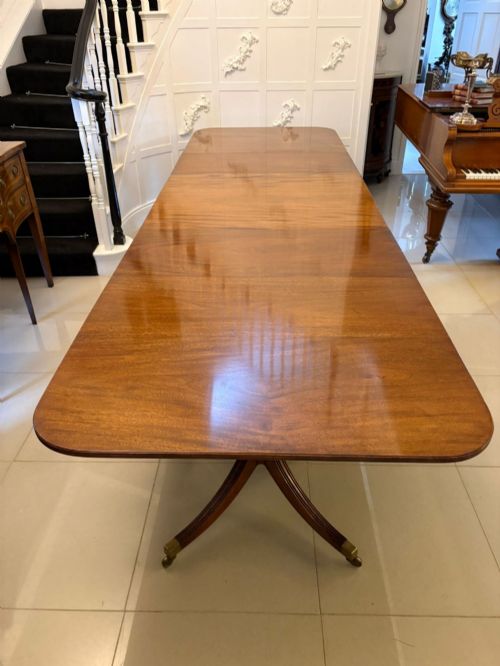
An extended boardroom table provides grand proportions and robust timber for large gatherings, drawing on centuries of formal dining design.
Extended Boardroom Table
An extended boardroom table serves as a substantial focal point, designed originally for grand feasts and official assemblies. When searching for an extended boardroom table, buyers encounter large dining formats built to accommodate dozens of guests.
The selections span the nineteenth century, the Edwardian era, and later revivals, offering multi-pillar bases and numerous leaves. These tables trace their origins to Georgian, Regency, and Victorian workshops where length and stability were paramount.
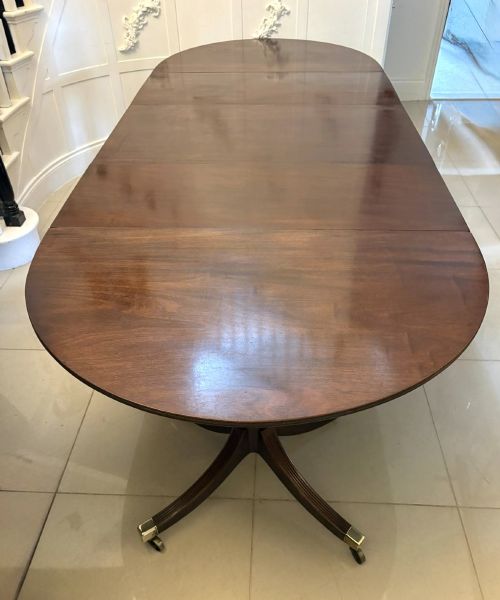
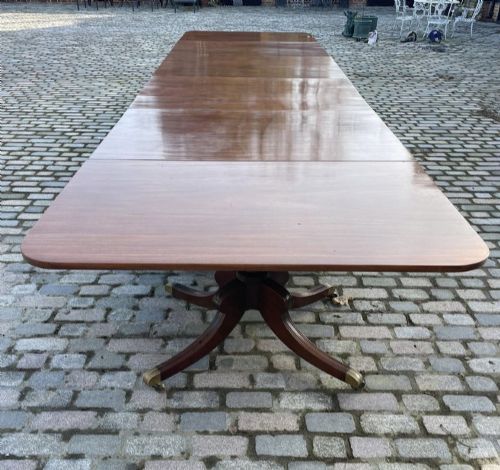
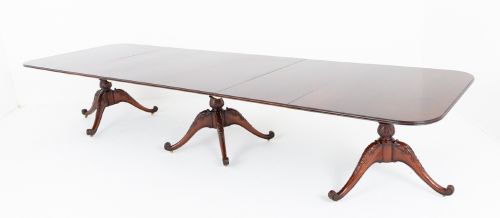
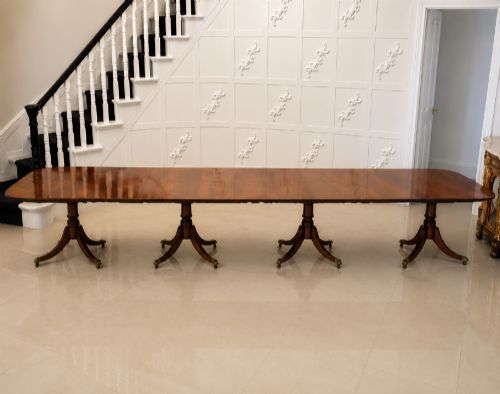
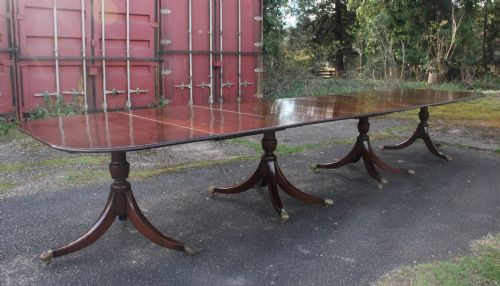
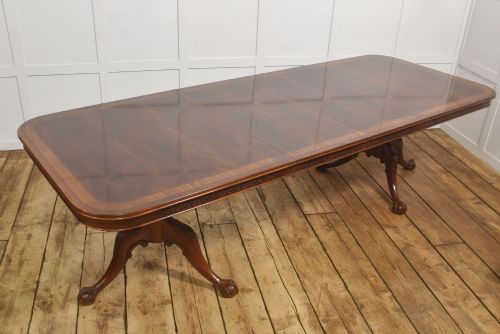
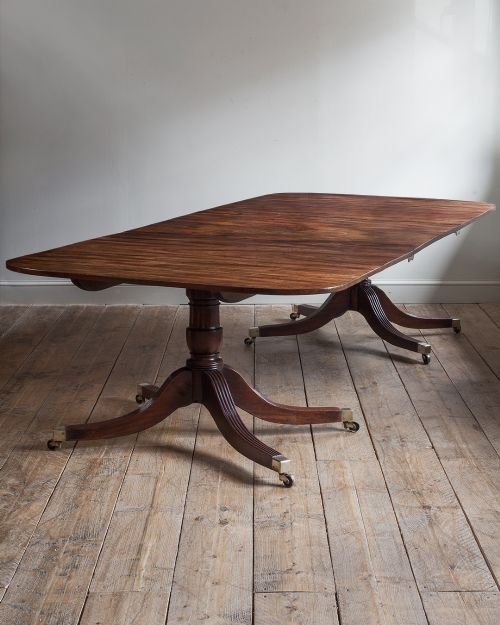
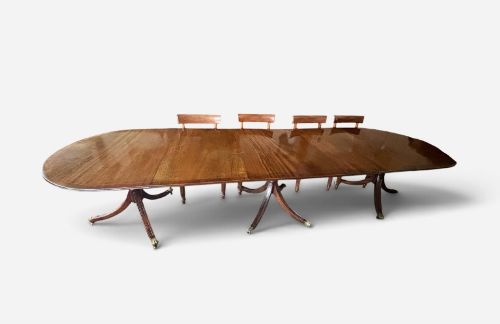
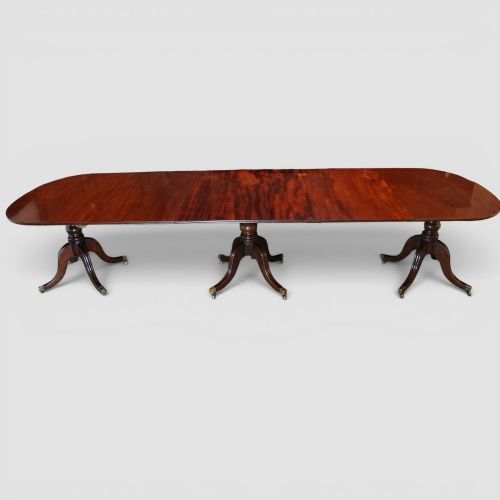
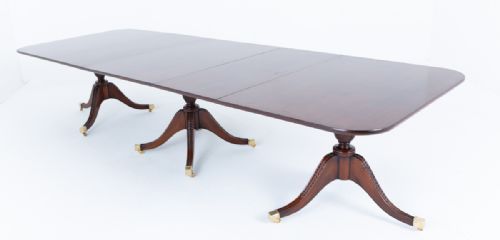
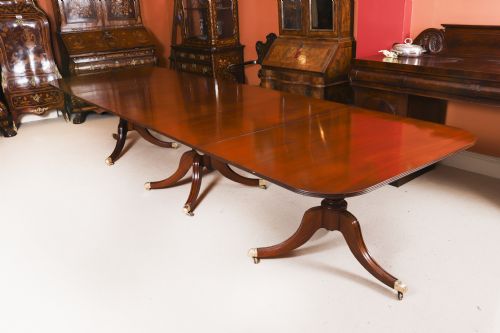
Most examples rely on pillar and pedestal configurations rather than simple four-leg designs, allowing heavy timber tops to expand safely. Buyers meet twin, triple, and four-pedestal structures capable of seating substantial parties.
How they were made
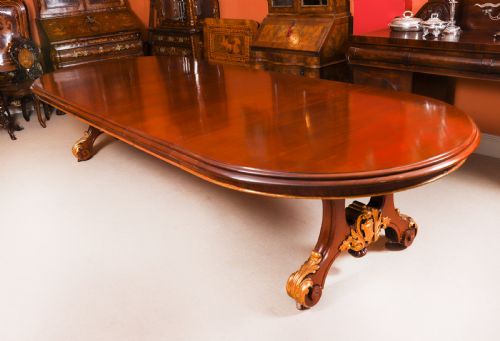
Cabinetmakers utilised dense hardwoods such as mahogany, oak, and rosewood, often selecting figured varieties to create striking table tops. Brass fittings, metal mechanisms, and gold leaf accents frequently appear on finer pedestal mounts and internal leaves.
Tables were constructed with multiple pillar supports or extending mechanisms that allowed extra leaves to drop in smoothly. Timber sections were joined with precise cabinetry to ensure the expansive surface remained level under heavy use.
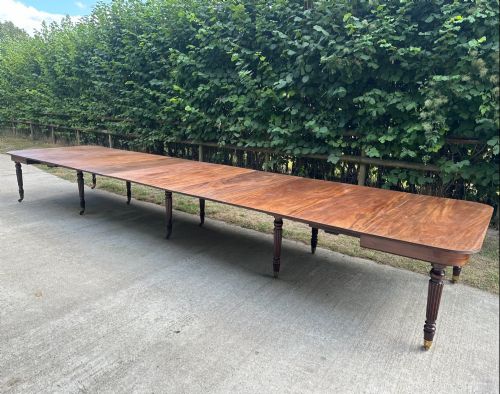
One monumental Irish Regency table stretches to accommodate twenty-six diners supported by five separate leaves.
What varies in quality
The distinction between ordinary and exceptional tables rests upon the selection of the timber grain and the integrity of the pillar supports. Highly figured mahogany or plum pudding mahogany tops exhibit superior depth and visual movement compared to plain timber boards.
Construction standards are evident in the weight and stability of the pedestals, brass claw feet, and the precision of the extending leaf joints. Master workshops engineered mechanisms that allowed massive lengths to operate without sagging at the centre.
Gillows·Wylie and Lochead Glasgow·Whytock and Reid
The Extended Boardroom Table Glossary
- Pedestal
- A central column support resting on splayed legs, usually fitted with brass castors. Multiple pedestals distribute the considerable weight of an extended top.
- Leaf
- A removable section of timber inserted into the centre of the table to increase its overall length. These allow the furniture to adapt for smaller or larger gatherings.
- Figured mahogany
- Timber exhibiting distinctive, highly decorative grain patterns such as flame or feather effects. This material was reserved for the most ambitious cabinet work.
- Regency style
- A design aesthetic reflecting the Regency period, characterised by classical restraint, pillar supports, and subtle brass ornamentation. Revivals of this style recurred into the twentieth century.
Extended Boardroom Table: Frequently Asked Questions
How do I seat twenty people?
Extended tables utilise multiple removable leaves supported by three or four heavy wooden pillars. Inserting these sections extends the timber top to accommodate large parties comfortably.
Matching chairs are often acquired alongside these large formats to ensure uniform seating height and style around the perimeter.
How do multiple pedestals work?
Tables of significant length require three or four wooden pillars rather than simple corner legs to bear the massive weight of the top. These columns typically feature brass castors to allow the heavy sections to roll apart when inserting leaves.
This configuration ensures that diners do not encounter obstructing legs beneath the extended surface.
How do I date a large table?
Dating relies on examining the timber species, the style of the pedestal bases, and the engineering of the extending mechanism. Georgian and Regency pieces often display Cuban mahogany and brass-paw feet, while later Victorian and Edwardian examples show heavier proportions.
Cabinetmaker stamps or workshop labels can occasionally be found beneath the top or within the pillar assemblies.