
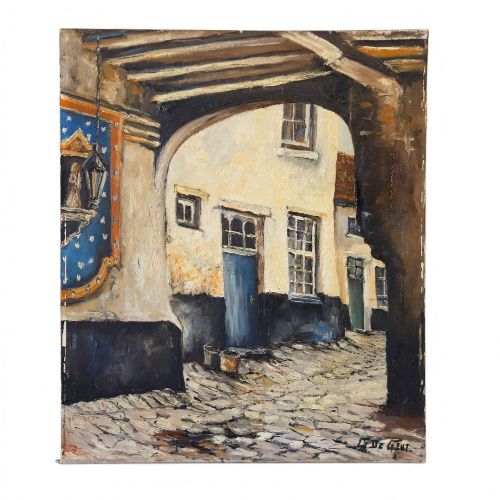


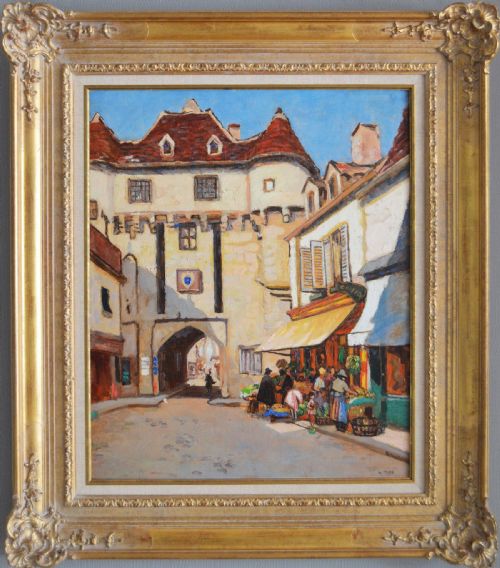
European Street Scene Art
European street scene art captures bustling townscapes and quiet urban alleys, offering buyers a window into historic continental daily life.
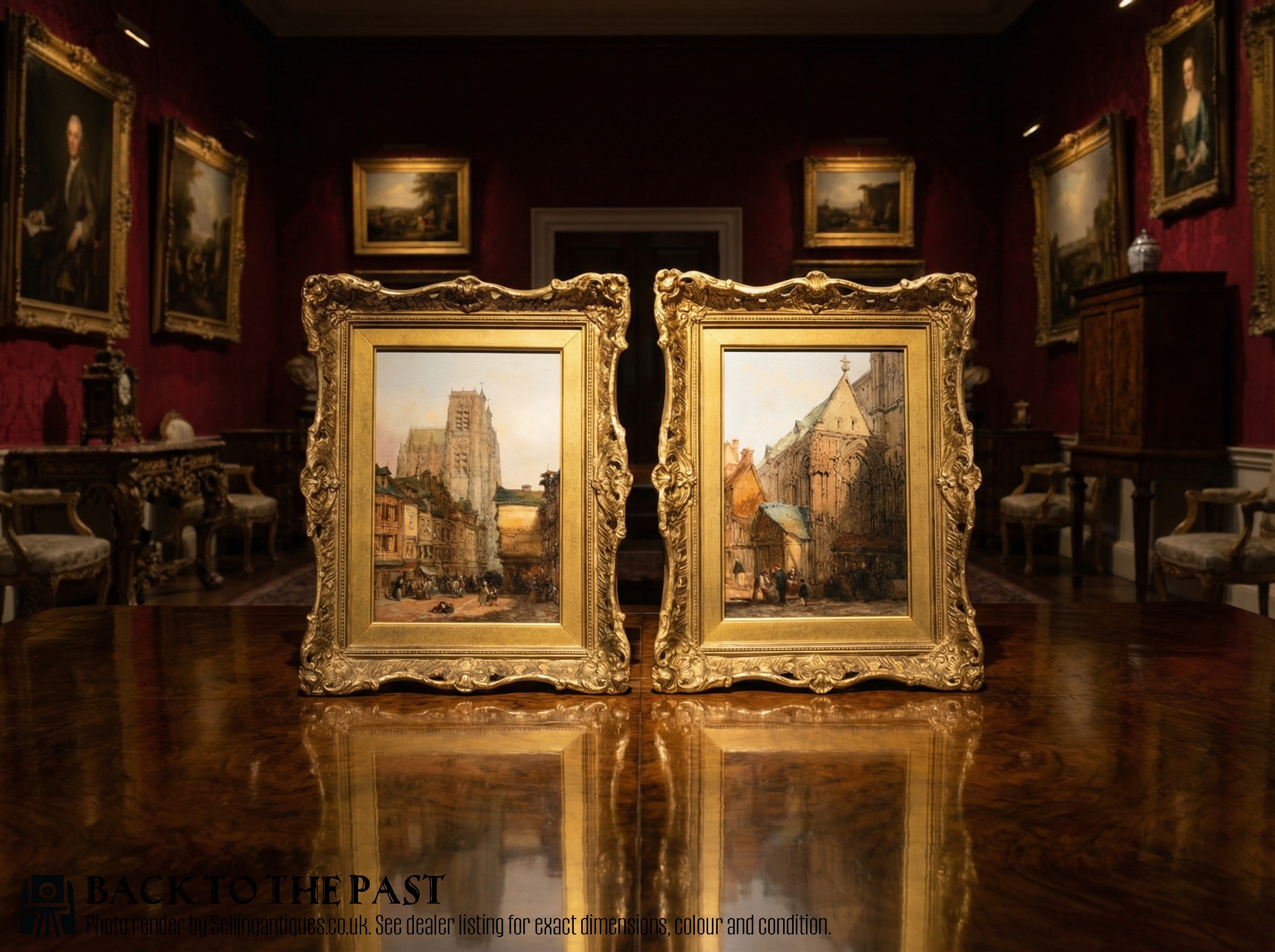
European Street Scene Art
When you search for european street scene art, you are looking at oil paintings, watercolours, and fine art pieces that depict continental towns, market days, and architectural views. These works capture urban landscapes from various historical periods, ranging from late Georgian interpretations to mid-century impressions.
The versions you are most likely to meet on this page span the nineteenth and twentieth centuries, often rendered in oil on canvas or watercolour on paper. They frequently portray specific European locations, such as French cathedrals, Belgian markets, and Flemish streets.
Makers and artists represented across these works include named painters like L. De Gent, Cecil Rochfort D'Oyly-John, William George Meadows, Lewis J Wood, Joseph W. Milliken, Paul Paul, Christiaan Pieter Snyders, Henry Schafer, and Letitia Marion Hamilton. Their compositions record urban topography through impressionist, realist, and Victorian lenses.
Materials and methods
These artworks are primarily executed using oil paint on canvas, oil on board, or watercolour on paper. Canvases are stretched over wood frames, while some watercolours and boards utilise traditional paper supports.
Frames often consist of gilt wood or gold leaf finishes that complement the period aesthetic of the paintings. The application ranges from textured impressionist brushwork to detailed architectural watercolour drafting.
Styles represented span impressionism, Victorian, Flemish impressionism, Georgian, mid-century impressionism, Edwardian, and twentieth-century realism.
Distinctions in quality
The distinction between standard works and superior examples rests on the confidence of the brushwork and the precision of the topographical or architectural rendering. Stronger pieces demonstrate a clear command of light and shadow within the streetscape.
Condition of the medium and the originality of the frame also influence the standing of a piece. Works retaining their original giltwood framing and stable, untouched paint surfaces sit firmly at the upper end of the range.
L. De Gent·Cecil Rochfort D'Oyly-John·William George Meadows·Lewis J Wood·Joseph W. Milliken·Paul Paul·Christiaan Pieter Snyders·Henry Schafer·Letitia Marion Hamilton
The European Street Scene Art Glossary
- Canvas
- A heavy woven fabric used as a surface for oil painting. It is typically stretched tightly across a wooden frame before application of the ground and paint.
- Impressionism
- A style of painting that focuses on capturing the visual impression of a moment, characterised by relatively small, thin, yet visible brush strokes.
- Watercolour
- A paint whose pigments are suspended in a water-soluble vehicle, usually applied to paper to produce translucent washes of colour.
- Giltwood
- Wood that has been treated with a thin layer of gold leaf or gold paint to give a metallic, decorative finish, frequently seen on period frames.
European Street Scene Art: Frequently Asked Questions
What periods do these paintings cover?
The available works span from the late Georgian era through the nineteenth century and into the mid-twentieth century. Painters working during these times captured evolving urban landscapes across Europe.
Most pieces date from the Victorian, Edwardian, and mid-century periods, reflecting stylistic shifts from detailed architectural views towards looser impressionistic interpretations.
How were these townscapes painted?
Artists utilised oil paint on canvas or board, alongside watercolour on paper, to record continental streets and market squares. These mediums allowed for both impasto texture and delicate washes.
Framing typically involved wood finished with gold leaf or gilt, serving to protect and enhance the visual depth of the urban scene.
Where do these street scenes originate?
The artworks depict various European locations, with specific representations of towns and cities in France, Belgium, and Flanders. These include named sites like Semur and Lannion.
Both British and continental artists travelled to record these foreign architectural views, capturing local markets, cathedrals, and archways.
How do I care for antique paintings?
Keep canvases and watercolours away from direct sunlight and high humidity to prevent paint cracking and paper degradation. Maintaining stable environmental conditions preserves the integrity of the materials.
Dust giltwood frames gently with a dry cloth and avoid using liquid cleaners on the painted surfaces.