

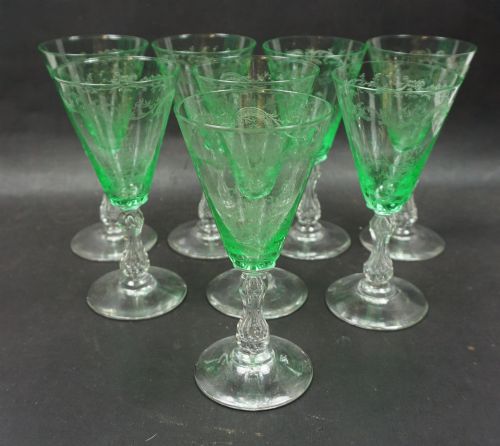
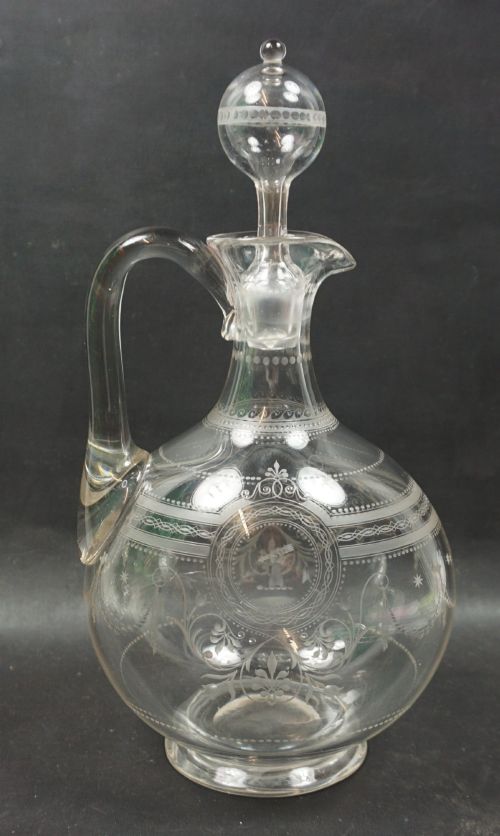
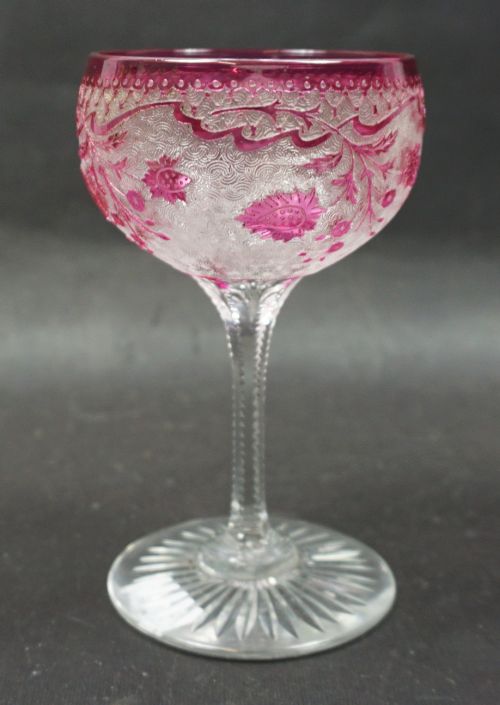
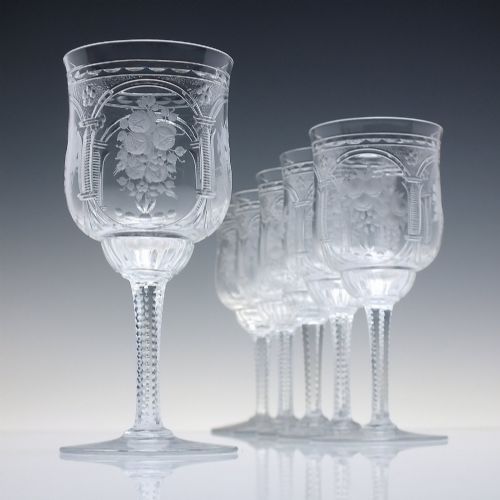


Etched Wine Glasses
Etched wine glasses bring decorative botanical motifs and brilliant crystal clarity to the table.
Etched Wine Glasses
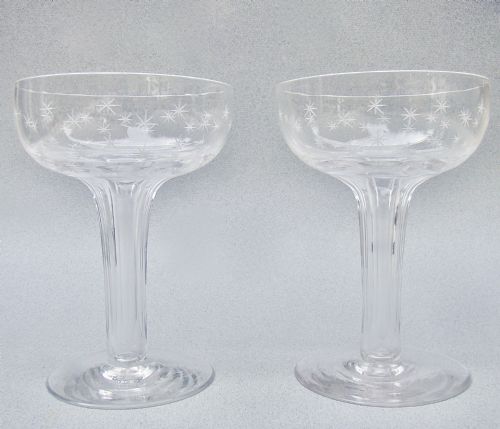
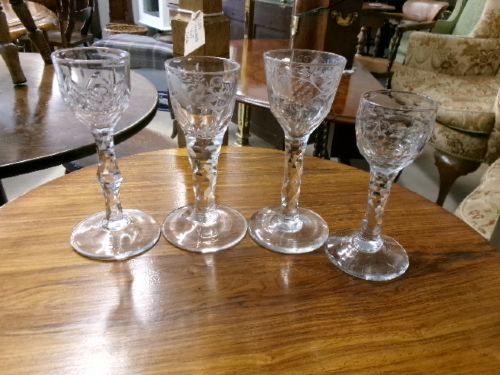
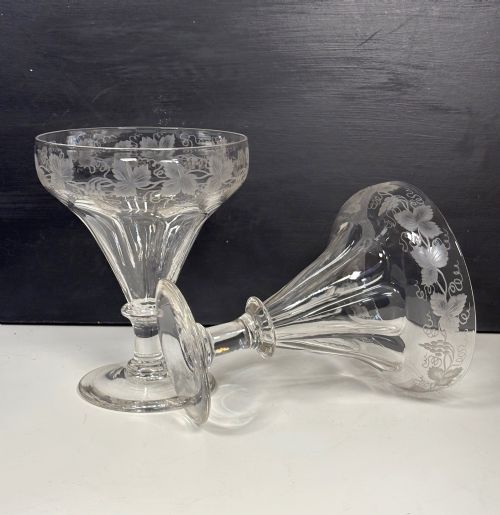
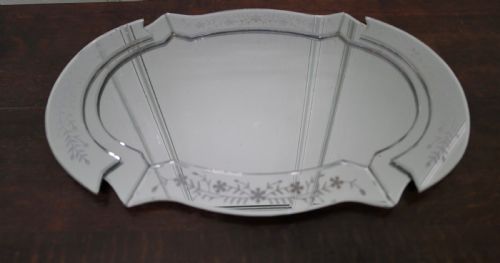
When you search for etched wine glasses, you discover drinking vessels ornamented with delicate surface incisions and patterns. These pieces range from intimate dessert wine vessels to robust hollow stem champagne glasses.
The versions you meet most frequently on this page belong to the Victorian era. Alongside these, you find Edwardian, Georgian, and Art Nouveau examples spanning the nineteenth and early twentieth centuries.
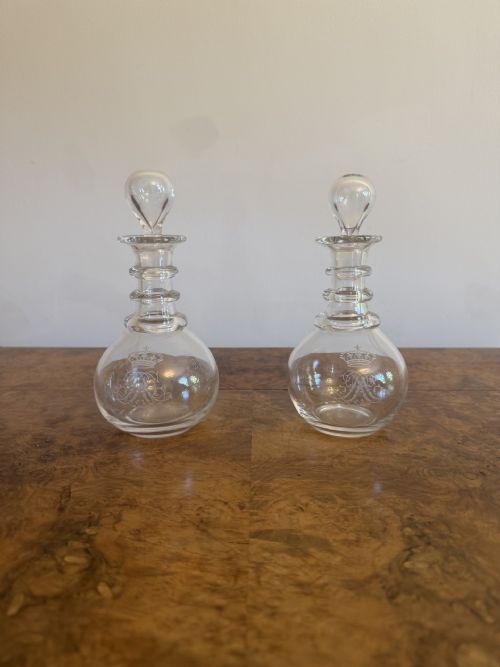
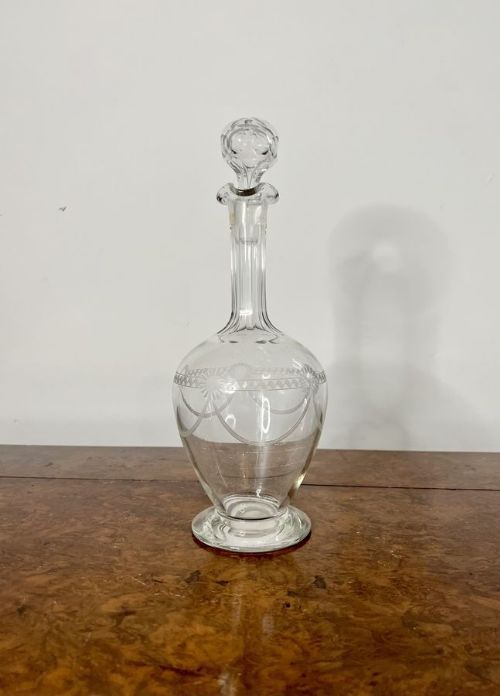
The selection includes matched sets, harlequin groupings, and individual statement stems. Alongside the standard wine glasses, related serving forms such as decanters, claret jugs, and rinsers appear regularly.
How They Were Made
Makers shaped these vessels using clear glass, lead crystal, and coloured crystal overlays. Many pieces combine heavy cut glass elements with fine wheel-engraved or acid-etched decoration.
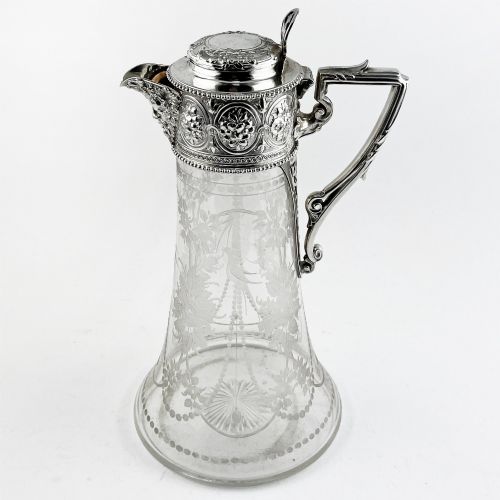
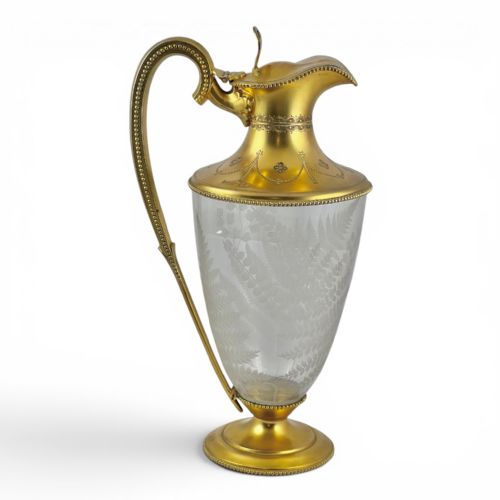
Makers mounted selected glass bodies in sterling silver, silver plate, or gilt bronze. These metal mounts range from simple collars to elaborate handles and Bacchus mask spouts.
Etched Wine Glasses Retail Price Guide 2026
Typical asking prices for etched wine glasses among the pieces listed under this phrase on Sellingantiques today, from the lower quarter to the upper quarter. They describe what is for sale here now, not the wider market.
What Varies in Quality
The depth and precision of the surface decoration separate standard items from superior examples. Crisp, deeply wheel-engraved botanical scenes show a level of artisan skill missing in shallow surface markings.
The quality of the underlying material dictates the weight and resonance of the vessel. Heavy lead crystal with brilliant light refraction sits far above ordinary clear glass.
Asprey and Co. Ltd·Baccarat Vallee·Elkington·Orfèvrerie Produx Saint Hilaire·Stevens and Williams
The Etched Wine Glasses Glossary
- Etched glass
- Glass decorated by the application of acid to eat away exposed portions of the surface. This technique produces soft-edged patterns often combined with wheel cutting.
- Lead crystal
- Glass containing metal oxides that increase weight, brilliance, and clarity. This material allows for sharper facets and deeper engraving.
- Claret jug
- A pouring vessel designed for serving red wine at the table. These pieces typically combine a decorated glass body with a metal handle and hinged lid.
- Roemer
- A traditional Germanic wine glass featuring a wide bowl on a cylindrical decorated stem. These vessels frequently appear in coloured crystal.
- Hollow stem
- A stem design where the interior channel connects the bowl to the foot. This form appears on specific nineteenth-century champagne and sparkling wine glasses.
Etched Wine Glasses: Frequently Asked Questions
Can I use antique wine glasses today?
You can use these glasses for special dining occasions or quiet evening drinks. Handle them carefully due to their age and delicate stems.
Hand washing remains essential after use. Store them securely away from edge hazards in your cabinet.
What is the difference between etching and engraving?
Etching uses acid to dissolve the surface glass and create frosted or shallow designs. Engraving relies on small rotating wheels to cut deeper lines into the material.
Combined techniques appear on many nineteenth-century pieces. Both methods produce permanent surface decoration.
How do I date Victorian wine glasses?
Examine the weight, pontil mark on the base, and overall silhouette of the vessel. Victorian pieces often feature heavy lead crystal and floral or vine motifs.
Compare the stem construction with known period examples. Makers marks on accompanying silver mounts also provide precise dates.