



Etched Crystal Pitcher
An etched crystal pitcher brings refined table service to life with detailed glasswork and often precious metal mounts.
Etched Crystal Pitcher
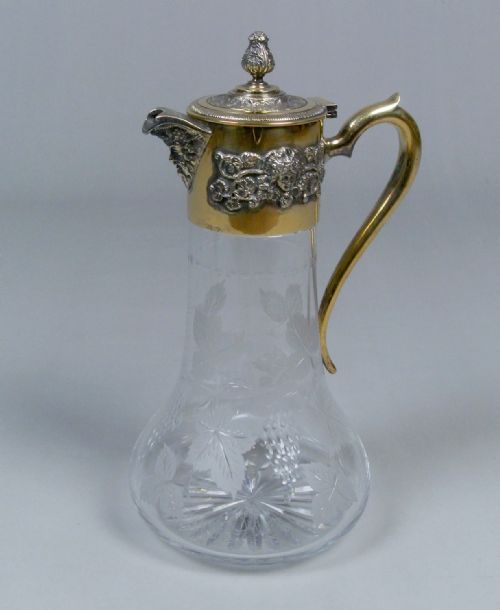
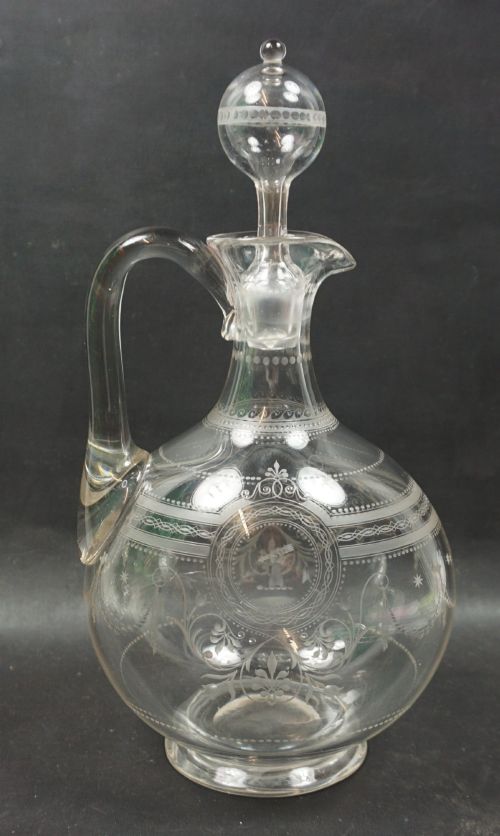
When you search for an etched crystal pitcher, you find vessels designed for serving wine and water, encompassing forms described as claret jugs, ewers, and wine jugs. These pieces appear across Victorian, Art Deco, and nineteenth-century periods.
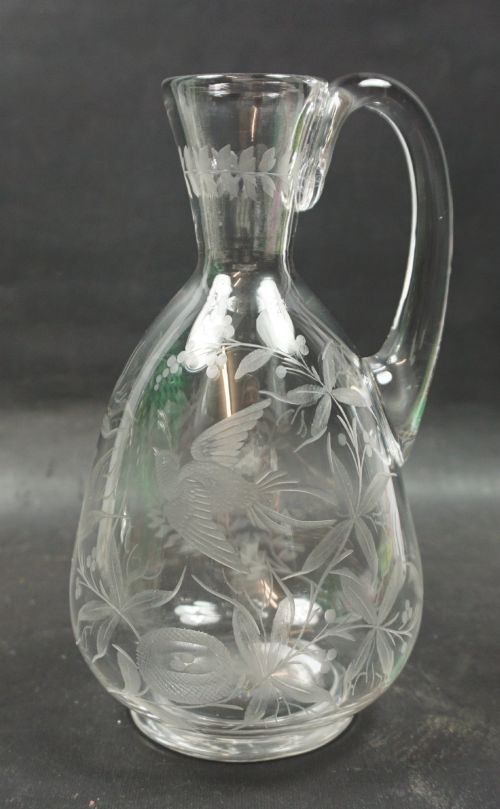
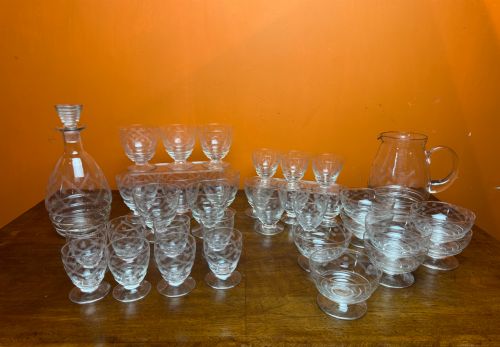
The most common examples on this page are Victorian and later nineteenth-century glass ewers and claret jugs, frequently featuring botanical motifs like grapes and vines. Alongside standalone jugs, the selection includes matched sets with drinking glasses.
Origins span English production centres such as Stourbridge alongside French manufacture, reflecting diverse European traditions in decorative glassware.
How they were made
Maker methods combine clear glass and lead crystal body formation with surface decoration achieved through hand wheel engraving and etching techniques. Artisans carved intricate patterns directly into the glass surface.
Many examples incorporate metalwork mounts, utilising sterling silver, silver plate, or silver gilt for handles, rims, and hinged lids, including elaborate figural elements like Bacchus masks.
Etched Crystal Pitcher Retail Price Guide 2026
Typical asking prices for etched crystal pitcher among the pieces listed under this phrase on Sellingantiques today, from the lower quarter to the upper quarter. They describe what is for sale here now, not the wider market.
Listings span the nineteenth century, Victorian, and Art Deco periods, utilising glass, lead crystal, sterling silver, and silver gilt.
What varies in quality
Distinction across the range rests on the crispness and depth of the wheel engraving or etching upon the glass, alongside the artistic ambition of the botanical or figurative motifs. Superior pieces exhibit precise hand-cut details that catch the light.
The quality of the metal mounts further separates examples, where substantial silver or silver-gilt work with secure, well-cast spouts and mounts elevates the piece above simpler glass-only formations.
Asprey and Co. Ltd
The Etched Crystal Pitcher Glossary
- Claret jug
- A specialised vessel for serving red wine at the dining table. These often feature silver mounts and hinged lids.
- Ewer
- A large jug with a wide spout and ornate handle, historically used for water or wine. Victorian examples frequently utilise heavy glass bodies with engraved botanical decoration.
- Stourbridge
- An English town renowned for its glassmaking industry during the nineteenth century. Artisans here produced highly skilled hand wheel engraved glassware.
- Silver gilt
- Silver that has been coated with a thin layer of gold. This finish appears on the mounts and hardware of select fine jugs.
Etched Crystal Pitcher: Frequently Asked Questions
What is an etched crystal pitcher used for?
These vessels served primarily for pouring wine, claret, or water during formal dining and entertaining. Their decorative surfaces made them central display items on the sideboard.
Today, collectors utilise them for actual service or display them to appreciate the nineteenth and twentieth-century glassmaker artistry.
How do I identify a Victorian piece?
Victorian examples often display naturalistic motifs such as grape and vine patterns, alongside heavy lead crystal bodies. The overall aesthetic leans towards ornate revival styles.
Context from associated silver mounts or hallmarks frequently helps confirm the nineteenth-century production period.
What distinguishes Art Deco examples?
Art Deco pieces from the nineteen-thirties favour geometric clarity and stylised engraved decoration rather than naturalistic Victorian floral motifs. These often appear alongside matching sets of drinking glasses.
The clean lines and streamlined profiles reflect the modern design movements of the interwar period.
Are the metal mounts always silver?
Mounts vary across the selection from sterling silver and silver gilt to silver plate. These metal components provide functional handles and hinged lids while framing the glass body.
Examining the metal weight and construction reveals the original tier of manufacture for the piece.