



Etched Crystal Bowls
These etched crystal bowls combine weight in the hand with fine surface pattern, offering a practical centrepiece for any table.
Etched Crystal Bowls
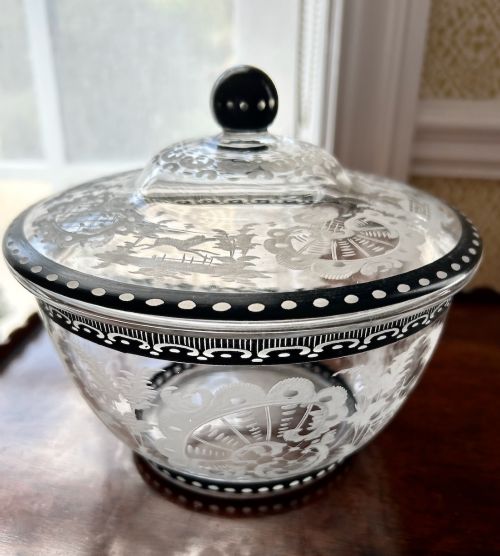
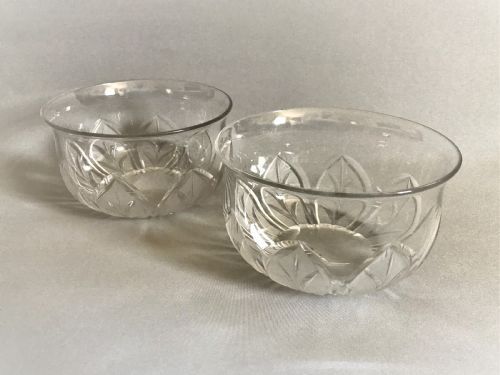
When you search for etched crystal bowls, you are looking at functional and decorative vessels shaped from lead crystal, clear glass, and frosted glass. The selection ranges from Victorian finger bowls and rinsers with Greek key motifs to larger pedestal bowls and covered vessels.
You are most likely to meet Victorian and mid-Victorian examples on this page, often featuring cut or frosted details alongside engraved decoration. Pieces span various forms, including tazza stands, champagne coupes, and decorative table centrepieces originating from English, French, and Bohemian makers.
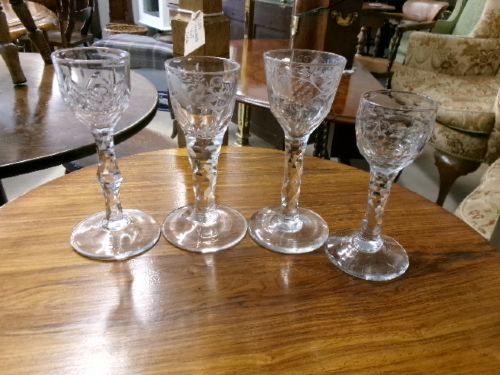
The styles shift across the decades from Georgian faceted designs and Grand Regency interpretations to Arts and Crafts and Art Deco suites. Alongside standard bowls, the evidence includes related glassware such as drinking glasses and multi-piece chandeliers utilising crystal elements.
How they were made
The foundation of these pieces relies on heavy lead crystal or clear glass, sometimes layered as red over crystal or combined with cobalt blue glass. Material choice dictates the ring and heft of the vessel before any surface work begins.
Makers shaped the glass through blowing and moulding, followed by extensive hand-cutting to create faceted surfaces and deep profiles. Surface decoration was then applied via wheel-engraving and etching, producing frosted or linear patterns such as fruiting vines and geometric friezes.
Etched Crystal Bowls Retail Price Guide 2026
Typical asking prices for etched crystal bowls among the pieces listed under this phrase on Sellingantiques today, from the lower quarter to the upper quarter. They describe what is for sale here now, not the wider market.
Object forms recorded in the evidence range from small finger bowls and rinsers to large tazza stands, epergnes, and chandeliers.
What varies in quality
Quality rests upon the clarity of the crystal and the crispness of the wheel-cut or etched lines. Finer examples display deep, sharp incisions and smooth polished facets that catch the light evenly without distortion.
The weight and balance of the piece dictate its standing, with superior vessels offering a substantial feel in the hand and careful proportion between the bowl and the foot base.
Baccarat Crystal
The Etched Crystal Bowls Glossary
- Finger bowl
- A small bowl used at the table for rinsing the fingers between courses. These often feature matching underplates or rinsers.
- Tazza stand
- A raised decorative vessel on a central foot, used for serving fruit or sweets. The form lifts the bowl above the table surface.
- Lead crystal
- Glass containing metallic oxide to increase refractive index, weight, and brilliance. It allows for deeper and sharper cutting than standard soda-lime glass.
- Epergne centrepiece
- A multi-tiered tabletop vessel holding a central bowl alongside smaller hanging baskets or arms. They are frequently assembled from crystal components and other materials.
- Champagne coupe
- A shallow, broad-bowled drinking glass designed for sparkling wine. The bowl is often engraved with floral or geometric friezes.
Etched Crystal Bowls: Frequently Asked Questions
What were etched crystal bowls used for?
These bowls served various dining and decorative purposes, ranging from rinsing fingers between courses to holding fruit and centrepiece displays. Smaller matched sets functioned as individual table rinsers.
Larger pedestal pieces and tazza stands acted as focal points for the table, showcasing sweets or desserts during formal meals.
How do I identify a Victorian bowl?
Victorian examples often display heavy lead crystal construction combined with characteristic motifs like Greek keys or fruiting vines. Look for hand-cut facets paired with frosted or wheel-etched details.
Forms from this period frequently include finger bowls, rinsers, and pedestal tazza stands dating from the mid to late nineteenth century.
Are these bowls suitable for daily use?
Many of these pieces were designed for functional dining use, possessing the sturdy lead crystal weight required for handling. Hand washing is essential to preserve the clarity of the glass and the integrity of the engraved surfaces.
Careful placement away from table edges ensures these antique vessels remain safe during regular entertaining or display.
How do Art Deco bowls differ from earlier styles?
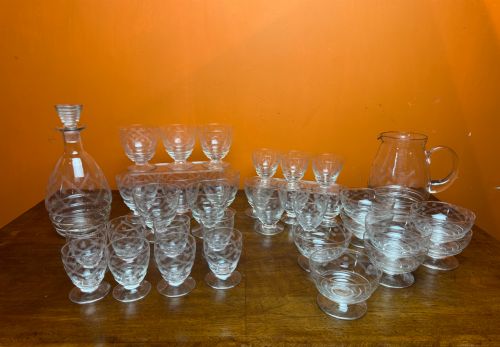
Art Deco pieces tend to feature streamlined geometric lines and larger suites of matching glassware rather than ornate Victorian floral motifs. The manufacturing reflects modernism through simplified silhouettes and precise, minimal engraving.
These later twentieth-century pieces often appear as comprehensive drinking glass suites and larger coordinated table settings.