

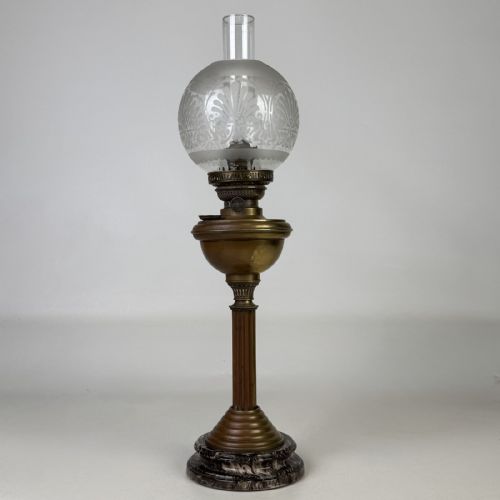
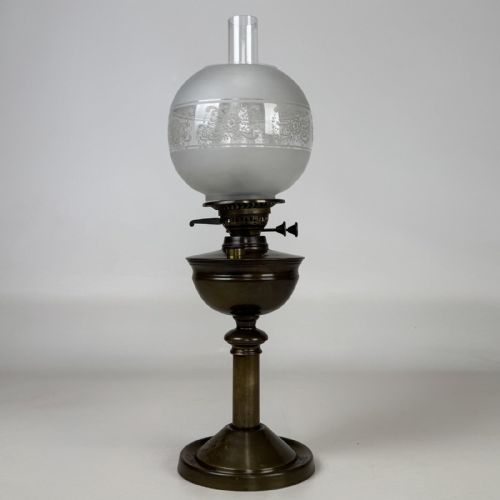
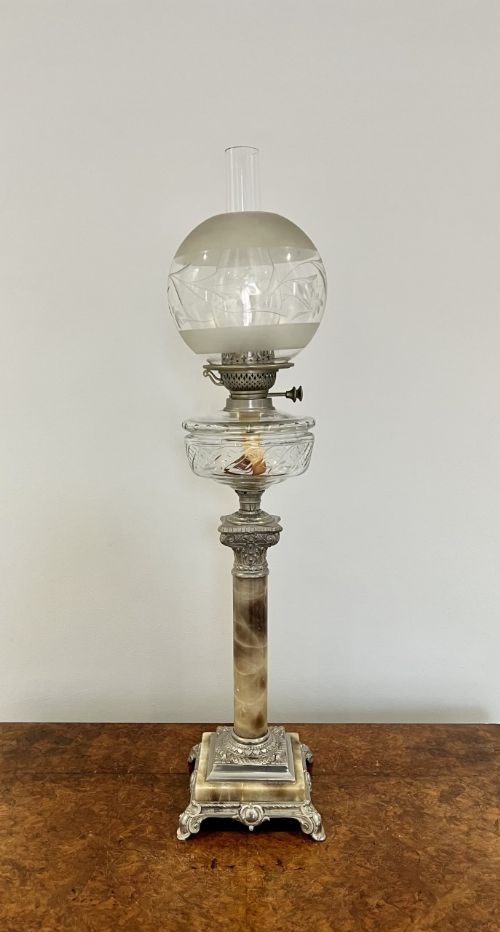


Etched Brass Globe
These etched brass globe lights and lamps bring warmth and character to a room, combining period metalwork with decorative glass.
Etched Brass Globe
An etched brass globe typically forms part of a nineteenth or early twentieth century lighting piece, often found mounted as a shade upon oil lamps and lanterns. You will most frequently encounter these items originating from Victorian and Edwardian periods, running through to the nineteen thirties.
The objects combine heavy brass structural elements with decorative glass vessels and shades. Forms range from simple table oil lamps to ceiling lighting and pairs of Chinese Canton vases adapted into lanterns.
How they were made
The construction relies heavily on brass foundations paired with various glass techniques, including frosted glass, cut glass, and cranberry glass. Some examples incorporate ceramic, porcelain, or onyx components into the body alongside the metalwork.
Makers utilised acid etching or wheel cutting on the glass globes and shades to create decorative patterns, which sat atop metal fonts and bases produced during the Victorian and Edwardian eras.
Etched Brass Globe Retail Price Guide 2026
Typical asking prices for etched brass globe among the pieces listed under this phrase on Sellingantiques today, from the lower quarter to the upper quarter. They describe what is for sale here now, not the wider market.
Even Chinese Canton porcelain vases occasionally found themselves pressed into service as nineteenth-century oil lantern lamps.
What varies in quality
The distinction between standard examples and finer pieces rests in the crispness of the brass casting and the depth of the glass etching. Superior items demonstrate heavier gauge metal and more intricate decorative work on both the globe and the base.
Maker attribution also elevates a piece, with recognised workshops providing greater distinction than unsigned production. The integration of complementary materials, such as onyx or specific coloured glass fonts, influences the overall character.
Hinks of Birmingham·Messengers·Harrods·Gaggenau
The Etched Brass Globe Glossary
- Brass
- A copper and zinc alloy forming the structural body of these lamps. It takes a polish readily and was widely used for Victorian and Edwardian metalwork.
- Font
- The reservoir holding the oil beneath the burner. These components frequently feature coloured glass, porcelain, or matching brass.
- Frosted glass
- Glass treated to produce a translucent, matte surface. This finish diffuses light softly through the globe.
- Cranberry glass
- A rich pinkish-red glass created by adding gold chloride to the molten batch. It appears often in nineteenth-century decorative vessels.
Etched Brass Globe: Frequently Asked Questions
What is an etched brass globe?
An etched brass globe is a decorative glass shade featuring acid-etched patterns, designed to sit atop a period oil lamp or lighting fixture.
These globes are typically paired with brass bases and fonts dating from the Victorian and Edwardian eras.
How do I identify a Victorian oil lamp?
Victorian oil lamps are identified through their characteristic brass construction, heavier proportions, and period manufacturing marks. They frequently incorporate glass fonts in colours like blue, pink, or cranberry.
Stylistic cues range from ornate nineteenth-century casting to later Art Nouveau curves.
Were these lamps converted to electricity?
Many surviving oil lamps have been converted from burning oil to run on electricity for modern domestic use. This conversion allows period brass and glass pieces to function as safe table or ceiling lighting.
Original burners and reservoirs are sometimes retained while the internal wiring is updated.
What materials are used in these lamps?
The primary materials are brass for the structural body and glass for the shades and fonts. Additional elements like onyx, porcelain, and ceramic frequently appear in the columns and bases.
Glass types vary from simple frosted surfaces to deep cranberry and cut crystal designs.