



Equine Portrait in Stable
An equine portrait in stable captures the prized animal within its quarters, bringing nineteenth-century sporting heritage straight into your room.
Equine Portrait in Stable
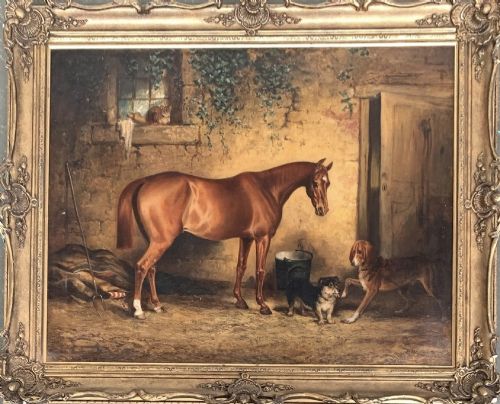
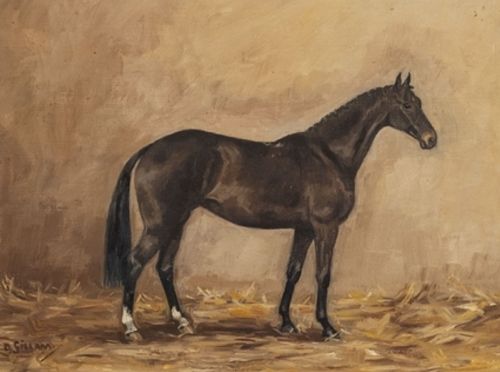
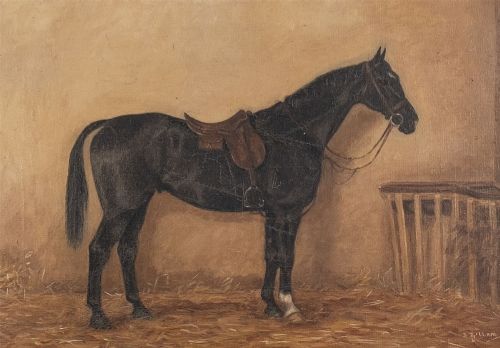
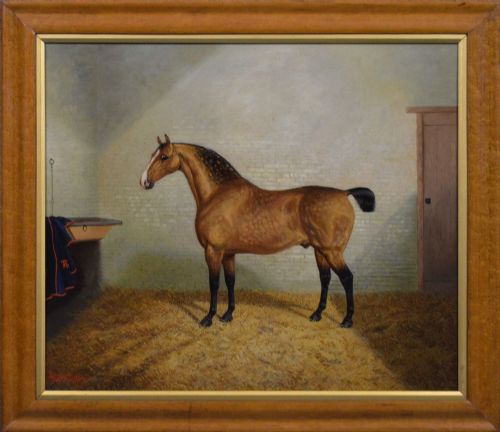
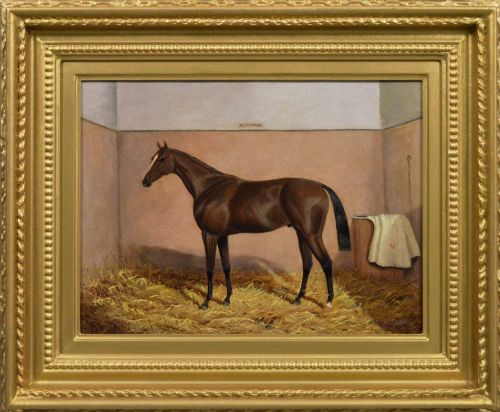
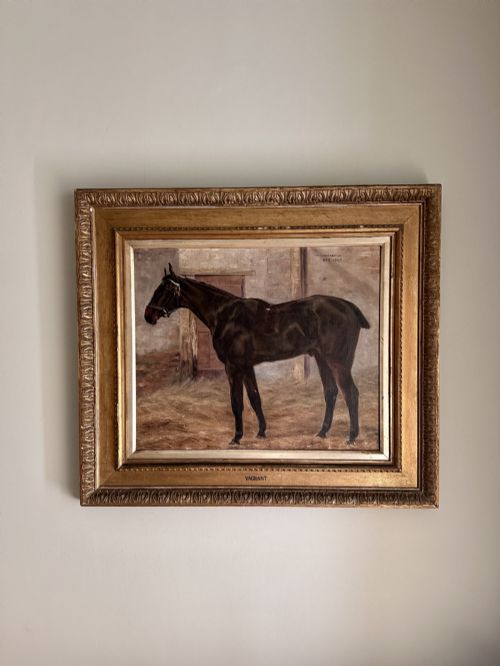
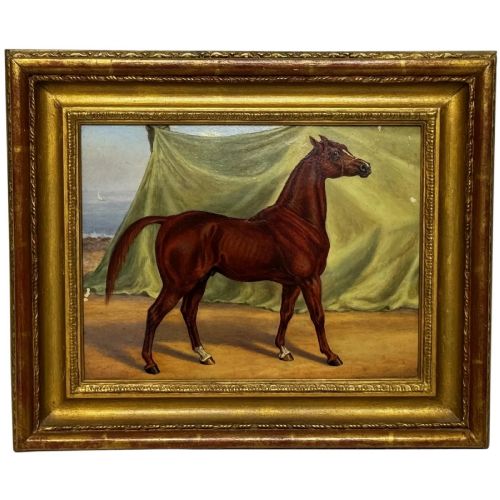
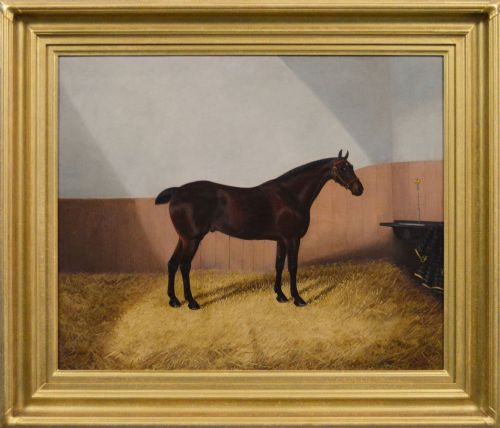
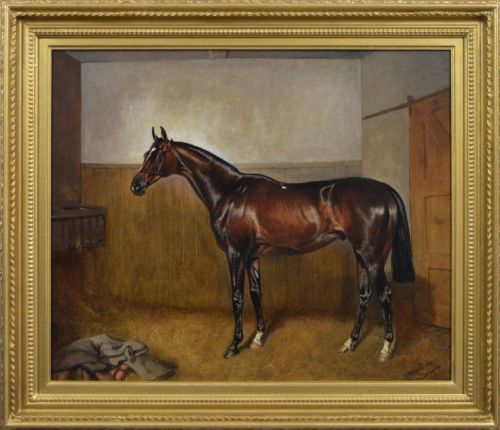
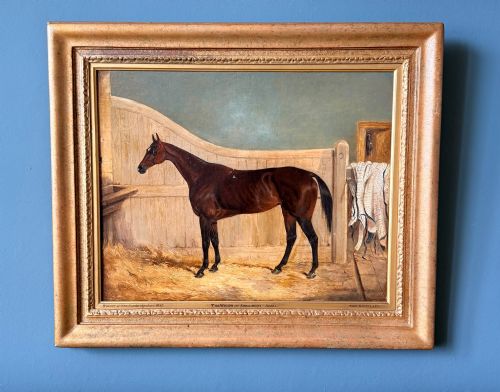
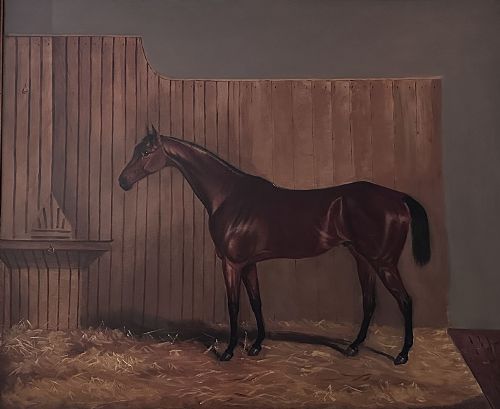
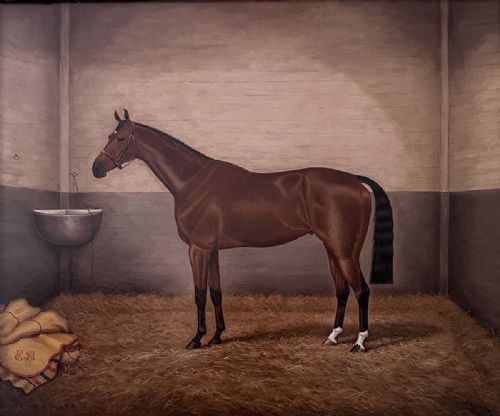
An equine portrait in stable focuses on horses housed within their stalls or yards, capturing individual animals rather than general hunting scenes. These works capture the muscular form and coat of hunters, racehorses, and purebreds, often recording specific champions and notable stable occupants by name.
Most examples found here date from the nineteenth century, spanning Victorian fine art and sporting traditions. You will encounter oil paintings on canvas alongside occasional watercolours and works on oak panel, reflecting the period's keen eye for animal conformation.
These portraits frequently place the animal within a structured interior, showing the timber partitions, straw bedding, and tack associated with nineteenth-century stable management. The composition places the horse as the central subject, often rendered with careful attention to bridlework and grooming.
Materials and methods behind the canvas
Artists relied primarily on oil paint applied to canvas stretched over wooden frames, though panel supports also appear in the record. The medium allowed painters to build up the rich sheen of a chestnut or bay coat through careful glazing and precise brushwork.
Frames form an integral part of these works, with period giltwood and gold leaf mouldings providing the traditional border for nineteenth-century sporting art. These frames complement the dark, warm interiors typical of stable scenes.
Several Victorian horses answer to grand names like General Peace and Flying Fox, immortalised in oil alongside their straw bedding.
Distinguishing quality in nineteenth-century horse portraits
Quality rests upon the artist's anatomical precision and the convincing rendering of the horse's musculature, stance, and expression. A strong hand captures the precise conformation of the animal, from the shoulder to the clean line of the pastern, rather than relying on generic animal forms.
The treatment of light marks the difference between standard studio work and superior painting. Master practitioners manage the deep shadows of the stable interior while directing illumination across the horse's coat to describe every muscle and highlight.
Henry Barraud·Albert Clark·Fred Fitzpatrick·John Alfred Wheeler·Thomas Walker Bretland·George E Sharpe·Benjamin Cam Norton·Alfred Moginie Bryant·Charles Bilger Spalding·John Nost Sartorius·William Shayer Snr·John Herring
The Equine Portrait in Stable Glossary
- Conformation
- The physical build and anatomical structure of the horse as depicted by the artist. Correct proportions were vital to Victorian patrons who knew bloodstock well.
- Giltwood
- Wood carved and coated with gold leaf or metallic paint to form the decorative picture frame. Period frames often share the age and style of the canvas they enclose.
- Sporting Art
- A genre of painting dedicated to horses, hounds, shooting, and field sports. This tradition flourished during the nineteenth century, recording famous winners and prized hunters.
- Bay
- A horse coat colour characterised by a reddish-brown body with black mane, tail, and lower legs. This tone appears frequently across the listed portraits.
Equine Portrait in Stable: Frequently Asked Questions
How do I identify a Victorian horse painting?
Victorian horse portraits usually carry specific stylistic markers from the nineteenth century, including deep, warm earth palettes and meticulous attention to equine anatomy. Many works bear signatures, dates, or inscription plaques on the frame identifying the horse and its owner.
The materials also offer clues, as these pieces typically use oil paint on canvas or oak panels housed in heavy giltwood frames characteristic of the period.
Where were these paintings originally displayed?
Nineteenth-century patrons hung these works in country houses, estate offices, and tack rooms to commemorate prized hunters, race winners, and valued bloodstock. They served as visual records of an estate's breeding success and sporting interests.
Today, they suit studies, libraries, and traditional living spaces where their dark, rich tones and historical subject matter complement period interiors.
Did artists paint horses from life?
Many nineteenth-century sporting artists worked directly from life, visiting stables to sketch prize animals for wealthy patrons and breeders. Painters often collaborated closely with owners to ensure correct markings and proportions.
Others worked within established traditions or produced multiple variations, sometimes drawing inspiration from earlier masters of equine portraiture while maintaining accurate detail.