



Equestrian Statue Decor
These equestrian statue decor pieces bring horse sculpture into a room, spanning bronze casts and leather models for collectors of animal figures.
Equestrian Statue Decor
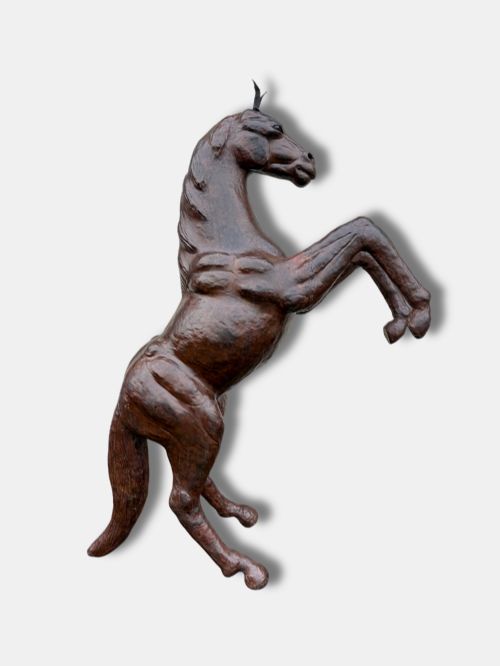
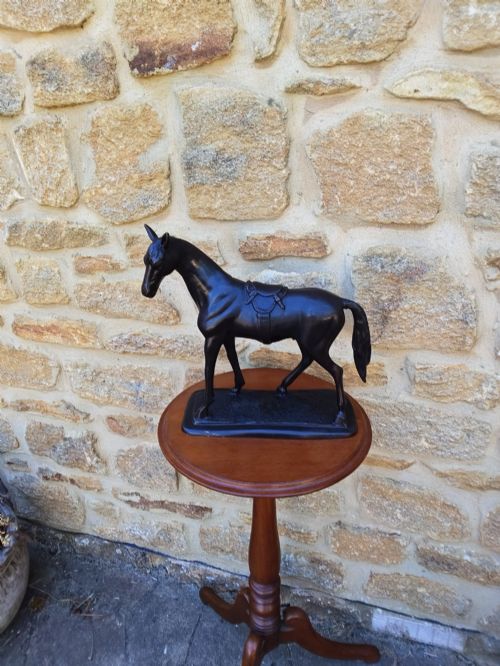
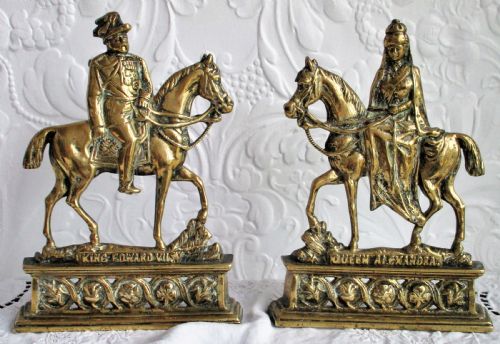
Equestrian statue decor encompasses sculptures, decorative figures, chimney ornaments, and hitching posts that depict horses and riders. Buyers exploring this category encounter nineteenth-century bronzes, cast iron horse heads, and leather models ranging from the Victorian era to mid-century modern designs.
The selections on this page draw from periods like the nineteenth century, eighteen-eighties, and nineteen-twenties, incorporating styles such as Animalier, Arts and Crafts, Neoclassical, and Western American. Forms extend from life-size leather models and gilt bronze groups on olive wood bases to architectural salvage and sculptural fragments.
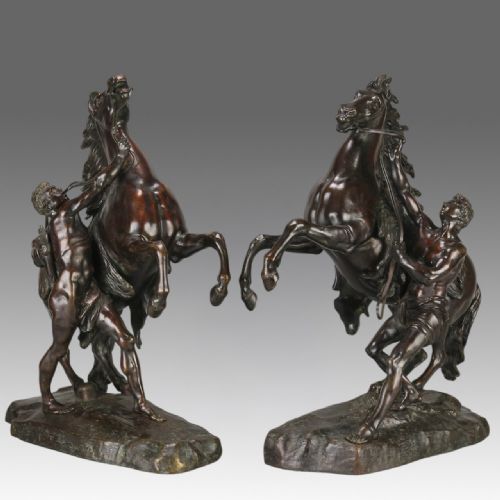
Makers and sculptors represented include traditional foundry work after Coustou and Remington, alongside pieces by Pierre Lenordez and Charles Crozatier. Whether looking for a pair of cast iron hitching posts or a patinated bronze cowboy figure, the variety reflects diverse historical interpretations of the horse.
Materials and construction methods
Foundries utilised bronze, brass, and cast iron poured into moulds to create heavy metallic sculptures and chimney ornaments with durable patinas. These metal pieces often capture fine anatomical details in the muscles and bridles of the animals.
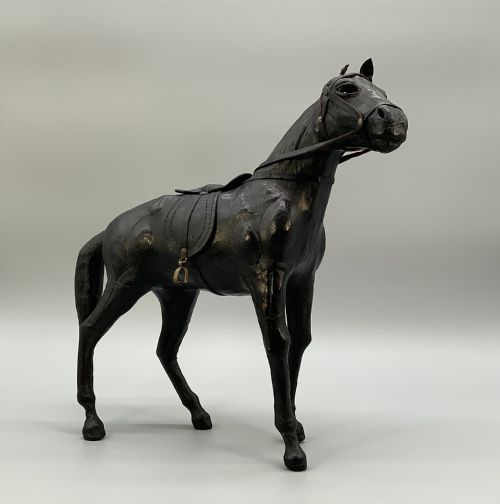
Woodcarvers and artisans shaped timber into figures, while leather-bound models utilised stitched hides fitted over internal structures to achieve substantial forms. Gilt bronze mounts were regularly secured to wooden bases such as olive wood.
Craftsmen applied paint finishes and patination techniques to metals and wood, creating surface textures that mimic natural hide or aged patinas across Victorian, Edwardian, and mid-century items.
Equestrian Statue Decor Retail Price Guide 2026
Typical asking prices for equestrian statue decor among the pieces listed under this phrase on Sellingantiques today, from the lower quarter to the upper quarter. They describe what is for sale here now, not the wider market.
Collectors can acquire a solitary bronze nostril, proving that even the smallest fragment of a horse statue finds an audience.
Evaluating quality and execution
The integrity of the materials dictates longevity, from the solid weight of a nineteenth-century bronze or cast iron hitching post to the tight stitching on leather models. Superior pieces maintain their original bases, such as olive wood mounts, and retain honest patination acquired over decades.
Pierre Lenordez·Charles Crozatier·Coustou·Remington
The Equestrian Statue Decor Glossary
- Animalier
- A nineteenth-century artistic movement focused on realistic depictions of animals, particularly horses and predators. Sculptors in this tradition worked extensively in bronze.
- Chimney ornament
- A decorative figurine or pair of figures designed to sit on a mantelpiece or shelf. These often depicted notable historical figures or animals.
- Hitching post
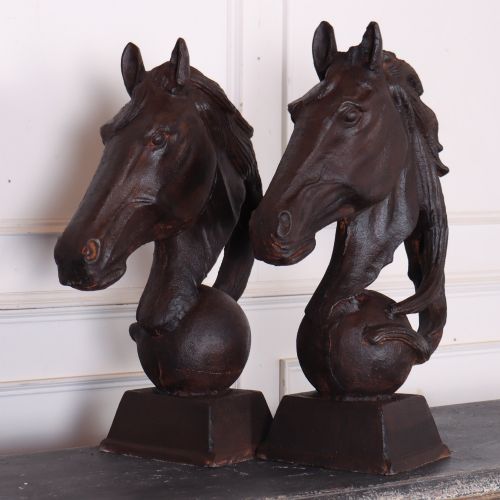
- A sturdy post, frequently cast in iron with a horse head terminal, historically used for tying up horses. Surviving examples now serve as architectural or garden ornaments.
- Gilt bronze
- Metalwork coated with a thin layer of gold or gold-coloured alloy to impart a rich sheen. It appears frequently on nineteenth-century decorative items.
- Patina
- The surface sheen and coloration developed by bronze, iron, wood, or leather through age and handling. A genuine patina indicates natural wear over time.
Equestrian Statue Decor: Frequently Asked Questions
What periods do these horse sculptures come from?
The pieces span the nineteenth and twentieth centuries, including Victorian, Edwardian, and Arts and Crafts eras. Makers produced both utilitarian items and purely decorative works during these decades.
Dates range from early nineteenth-century carved wood figures to mid-century leather-bound models and bronze casts.
How were cast iron horse heads used?
Cast iron horse head pieces frequently functioned as hitching posts outside properties or served as architectural salvage. Their robust metal construction allowed them to withstand outdoor placement.
Over time, many of these utilitarian fixtures transitioned into indoor decorative objects or garden ornaments.
What is an Animalier bronze?
Animalier refers to a nineteenth-century style dedicated to accurate and dynamic representations of animals. Sculptors captured horses in motion, such as steeple chases or bucking broncos.
These bronzes rely on careful foundry work to display realistic musculature and movement.
How should leather horse models be displayed?
Leather models require stable indoor environments away from direct sunlight and excessive moisture to preserve the stitched hide. Placing them on flat surfaces like desks or shelves protects their internal structure.
Regular dusting with a soft cloth helps maintain the condition of the leather surface.