





Equestrian Military Art
Equestrian military art brings together mounted troops, battle scenes and commanding officers in oil paintings, watercolours and mezzotints.
Equestrian Military Art
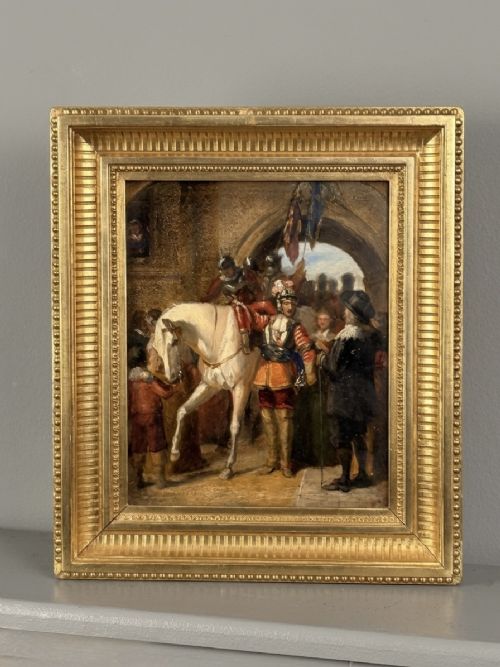
Equestrian military art encompasses oil paintings, watercolours, mezzotints, drawings and porcelain wall plaques depicting mounted soldiers, cavalry skirmishes and notable commanders. The material ranges from eighteenth-century oil on canvas works to nineteenth-century watercolours and twentieth-century prints.
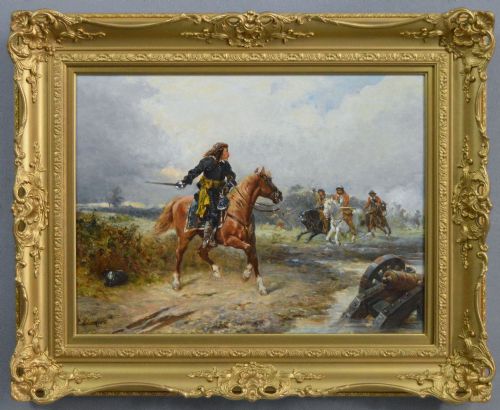
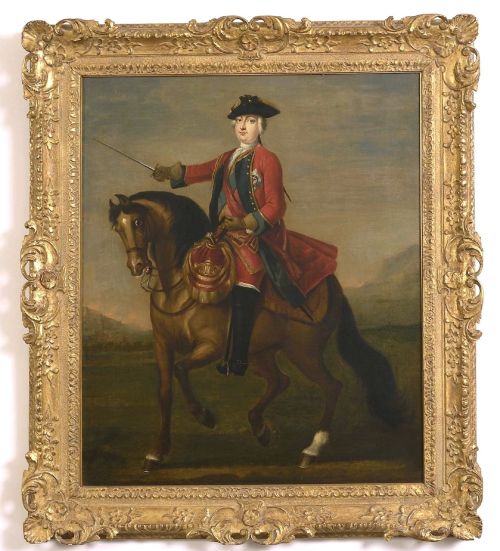
Buyers encounter eighteenth-century portraits of figures such as the Earl Ligonier alongside nineteenth-century depictions of cavalry charges and civil war engagements. Works span the seventeenth, eighteenth and nineteenth centuries, with notable twentieth-century pieces by artists like Snaffles.
Framed artwork and individual paintings dominate the selection, offering detailed portrayals of military history, regiments and specific campaigns. These items serve as historical records of military dress, tactics and portraiture.
How they were made
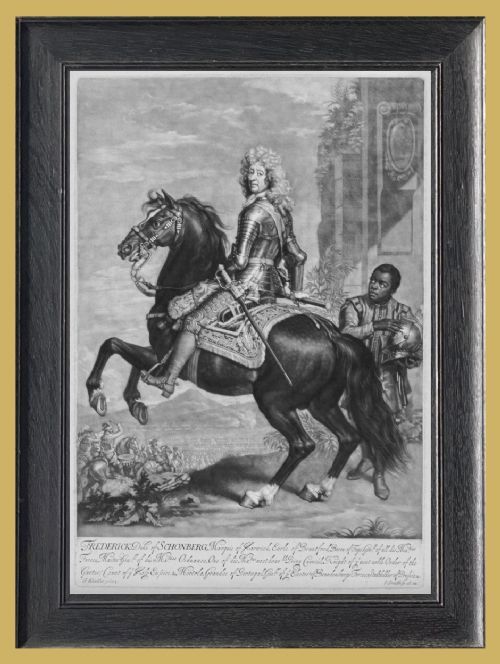
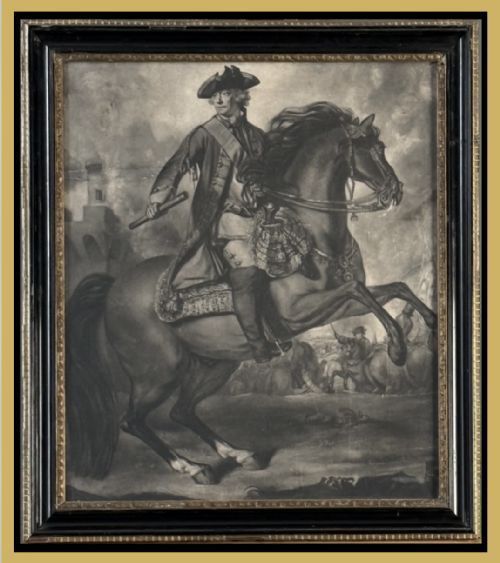
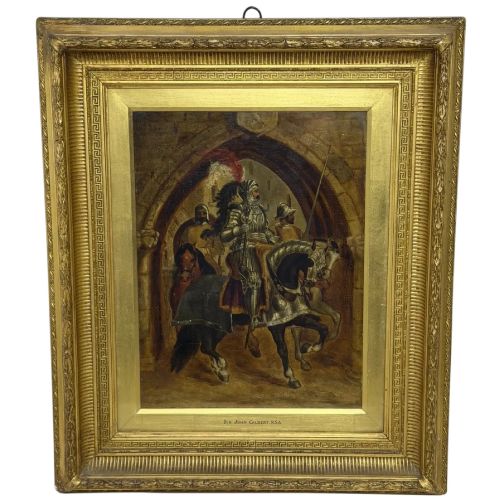
Artists worked primarily in oil on canvas, watercolour and ink on paper, occasionally utilising mezzotint engraving techniques. Canvases are often housed in giltwood frames that complement the traditional subjects.
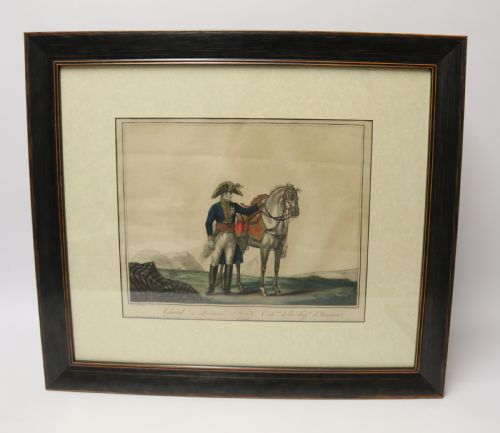
Watercolours and drawings on paper capture fine details of uniforms and horse anatomy, while oil paintings employ layered pigments to build depth in battle scenes and portraits. Some works incorporate hand-colouring on printed bases.
Equestrian Military Art Retail Price Guide 2026
Typical asking prices for equestrian military art among the pieces listed under this phrase on Sellingantiques today, from the lower quarter to the upper quarter. They describe what is for sale here now, not the wider market.
The selection includes porcelain wall plaques and pen and ink drawings alongside traditional oil paintings.
What varies in quality
The sophistication of horse anatomy, rider posture and facial expression distinguishes superior works from simpler portrayals. Compositional balance in complex cavalry skirmishes dictates the visual impact of the piece.
The condition of the canvas, paper or porcelain support, along with the preservation of original pigments and giltwood frames, influences the overall integrity of the artwork.
Robert Alexander Hillingford·Edward Fisher·John Smith·John Wootton·Thomas Hudson·Edith Alice Simkins·Jean Sobieski·Gilbert Scott Wright·Thomas Mackay·Snaffles·Albert Ferdinand Le Dru·George Cattermole·Philips Wouwerman·William Edward Millner·Harry Ashby
The Equestrian Military Art Glossary
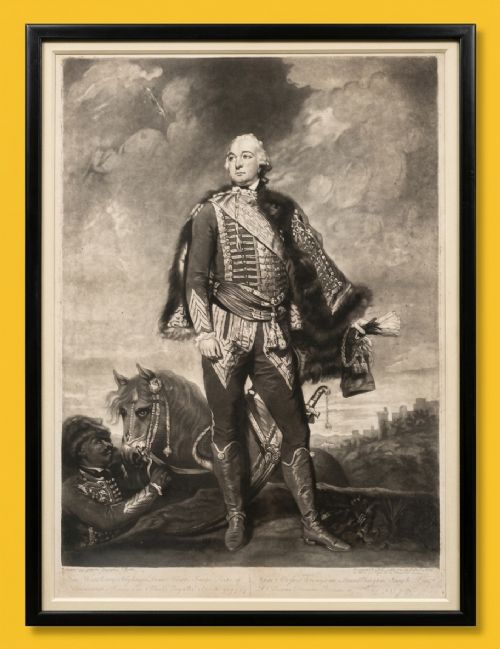
- Mezzotint
- A printmaking process of the intaglio family where the plate is roughened to achieve tonal variation. It allows for rich dark shades and subtle gradations of light.
- Giltwood
- Wood that has been covered with a thin layer of gold leaf or gold paint. This finish is commonly found on traditional frames surrounding historical oil paintings.
- Cavalry
- Troops mounted on horseback trained for combat. In these artworks, they appear in skirmishes, processions and formal portraits.
- Watercolour
- A painting method in which the paints are made of pigments suspended in a water-based solution. Paper serves as the primary support for these fluid compositions.
Equestrian Military Art: Frequently Asked Questions
What subjects appear in equestrian military art?
These works depict mounted soldiers, commanding officers, cavalry skirmishes and historic battle scenes. Subjects range from seventeenth-century commanders to twentieth-century garrison life.
Portraits of individual officers on chargers sit alongside multi-figure battle compositions and intimate watercolour sketches.
How do I hang these artworks?
Framed oil paintings and watercolours require stable wall space away from direct sunlight and damp conditions. Heavy giltwood frames need secure fixings suited to the wall type.
Pairing pieces by period or framing style creates a cohesive display in a study or hallway.
How are different periods identified?
Seventeenth and eighteenth-century pieces often feature formal portraiture and darker palettes associated with old master traditions. Nineteenth-century works typically show greater narrative action in battles and genre scenes.
Twentieth-century pieces introduce printed mediums and lighter watercolour techniques while maintaining military themes.
What materials were used?
Artisans worked with oil on canvas, watercolour on paper, pen and ink drawings, and porcelain wall plaques. Frames are frequently constructed from wood with giltwood finishes.
Mezzotint prints provide an alternative medium for reproducing detailed portraits of military leaders.