



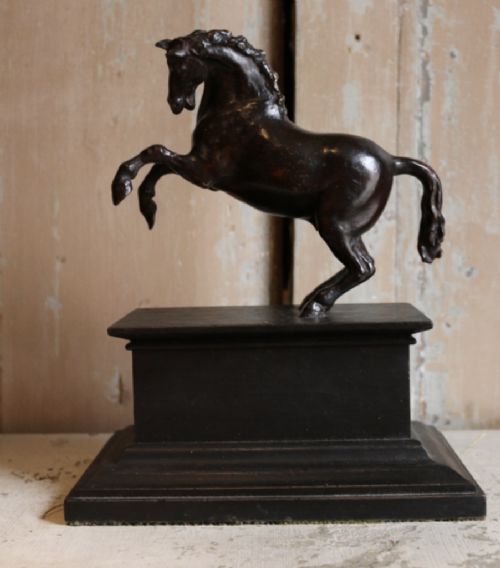


Equestrian Art Sculpture
An equestrian art sculpture captures the strength and movement of the horse through bronze, wood, and leather across multiple centuries.
Equestrian Art Sculpture
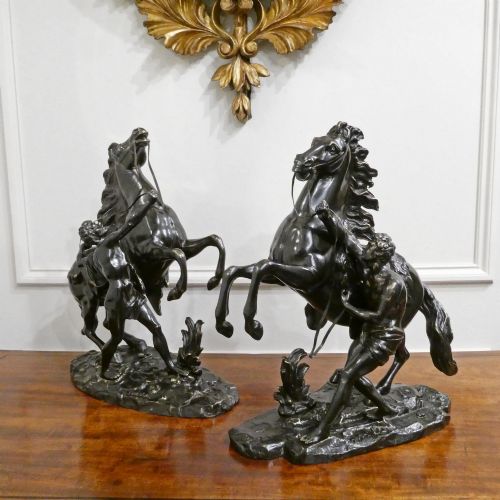
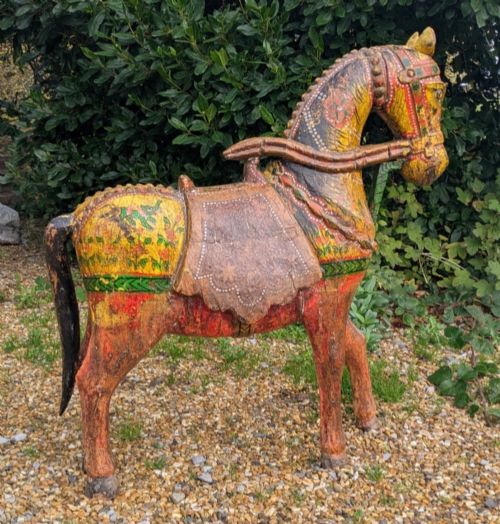
These works comprise three-dimensional figures and wall plaques depicting horses and riders, ranging from full statuary to folk art. When you search for an equestrian art sculpture, you encounter diverse forms including bronze casts, carved wooden rocking horses, and leather models. The selection spans centuries of craftsmanship, from early carvings to twentieth-century bronze castings.
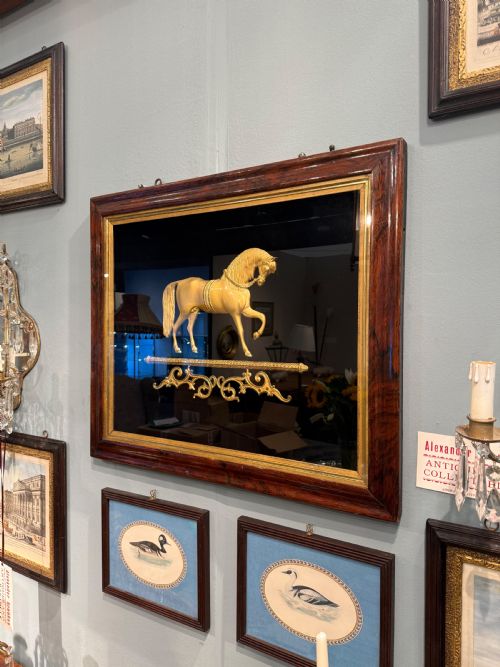
Bronze figures dominate the offerings, often cast in the French or European realist tradition, alongside folk art wooden interpretations. You will find pieces varying from life-size proportions down to cabinet-sized bronzes mounted in wooden frames. The material execution shifts between cast metal, carved timber, and constructed leather over armature.
Materials and construction methods
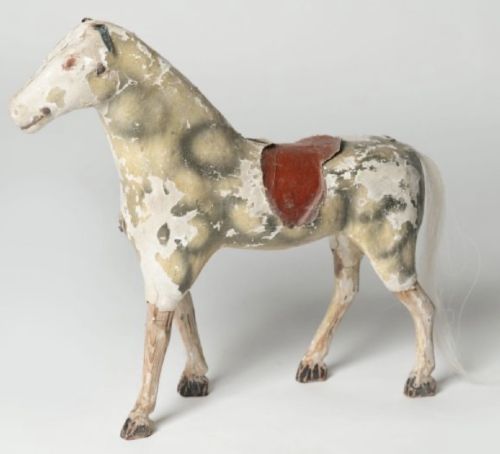
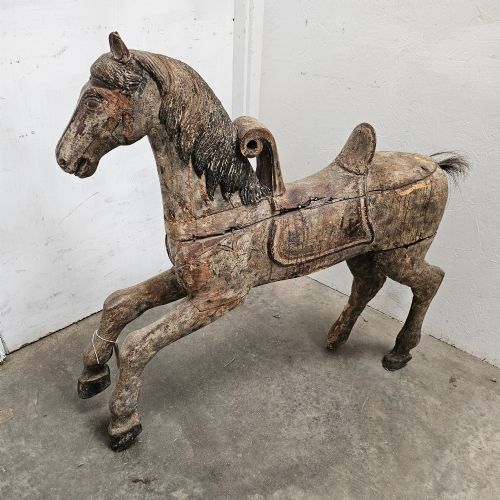
Makers utilised traditional casting techniques for bronze pieces, capturing fine musculature and surface texture through lost-wax methods before applying patination. Wooden examples rely on hand-carved timber, occasionally retaining original paint finishes or mounted with genuine horsehair details. Leather models employ stretched hides over structural cores, demonstrating distinct taxidermy and saddlery skills.
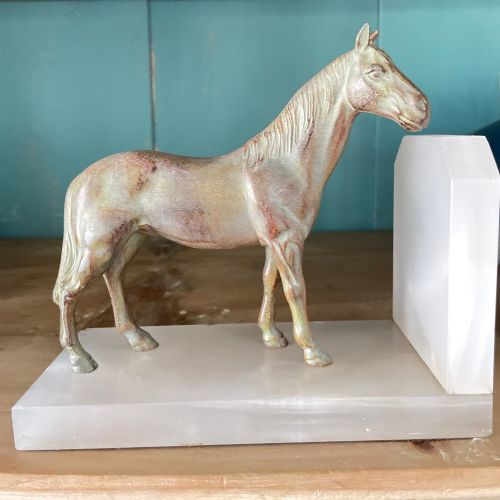
Mixed media applications appear in pieces incorporating marble dust reliefs, sheet metal fabrication, and gilded wooden frames. Surface treatments range from polished patinas on metal to naive painted finishes on nineteenth-century folk art subjects.
Equestrian Art Sculpture Retail Price Guide 2026
Typical asking prices for equestrian art sculpture among the pieces listed under this phrase on Sellingantiques today, from the lower quarter to the upper quarter. They describe what is for sale here now, not the wider market.
Listings feature bronze, carved wood, leather, marble dust, and sheet metal across pieces dating from the seventeenth century to the modern era.
Assessing quality and execution
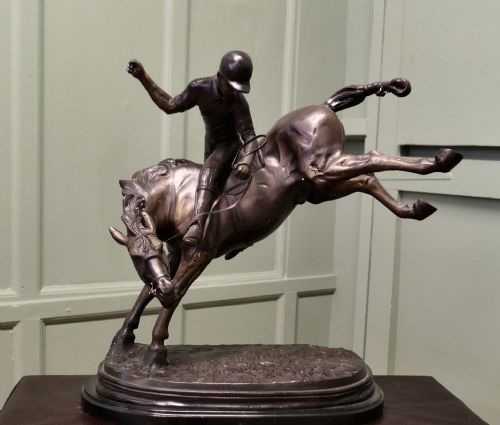
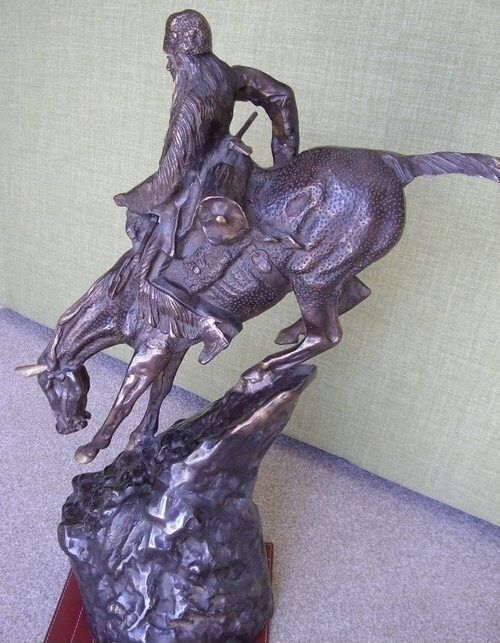
The distinction between tiers rests upon anatomical accuracy, sculptural fluidity, and the fidelity of the casting or carving. Superior examples demonstrate a careful observation of equine movement, whether in a rearing posture, a trotting cob, or a bucking broncho. Inferior pieces often exhibit stiff transitions and heavy-handed surface finishing that obscure the underlying form.
Provenance and signature markings elevate certain bronze and wooden works, particularly those linked to known sculptors or specific regional folk traditions. The preservation of original surface elements, such as early paint layers on wooden horses or untouched bronze patination, significantly impacts the standing of a piece.
Frederic Remington·Luigi Secchi·Philip Blacker·Xavier Raphanel
The Equestrian Art Sculpture Glossary
- Patina
- The surface coloration and sheen developed naturally over time or applied chemically by the maker to bronze and wood. This treatment enhances the depth of the sculptural details.
- Lost-wax
- A casting method where a wax model is rendered into a metal sculpture. This technique allows for intricate detail in bronze figures.
- Folk art
- Objects created by self-taught or traditional makers outside academic traditions. These pieces often display naive charm and regional character.
- Relief
- Sculptural elements bonded to or carved from a flat background panel rather than standing fully in the round. Wall plaques frequently utilise this method.
- Armature
- The internal supporting framework used in leather and large sculptural models to maintain structural integrity. It provides the hidden skeleton for pliable exterior materials.
Equestrian Art Sculpture: Frequently Asked Questions
What is an equestrian art sculpture?
An equestrian art sculpture is a three-dimensional representation or wall relief of a horse, often accompanied by a rider such as a polo player, cowboy, or Hellenistic figure.
These pieces are rendered in materials like bronze, carved wood, leather, and sheet metal, reflecting artistic styles from the seventeenth century onward.
How do I date a wooden horse?
Dating a wooden horse involves examining the tool marks, construction joints, and the state of any original paint or surface finishes. Nineteenth-century examples often display hand-carved details and naive proportions distinct from later machine-finished items.
The presence of original horsehair, tack, or specific folk art traits further helps place the object within a particular period.
Where should I display bronze horses?
Bronze horse sculptures suit stable display surfaces such as wooden sideboards, desks, or specialised gallery shelves where their weight and material can be appreciated.
Wall-mounted plaques and framed bronze reliefs require secure fixings into solid walls to support the combined weight of the metal and wood components.
How do I care for leather models?
Leather models require stable indoor humidity levels away from direct sunlight to prevent the hide from drying out or cracking over its internal structure.
Dusting should be performed gently with a dry, soft brush to protect the surface without introducing moisture that could damage the material.