


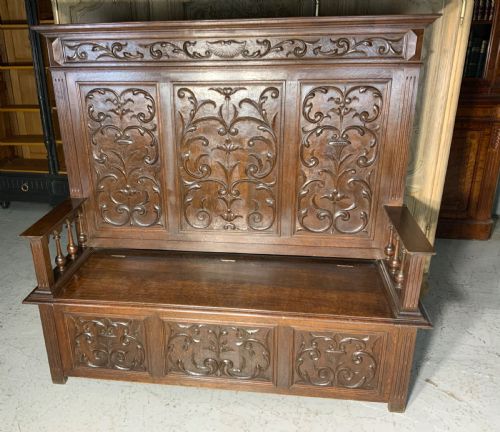

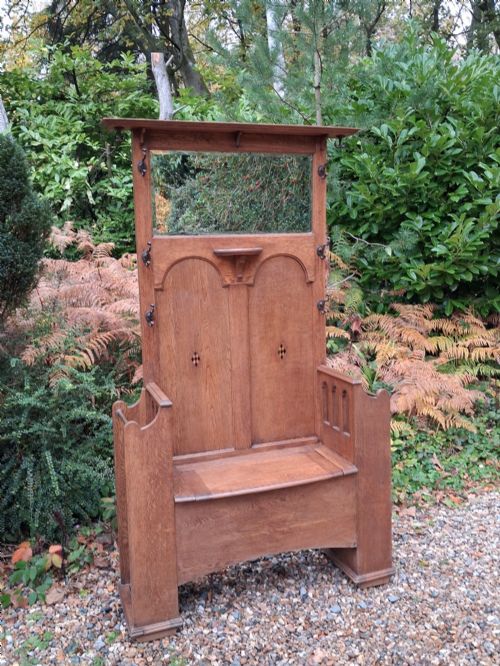
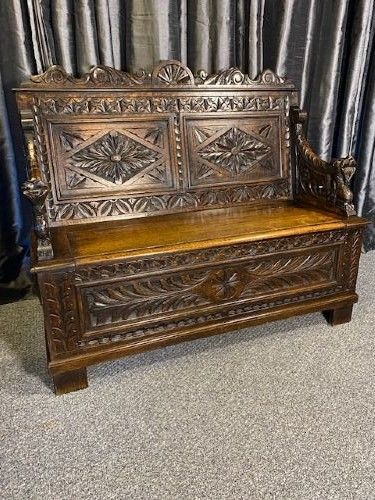
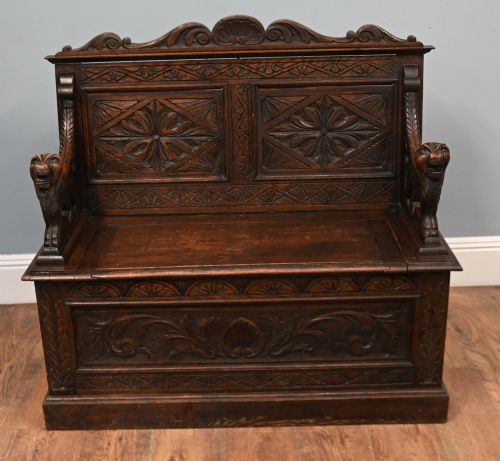
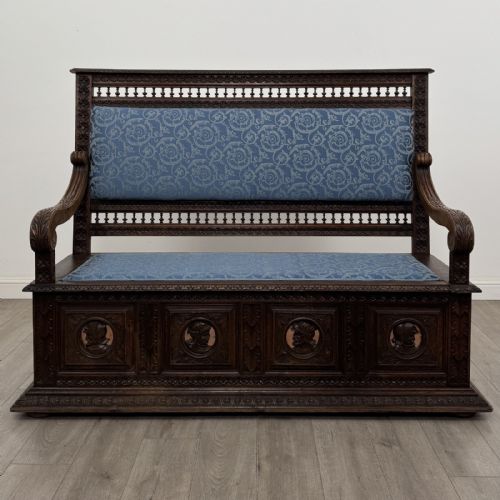
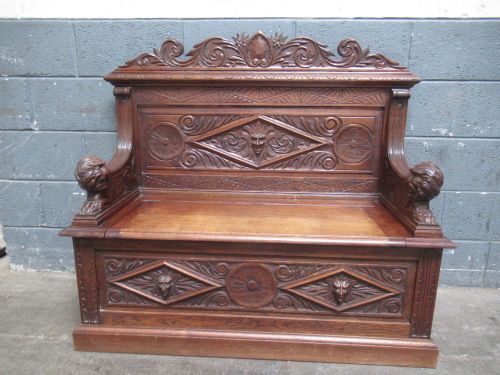
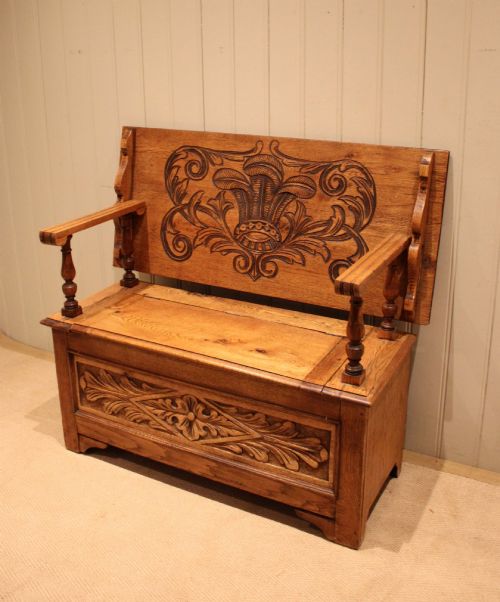
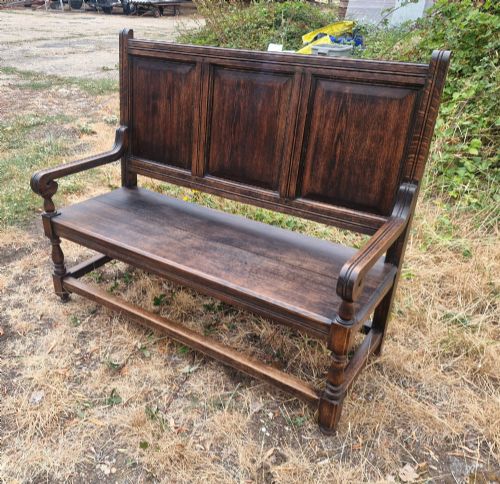
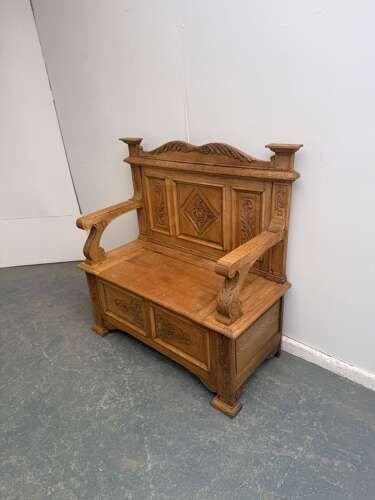
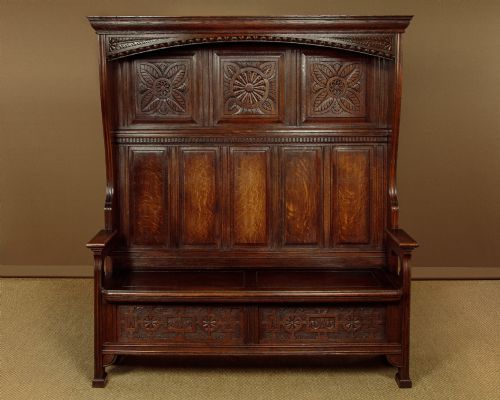
Entryway Oak Monks Bench
An entryway oak monks bench gives a hall practical seating and storage, built in solid timber to last.
Entryway Oak Monks Bench
When you search for an entryway oak monks bench, you find sturdy seating designed for hallways, passages, and cloakrooms. The pieces listed here span the seventeenth century through to the twentieth century, encompassing styles from Jacobean revival to Arts and Crafts and Gothic revival.
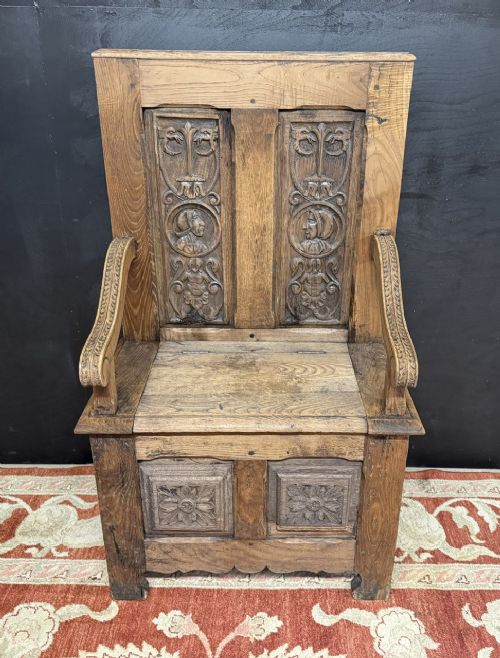
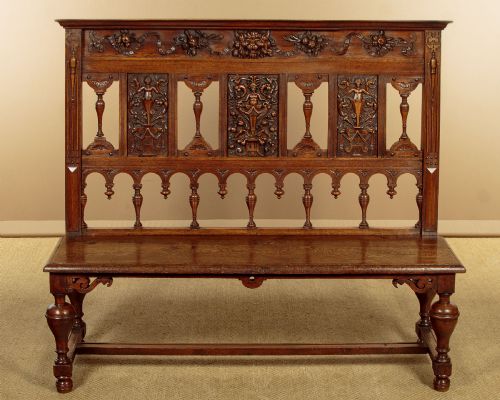
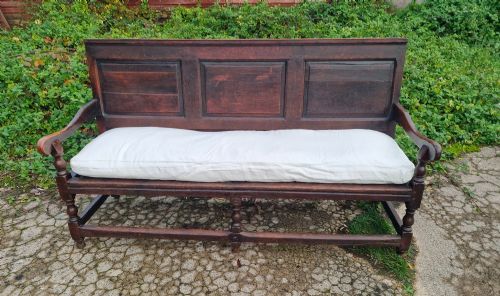
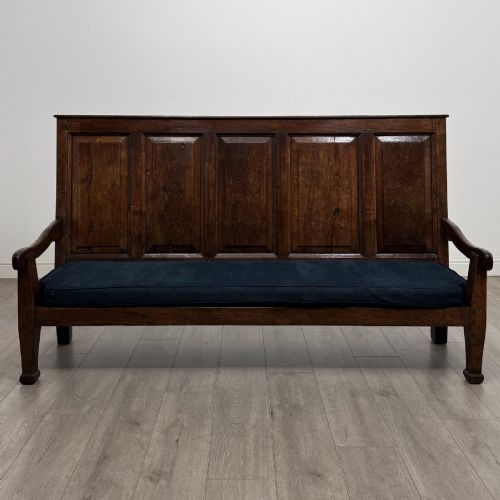
Most examples function as box settles, hall seats, or coffer benches, offering a lift-up lid or storage beneath the seat. You encounter variants with panelled backs, carved details, and canopy tops alongside simpler straight-back forms.
The selection ranges from early eighteenth-century country pieces to late Victorian and Edwardian interpretations. These items served households by keeping entranceways orderly while providing a place to sit.
What varies in quality
The depth and execution of the carving separate standard examples from finer works, particularly where motifs like the Green Man or elaborate relief panels appear. Proportion, timber selection, and the integrity of the original joints dictate the standing of each piece.
The presence of early hardware, integrated storage boxes, and canopy tops adds complexity to the construction. Condition and originality of the oak surface also influence the character of the hall seat.
Entryway Oak Monks Bench Retail Price Guide 2026
Typical asking prices for entryway oak monks bench among the pieces listed under this phrase on Sellingantiques today, from the lower quarter to the upper quarter. They describe what is for sale here now, not the wider market.
Listings for this phrase include pieces spanning the 17th, 18th, 19th, and 20th centuries, alongside Edwardian and Victorian eras.
Liberty
The Entryway Oak Monks Bench Glossary
- Settle
- A wooden bench with a high back, solid arms, and often a box base for storage. It provides draught protection in hallways and living spaces.
- Box settle
- A form of seating featuring a hinged seat lifting to reveal a storage compartment beneath. This design maximises utility in entranceways.
- Jacobean Revival
- A nineteenth-century style imitating seventeenth-century British furniture design, typically characterised by heavy proportions and geometric or floral carving.
- Coffer
- A chest or box used for storage, sometimes incorporated into the base of a hall seat. It forms a secure compartment for household goods.
- Green Man
- A sculptural architectural ornament depicting a face made of or surrounded by leaves and vines. It appears frequently on carved Victorian and revival woodwork.
Entryway Oak Monks Bench: Frequently Asked Questions
How do I use an entryway oak monks bench today?
These pieces fit naturally into hallways and boot rooms as a place to sit while putting on shoes. The lift-up seat provides hidden storage for hats, scarves, and daily clutter.
Their substantial presence also works well in large kitchens or living areas as a characterful seating option.
What is the difference between a settle and a hall bench?
Settles typically feature high backs and solid sides designed to block draughts in older homes. Hall benches often have more open structures or integrated storage boxes tailored for entranceways.
Both terms overlap frequently in historical listings depending on the era and regional workshop traditions.
How can I tell the period of an oak monks bench?
Period indicators include construction methods, tool marks, and stylistic details such as Jacobean revival panels or Arts and Crafts simplicity. Eighteenth-century pieces often show simpler country construction compared to heavily carved Victorian examples.
Hardware styles and timber patination also help distinguish seventeenth and eighteenth-century origins from later nineteenth and twentieth-century revivals.
Are these benches made of solid wood?
The listings consist primarily of solid oak, alongside variations that incorporate pine for internal components or secondary boards. Wrought iron and brass fixtures appear on hinges and operational parts.
Construction relies on traditional timber framing rather than modern veneers.