


Entryway Console Table Marble
An entryway console table marble brings weight and polish to a hallway, offering a sturdy stone surface designed to stand flat against a wall.
Entryway Console Table Marble
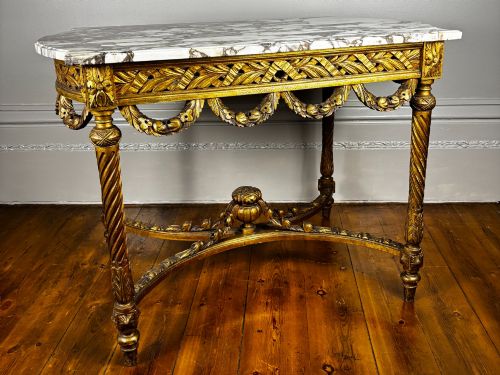
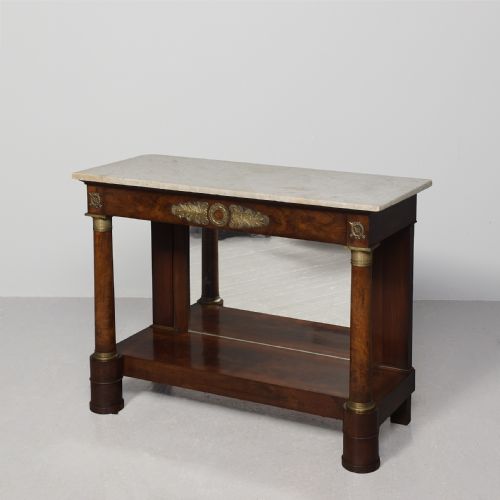
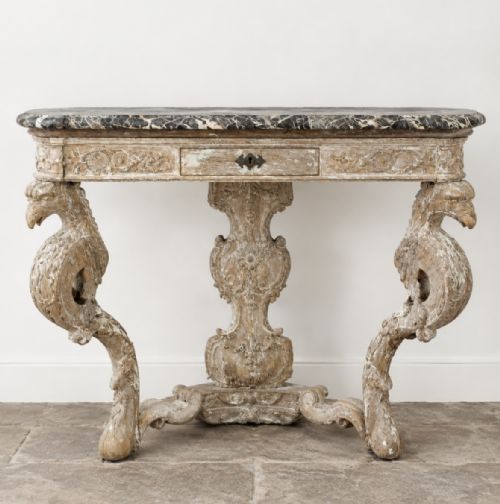
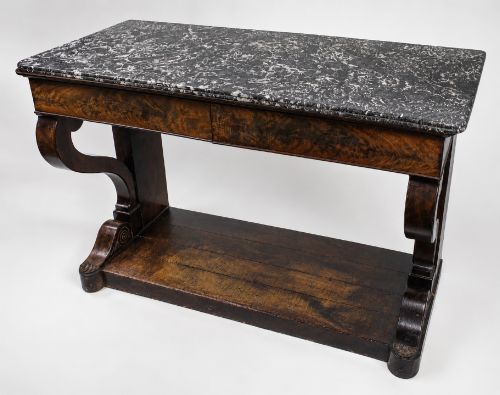
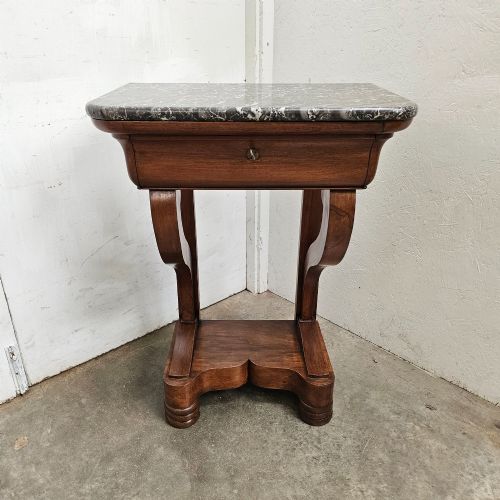
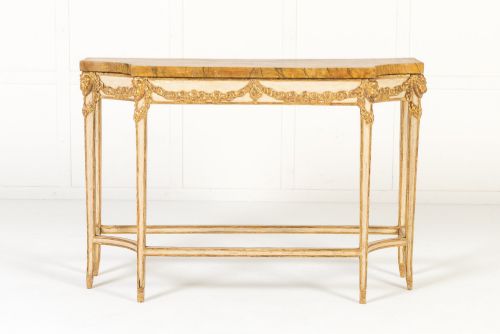
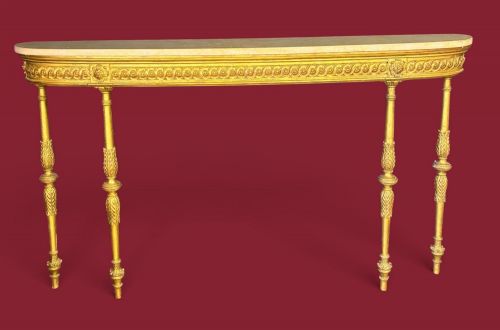
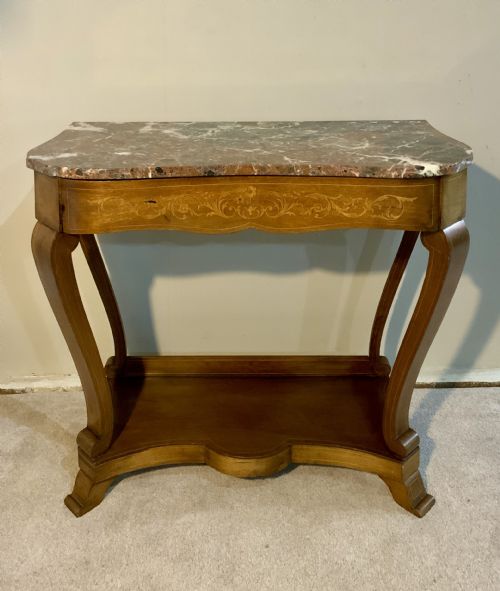
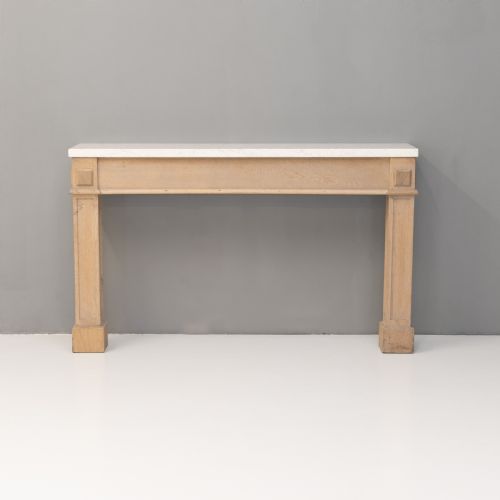
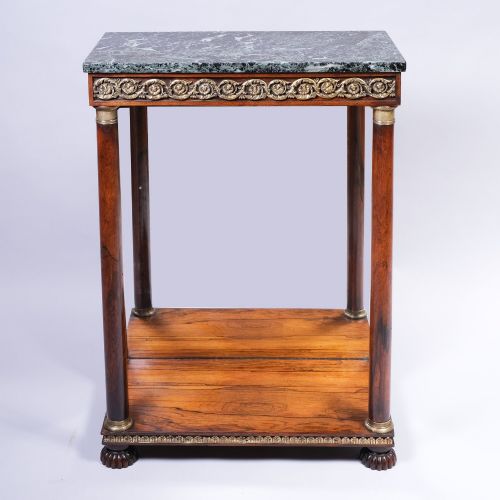
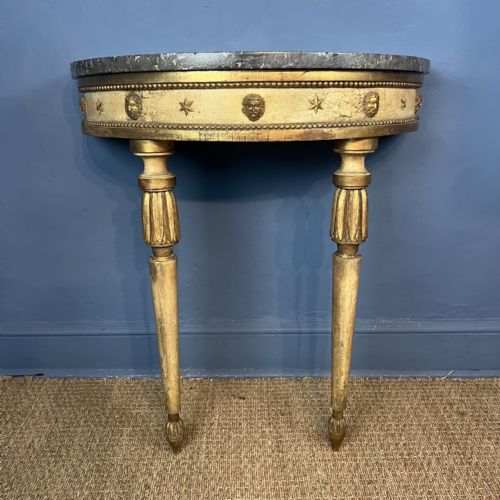
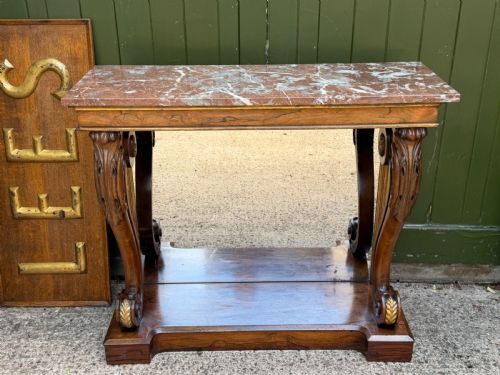
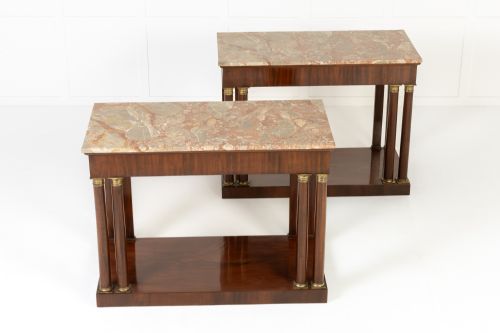
When searching for an entryway console table marble, buyers encounter narrow wall-standing tables topped with polished stone, historically placed in halls, drawing rooms and reception spaces. The forms span the eighteenth, nineteenth and early twentieth centuries, drawing heavily on French Empire, Regency, Italian Neoclassical and Victorian design idioms.
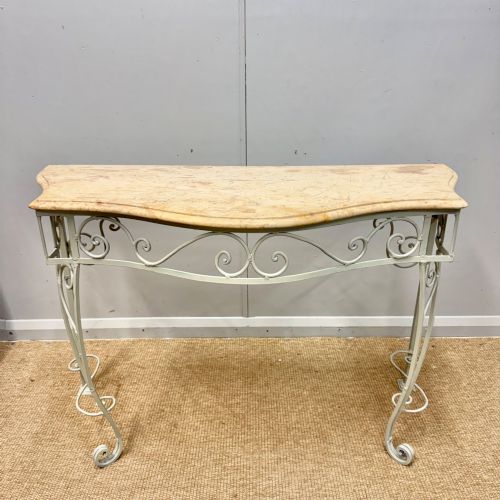
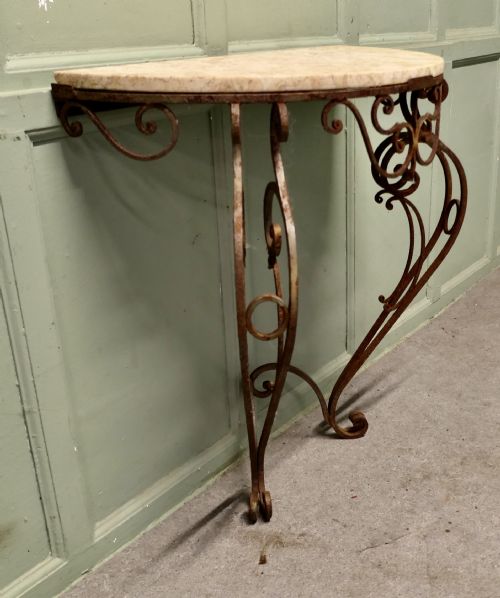
Most pieces met on this page combine timber frames in mahogany, walnut, rosewood or giltwood with fitted marble surfaces, occasionally accompanied by matching mirrors. Formats range from straight-fronted tables to serpentine outlines, demi-lune half-moon shapes and occasional wrought iron frames.
Origins lean heavily toward French and Italian workshops, alongside English examples, reflecting centuries of continental influence on domestic interiors. These tables served both decorative and practical purposes, providing a designated surface upon entering a home.
Materials and Construction
Frames rely on dense cabinet timbers such as mahogany, walnut and rosewood, frequently enriched with parcel gilt, gesso, or paintwork, alongside structural elements in wrought iron. Timber sections are carved, turned or veneered to support heavy stone loads without sagging.
Slabs of marble, fossil marble and breccia marble are cut, shaped and polished to fit precisely onto the wooden chassis, acting as both working surfaces and decorative centrepieces. Gilding and brass mounts are applied to accent the structural lines of the wood beneath.
Entryway Console Table Marble Retail Price Guide 2026
Typical asking prices for entryway console table marble among the pieces listed under this phrase on Sellingantiques today, from the lower quarter to the upper quarter. They describe what is for sale here now, not the wider market.
Lion's paw supports on Italian revival tables ensure your hallway post rests securely between mythological claws.
Distinctions in Quality
Quality rests upon the crispness of the carving, the selection of the timber grain, and the thickness and figure of the marble top. Superior examples display deeply chiselled giltwood or finely figured veneers that integrate harmoniously with the stone.
Construction methods also dictate standard; tight joinery in the frame and an exact, flush fit between the stone and the timber chassis separate workshop masterpieces from simpler utility pieces.
The Entryway Console Table Marble Glossary
- Console Table
- A table designed to stand against a wall, traditionally fixed with brackets or resting on front legs. It provides a shallow surface for display in narrow spaces like halls.
- Demi-Lune
- A half-moon shape used for tabletops and frames. This curved silhouette allows tables to sit compactly against hallway walls.
- Parcel Gilt
- Partially gilded woodwork where gold leaf highlights specific carved details against a painted or polished timber background. It creates contrast on Neoclassical and Rococo frames.
- Breccia Marble
- A multicoloured stone composed of broken fragments cemented together in a natural matrix. It appears frequently on grand Italian revival tables.
- Serpentine Outline
- A curved edge that undulates with a convex centre flanked by concave sides. This flowing line adds movement to nineteenth-century case pieces.
Entryway Console Table Marble: Frequently Asked Questions
Where should I place a marble console table?
These tables suit narrow entrance halls, corridors or reception rooms where floor space is limited. Their shallow depth allows them to sit flush against walls without obstructing passageways.
The stone top handles keys, correspondence and decorative objects, making the surface practical for daily comings and goings while establishing a formal tone near the front door.
How do I care for the marble top?
Wipe the stone surface regularly with a soft, damp cloth and dry it completely. Avoid using acidic cleaners, vinegar or abrasive pads that can etch or dull the polished finish.
Using coasters or protective mats beneath liquids prevents staining, as marble remains a porous material that absorbs spills if left unattended.
How do I identify a Regency console table?
Regency pieces date from the early nineteenth century and often feature dark exotic timbers like rosewood or mahogany. Look for classical restraint, brass mounts and sometimes inset mirror-backs that reflect light.
Carved details draw on Greek, Roman and Egyptian motifs, reflecting the archaeological interests of the period.
Are these tables heavy to move?
The combination of dense cabinet timbers and solid stone slabs makes these pieces substantial and weighty. The marble top is typically heavy, though many historic examples feature loose slabs resting unattached on the wooden frame.
Lifting requires two people, and removing the stone top first makes shifting the wooden base safer during transit.