



Engraved Silver Call
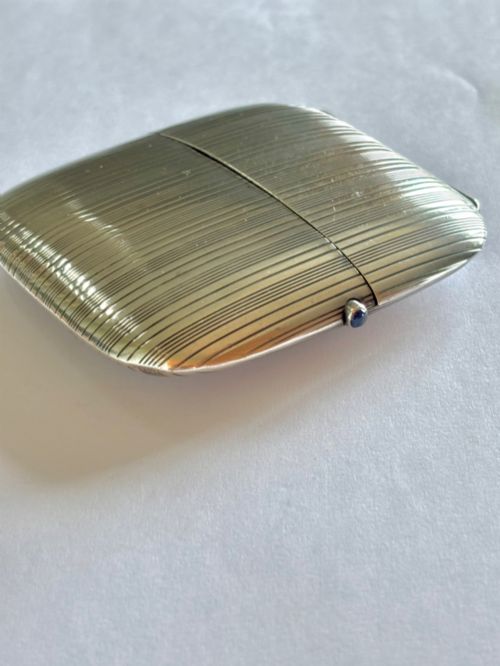
These engraved silver call pieces are finely wrought card cases and trays created for polite Victorian and Edwardian social exchange.
Engraved Silver Call
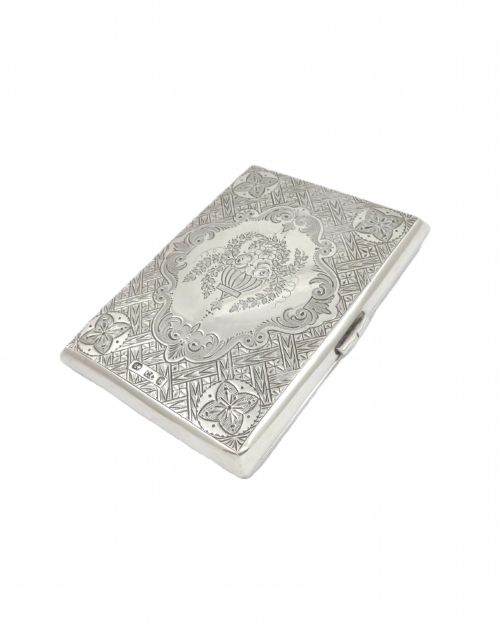
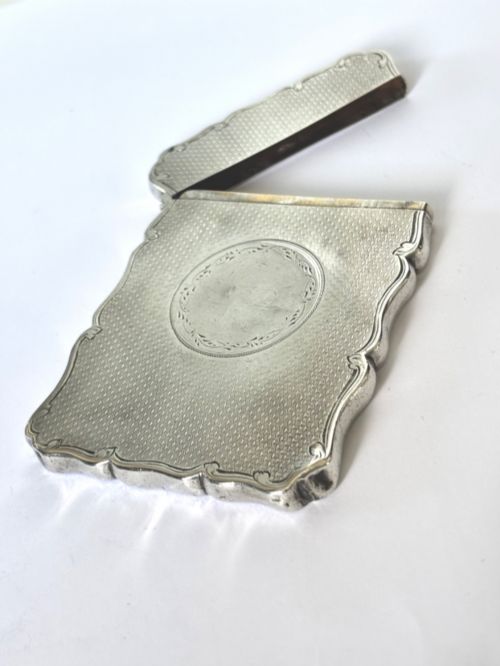
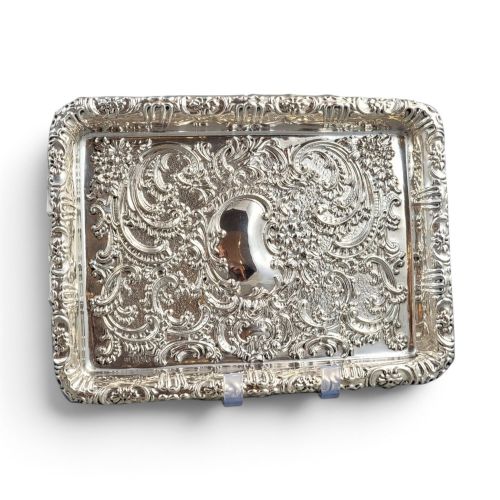
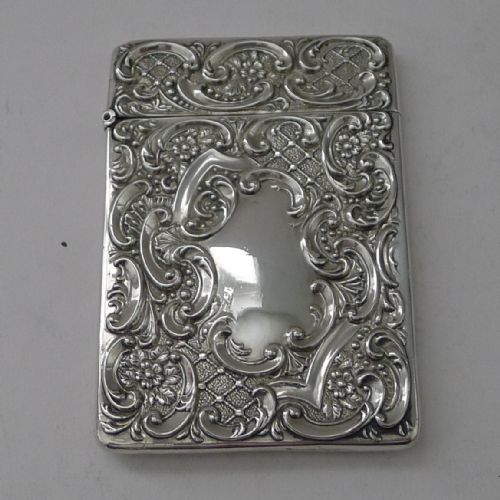
When you search for engraved silver call, you are looking at items designed for the etiquette of visiting and calling in the nineteenth and early twentieth centuries. The selection here centres on solid sterling silver visiting card cases, folding card holders, and small silver trays.
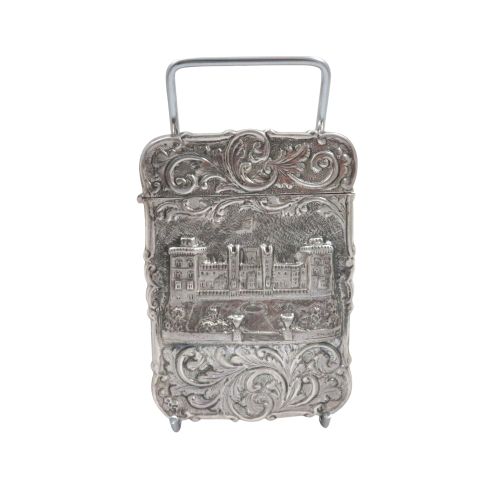
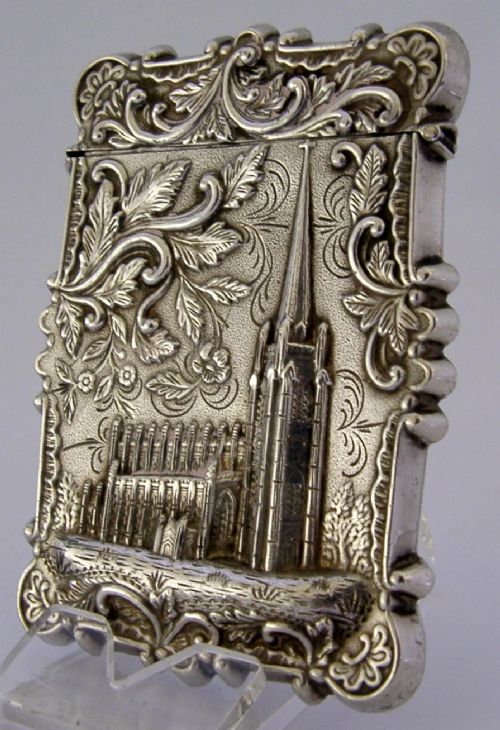
You will most frequently meet Victorian and Edwardian examples fashioned in Birmingham and London. These range from simple engine-turned card cases to elaborate castle top pieces depicting landmarks such as Windsor Castle and St Paul's Cathedral.
Alongside card cases, the evidence includes occasional cigarette cases, serving trays, and novelty items incorporating materials like Connemara marble or cow horn. Each object served a precise social function in polite society, holding calling cards or presenting them upon arrival.
How they were made
Makers utilised sterling silver and silver gilt, forming the structural bodies through pressing, folding, or soldering. Sheffield plate and copper also appear, alongside organic additions such as cow horn and Connemara marble.
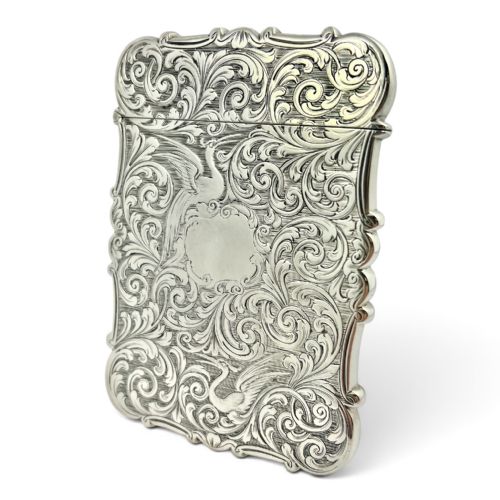
Decoration relied heavily on hand engraving, chasing, and repousse work to create intricate foliate scrolls, geometric patterns, and architectural scenes. Master silversmiths utilised specialised punches and gravers to achieve crisp relief on castle top panels and hinged lids.
One robust table gong repurposes a natural cow horn, proving that Victorian makers turned every available material to domestic display.
What varies in quality
Quality rests on the depth and clarity of the hand engraving and the precision of the mechanical joints. Sharply rendered architectural details on castle top pieces indicate superior workshop output compared to worn, shallow stamping.
The weight of the solid silver, the snugness of the hinged lids, and the presence of clear hallmarks significantly elevate an object. Makers such as Nathaniel Mills or George Unite demonstrate a standard of finish that distinguishes finer pieces from standard production.
Nathaniel Mills·George Unite·Robert Pringle And Sons·Foxall And Co·Walker And Hall
The Engraved Silver Call Glossary
- Castle top
- A style of card case featuring a high-relief engraving or repousse panel of a famous building or landmark on the cover. These architectural scenes are characteristic of mid-nineteenth-century Birmingham makers.
- Calling card
- A small paper rectangle inscribed with a visitor's name, used for formal social visits. These cards were carried in specialised silver cases and presented to a servant upon arrival.
- Sterling silver
- An alloy consisting of ninety-two point five percent silver and seven point five percent other metals, usually copper. This standard composition is verified by official assay office hallmarks.
- Sheffield plate
- A composite material made by fusing a thin sheet of silver to a thicker copper base. This technique preceded modern electroplating and appears on older trays in the archive.
- Silver gilt
- Sterling silver that has been coated with a thin layer of gold on the interior surface. This treatment protected the silver from tarnishing when housing items like cigarettes or visiting cards.
Engraved Silver Call: Frequently Asked Questions
How were these silver cases used?
Victorian and Edwardian callers carried these cases when visiting friends or acquaintances to formally announce their presence. Upon arriving at a residence, the visitor presented a card to the household servant from the case.
The servant then carried the card on a small silver tray to the master or mistress of the house. If the host was not receiving visitors, the card was left on the tray as proof of the call.
How do I date an antique silver card case?
Dating relies heavily on the hallmarks stamped into the silver, which indicate the assay office, the maker's mark, and the exact year of production. Birmingham and London were the primary manufacturing hubs for these items.
Stylistic clues also help determine the age, such as the heavy ornamentation of Victorian gothic revival pieces versus the clean geometric lines of Art Deco items. The presence of specific architectural landmarks like Windsor Castle points directly to mid-nineteenth-century production.
Can I still use a vintage card case today?
These pieces function well for carrying modern business cards, credit cards, or folded notes. The slim profile fits easily into a pocket or evening bag.
Care should be taken with the antique hinges and spring mechanisms, which require gentle handling. Regular, soft polishing maintains the finish without wearing away the hand engraving.