






Engraved Scent Bottle
An engraved scent bottle carries the essence of past centuries, offering tactile luxury through finely cut glass and intricate metalwork.
Engraved Scent Bottle
An engraved scent bottle serves to hold perfume, smelling salts, or spirit for personal use during social engagements. These portable vessels range from pocket flasks to dressing table decanters, designed for daily carriage or boudoir display.
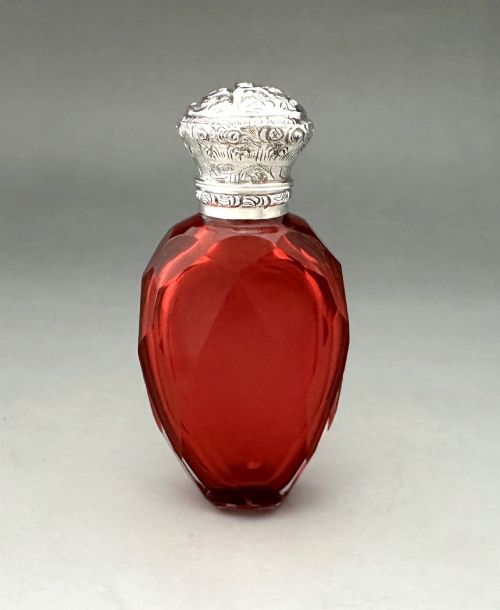
The selections available span the Georgian, Victorian, and Edwardian eras, encompassing English, French, and Dutch origins. Common forms include double-ended glass phials with metal caps, silver-cased glass flasks, and novelty miniature shapes like violins.
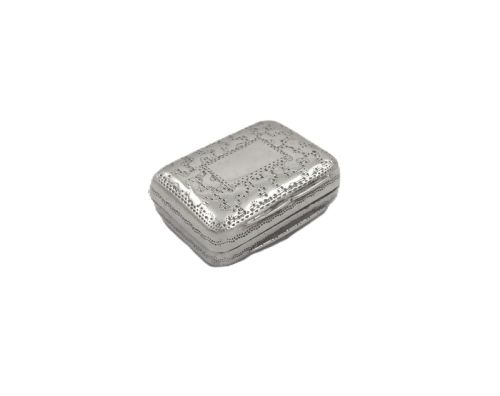
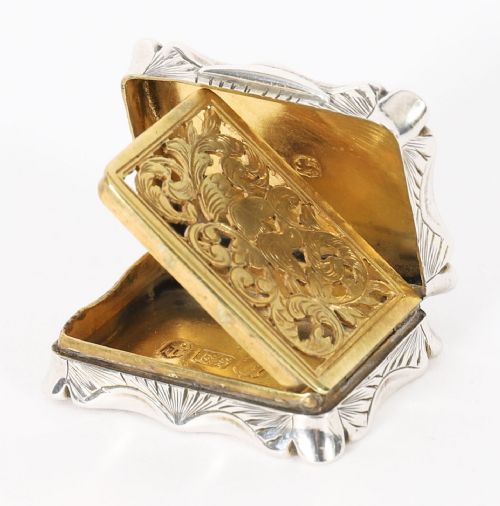
Vinaigrettes also appear within this category, functioning as small boxes fitted with internal pierced grilles to hold sponge soaked in aromatic vinegar. These diverse objects reflect changing social customs regarding personal fragrance and hygiene across the seventeenth, eighteenth, and nineteenth centuries.
How they were made
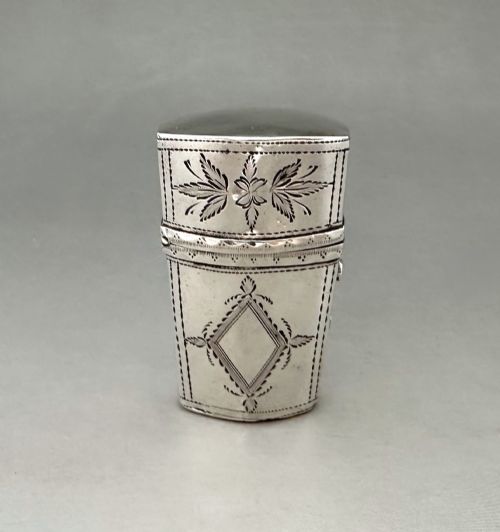
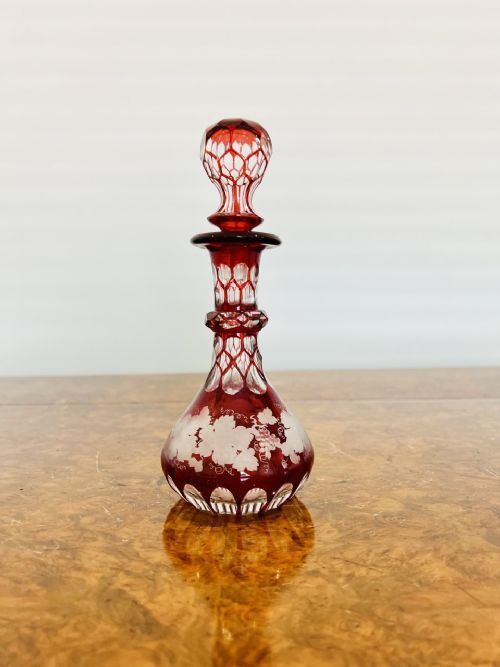
Makers shaped vessels using glass-blowing, facet-cutting, and etching techniques upon clear, ruby, and amethyst glass bodies. Craftsmen applied surface decoration through hand-engraving directly onto the glass or upon precious metal collars, caps, and outer cases.
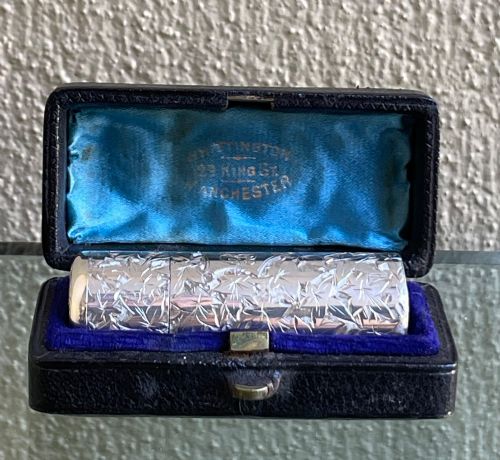
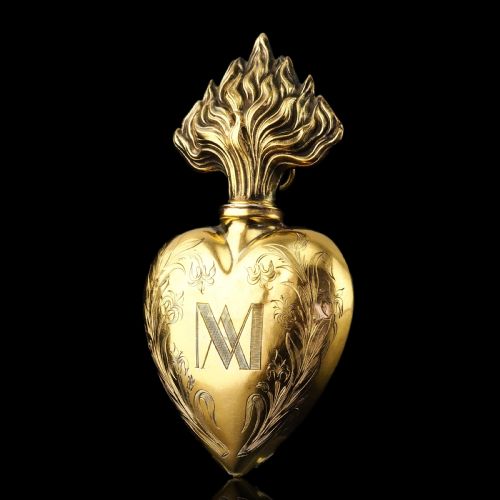
Metal components utilise sterling silver, silver gilt, and solid silver, frequently fashioned with hinged lids and screw caps. Silversmiths employed chasing and engraving to ornament the metalwork with foliate motifs, crests, and geometric patterns.
Miniature silver violins played a serious role in the nineteenth century, holding scent inside their hollow bellies.
What varies in quality
Quality rests upon the crispness of the glass cutting and the depth of the metal engraving. Superior examples display precise facet work and sharply defined hand-engraved details on both the glass body and the silver mountings.
The integrity of the construction distinguishes finer pieces, seen in tight-fitting caps, intact internal grilles in vinaigrettes, and well-balanced proportions. The presence of recognizable maker marks adds significant distinction to the metal components.
Horton & Allday·Edward Smith·S. Morden & Co
The Engraved Scent Bottle Glossary
- Vinaigrette
- A small ornamental box or bottle containing a perforated grille for holding a scented sponge. These pieces date predominantly from the Georgian and Victorian periods.
- Silver Gilt
- Silver that has been coated with a thin layer of gold on its surface. This technique provided the rich appearance of solid gold while utilising silver as the base material.
- Double Ended
- A scent bottle featuring compartments at both top and bottom with separate caps. This design allowed the owner to carry two different fragrances or a perfume and smelling salts simultaneously.
- Cut Glass
- Glass shaped and patterned by grinding wheels and abrasive stones. The process creates deep facets that refract light through the body of the bottle.
Engraved Scent Bottle: Frequently Asked Questions
How do I clean an old scent bottle?
Resist harsh chemical dips or ultrasonic cleaners, which can damage delicate glass surfaces and historic metalwork.
Instead, use warm water and a soft bottle brush for the interior, leaving the piece to air dry completely.
Are these bottles safe for modern perfume?
Many historic bottles feature cork seals or ground glass stoppers that have dried or worn over centuries of use. While solid silver caps close securely, liquid might leak if carried horizontally in a modern handbag.
Display them upright on a dressing table rather than trusting them for daily pocket transport.
What is the difference between a scent bottle and a vinaigrette?
A scent bottle holds liquid perfume, utilising a stopper, screw cap, or hinged lid to retain the liquid. A vinaigrette is a small container specifically designed for solid aromatics or vinegar-soaked sponge, featuring a pierced internal grille.
Both served similar social functions in masking unpleasant odours and reviving the wearer.
How can I tell a Victorian bottle from a Georgian one?
Georgian pieces often exhibit simpler, heavier sterling silver mounts and distinct hand-cut glass facets. Victorian examples frequently showcase more elaborate ornamentation, diverse coloured glass such as ruby or amethyst, and mechanical innovations like double-ended designs.
Hallmarks on the metal components provide the most reliable dating evidence.