






Engraved Perfume Bottle
These engraved perfume bottle examples combine fine glasswork and precious metal mounts to carry personal scent through the centuries.
Engraved Perfume Bottle
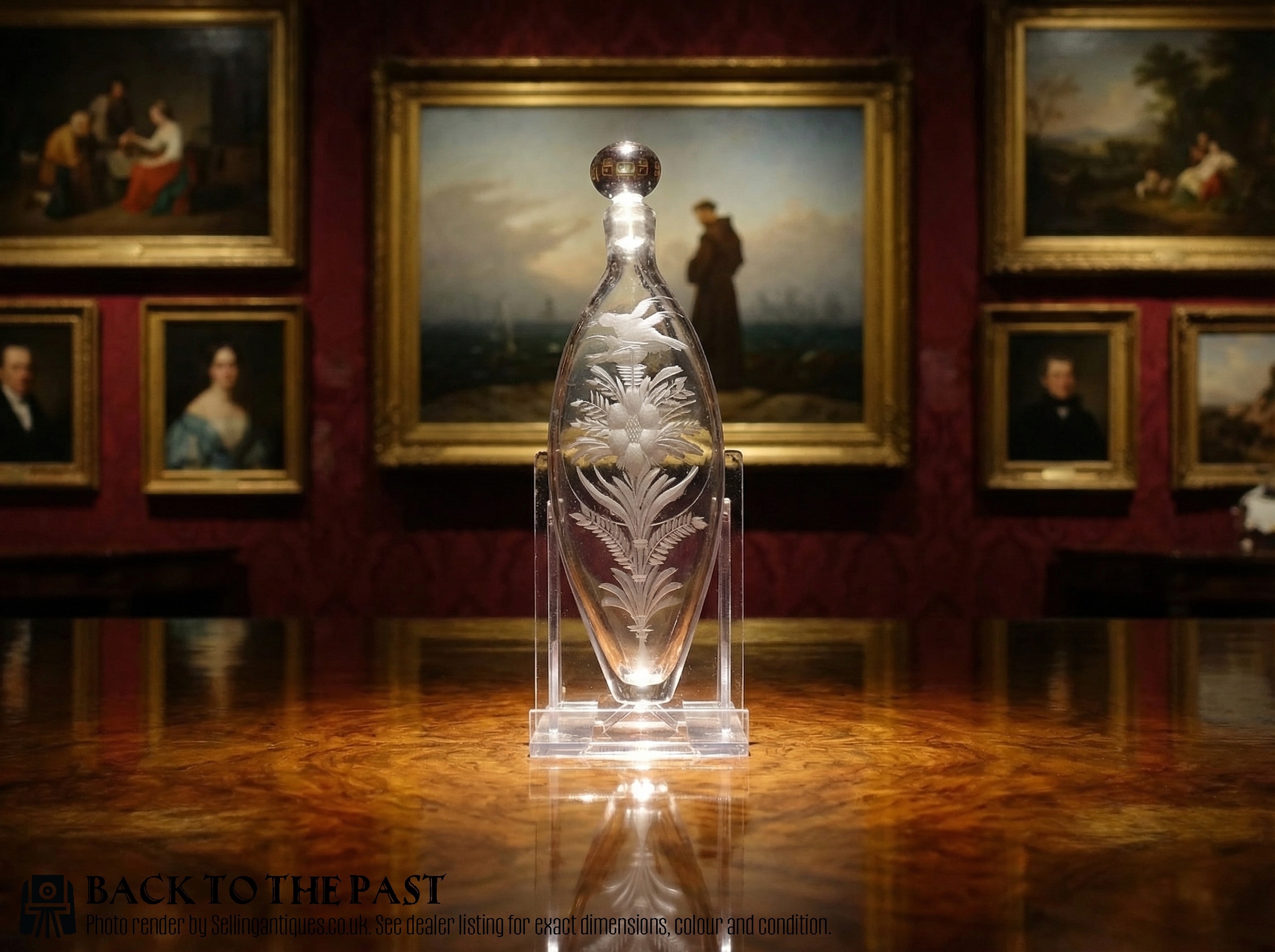
When you search for an engraved perfume bottle, you are looking at small personal containers designed to hold volatile scents and smelling salts. The selection spans the Georgian and Victorian eras up to the early twentieth century, taking the form of flasks, double-ended vessels, and vinaigrettes.
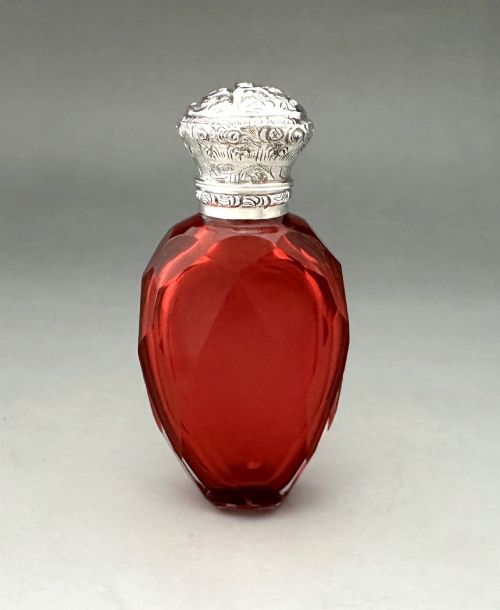
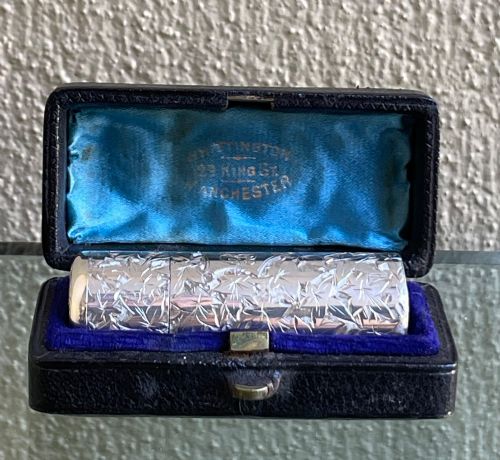
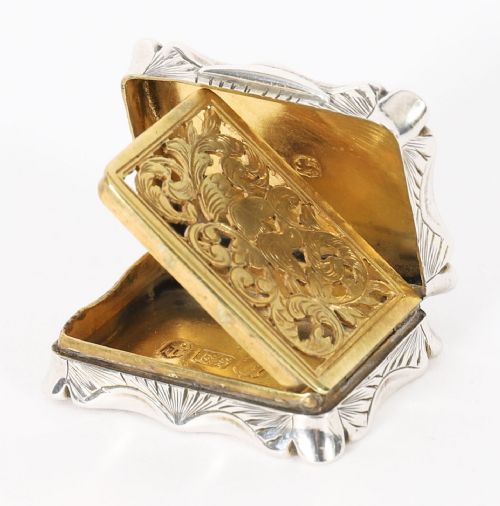
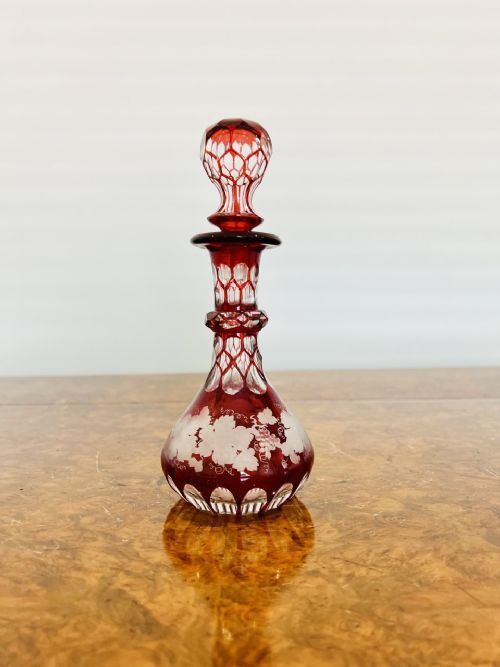
The version you are most likely to meet on this page is a Victorian piece featuring cut crystal or coloured glass bodywork paired with a hinged silver cap or collar. These range from simple pocket cylinders to elaborate vanity set inserts and novelty shapes.
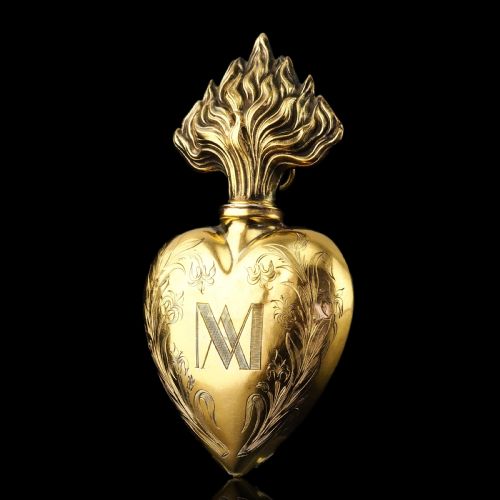
Origins stretch across England, France, Holland, and Bohemia, reflecting the widespread European taste for portable luxury. Materials extend beyond plain glass to include rich ruby, amethyst, and amber hues, often cased in sterling silver or silver gilt.
What varies in quality
Quality rests upon the crispness of the wheel engraving on the glass and the weight of the silver mounts. Fine examples display deep, sharp facet cutting and securely fitting hinged caps that close flush against the collar.
The distinction between ordinary production and superior work lies in the integration of materials, such as the precision of guilloche enamel lids or the inclusion of original inner glass stoppers. Maker attribution and unusual colour variations elevate specific pieces above standard domestic wares.
One Dutch piece takes the shape of a miniature silver violin, proving that Victorians loved carrying their music in liquid form.
Horton & Allday·Edward Smith·Asprey·S Morden & Co
The Engraved Perfume Bottle Glossary
- Vinaigrette
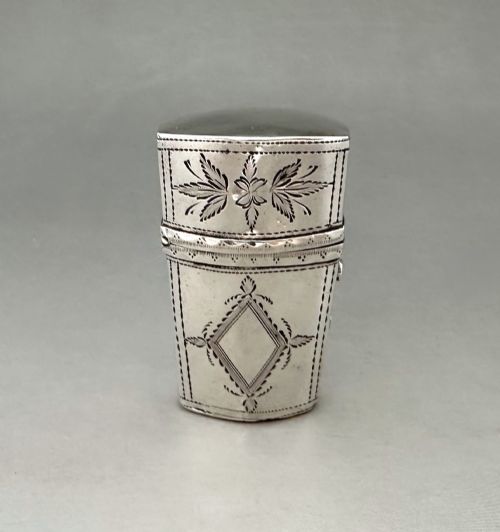
- A small container holding a perforated grille, originally used to soak a sponge in vinegar and aromatic compounds. These metal boxes were tucked into pockets or chatelaines during the Georgian and Victorian periods.
- Double Ended Scent Bottle
- A vessel featuring two separate compartments accessed from opposite ends, allowing the owner to carry two distinct fragrances or a scent alongside smelling salts. They typically use hinged silver caps at both terminals.
- Silver Gilt
- Silver that has been coated with a thin layer of gold on its surface, giving it a warm, rich tone. This technique protects the underlying metal from tarnishing while offering the appearance of solid gold.
- Guilloche Enamel
- A decorative technique where a precise pattern is mechanically engraved into metal before being covered with translucent enamel. This creates shifting geometric reflections beneath the coloured glass surface.
- Cut Crystal
- High-clarity glass containing lead oxide, shaped by grinding and polishing facets onto the exterior. The lead content increases the refractive index, making the engraved patterns sparkle brightly.
Engraved Perfume Bottle: Frequently Asked Questions
How do I date an antique scent bottle?
Dating relies on a combination of hallmarks stamped on the silver mounts, the manufacturing style of the glass, and the overall form. Assay office marks and maker stamps on sterling silver components provide the most precise chronological markers.
Stylistic shifts also help narrow the period. Georgian examples often display distinct hand-cut facets, while late Victorian and Edwardian pieces frequently incorporate machine-engraved details or novelty shapes.
Were these bottles meant for travel?
Many of these vessels were engineered specifically for travel, fitting securely inside leather vanity cases, dressing sets, or pocket compartments. Their robust cut glass bodies and tight screw or hinged silver caps prevented leaks during transit.
Smaller examples were designed to be suspended from chatelaines or carried discreetly in evening bags. Double-ended versions maximised utility by holding two different liquids in a single compact cylinder.
Why do some bottles have two caps?
Double-ended bottles feature a cap at each extremity to service two separate internal chambers. This ingenious design allowed users to carry a perfume in one end and smelling salts in the other.
They became particularly popular in the Victorian era when portable refreshment was a daily necessity. The central portion of the glass body is often faceted or shaped to provide a secure grip for the hand.
What is ruby glass?
Ruby glass is a deep red ornamental glass created by adding gold chloride to the molten batch during production. It gained immense popularity during the nineteenth century for decorative tablewares and personal accessories.
When cut and engraved, the clear facets contrast sharply with the saturated red body to highlight the maker's pattern. Victorian makers paired this intense colour with bright sterling silver mounts to striking effect.