



Engraved Crystal Jug
An engraved crystal jug brings brilliant table service, combining deep wheel-cut motifs with fine silver mounts.
Engraved Crystal Jug
An engraved crystal jug is a heavy serving vessel used for wine, claret, or champagne, encountered most frequently in Victorian and Edwardian examples from English makers. These pieces range from small wine ewers to large pint-sized jugs, often finished with detailed silver-plated or sterling silver mounts and handles.
Makers from Stourbridge and prominent houses such as Stevens and Williams, Richardsons, and Lobmeyr produced these serviceable vessels for formal dining. Collectors will find both modest table glass and important Royal presentation pieces represented among the stock.
Materials and construction
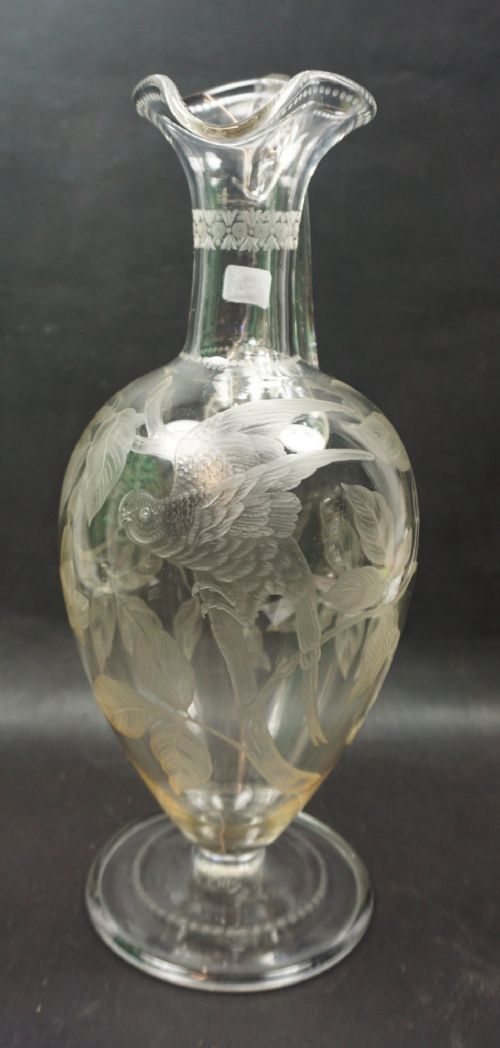
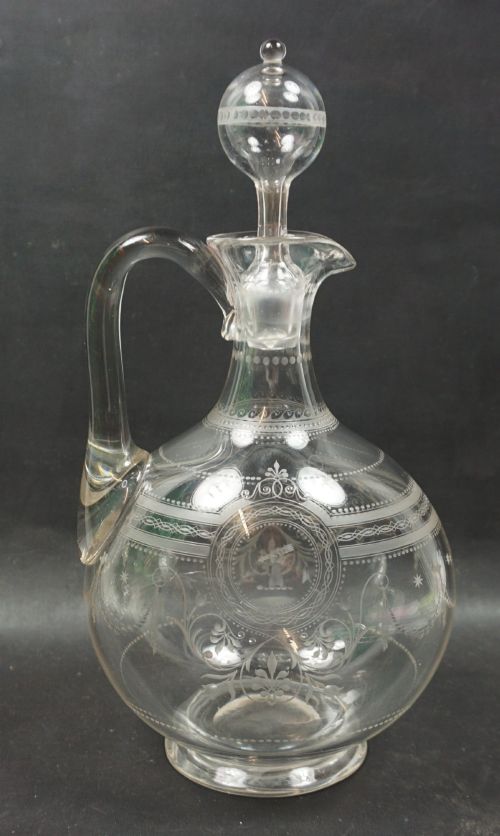
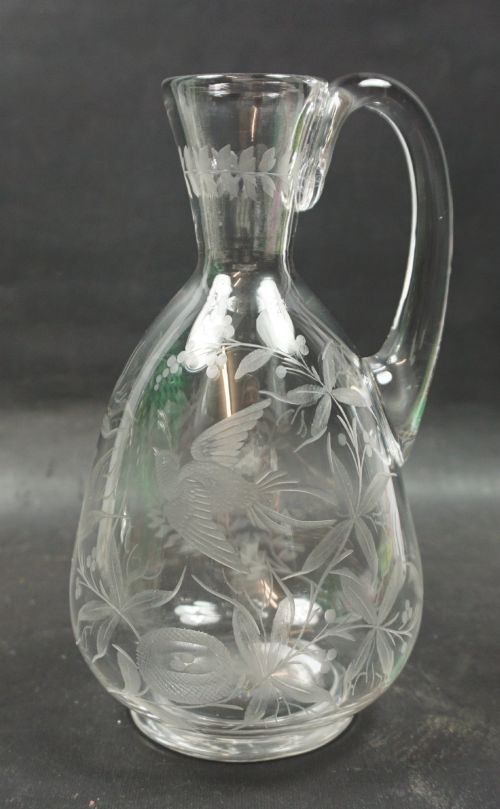
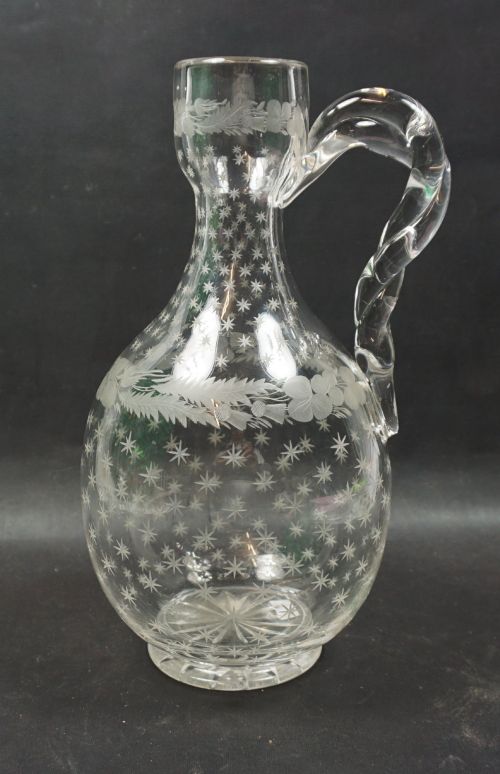
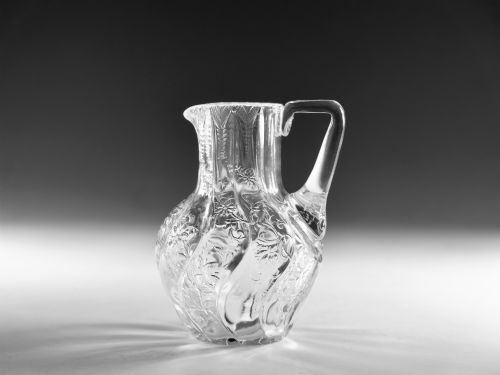
The construction relies on heavy lead crystal or glass blown into shape and deeply worked on a lapidary wheel to achieve sharp, intricate engraving. Craftsmen utilised hand wheel engraving techniques to carve complex botanical, heraldic, or figurative scenes into the surface of the vessel.
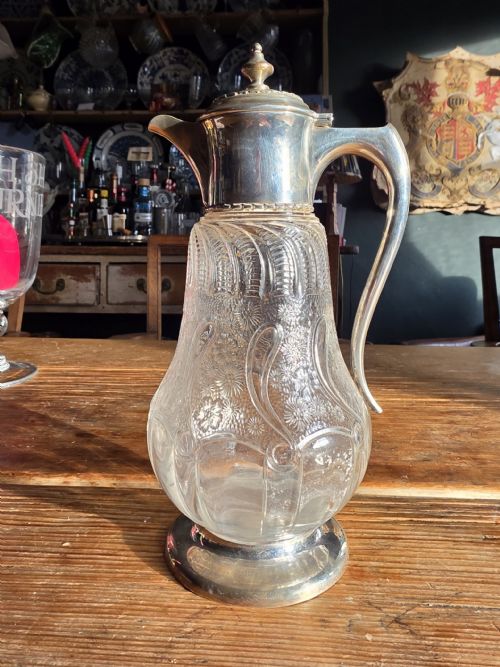
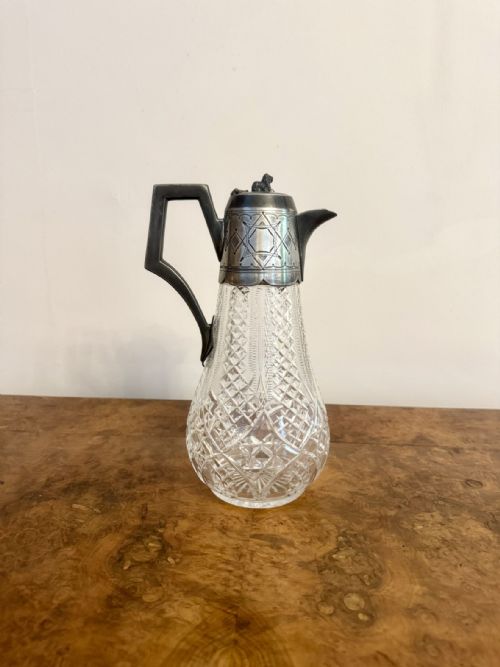
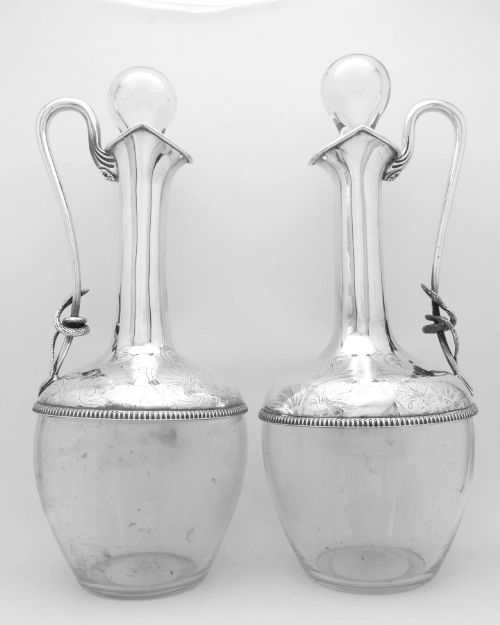
Mounts in silver plate, sterling silver, or Bacchus mask designs were securely fitted to the rims, spouts, and handles, frequently paired with serpent or scroll handles. The fusion of metalwork and heavy cut glass required precise silversmithing to complement the brilliance of the crystal body.
Engraved Crystal Jug Retail Price Guide 2026
Typical asking prices for engraved crystal jug among the pieces listed under this phrase on Sellingantiques today, from the lower quarter to the upper quarter. They describe what is for sale here now, not the wider market.
Several jugs feature playful Bacchus mask spouts or writhing serpent handles, ensuring the wine server stared right back at thirsty guests.
Assessing quality and finish
The distinction between standard table service and exceptional pieces rests upon the depth, clarity, and precision of the wheel engraving. Highly regarded examples display crisp botanical details, animal studies, or heraldic crests carved with distinct three-dimensional relief.
Weight, metalwork refinement, and signed provenance elevate certain works. Heavy lead crystal combined with fully hallmarked sterling silver mounts or documented maker signatures separates everyday glassware from exhibition-grade pieces.
William Comyns·Asprey and Co. Ltd·Stevens and Williams·Webb Corbett·Richardsons·Lobmeyr
The Engraved Crystal Jug Glossary
- Claret jug
- A specialised vessel designed for serving red wine, typically featuring a glass body with a hinged metal lid and handle.
- Hand wheel engraving
- A technique where glass is held against rotating small wheels of stone or copper fed with an abrasive slurry to cut deep designs.
- Lead crystal
- Glass containing lead oxide which increases weight, refractive index, and clarity, providing a resonant ring when struck.
- Intaglio
- A technique where the design is carved into the surface of the glass rather than raised in relief.
- Stourbridge
- An English town renowned for its historic glassmaking industry and skilled practitioners of cut and engraved crystal.
Engraved Crystal Jug: Frequently Asked Questions
What is an engraved crystal jug used for?
These vessels served primarily at the dining table for pouring claret, champagne, or dessert wine during formal Victorian and Edwardian meals. They functioned as both practical serving ewers and decorative centrepieces.
The hinged lids and secure handles allowed hosts to pour wine cleanly while keeping sediment back in the body of the decanter.
How do I date an antique glass jug?
Dating relies on stylistic clues such as the form of the silver mounts, the depth of the glass cutting, and documented maker signatures. Victorian and Edwardian examples often exhibit specific floral motifs, crests, or revival styles unique to their decade of production.
Examining the pontil mark on the base and the hallmarks on any silver components provides further confirmation of the period of manufacture.
What styles are common in these jugs?
Victorian Rococo Revival and Edwardian neoclassical designs appear frequently alongside the more exotic Islamic Revival pieces produced around the turn of the twentieth century. These styles reflect the changing decorative tastes of British and European dining rooms.
Motifs range from naturalistic fruiting vines and birds to formal heraldic crests and the flowers of the union.