



Engraved Cranberry Glass
Engraved cranberry glass brings rich crimson tones and detailed wheel-cut foliage directly to the Victorian dining table.
Engraved Cranberry Glass
Engraved cranberry glass encompasses nineteenth-century tableware and decorative vessels, spanning the Victorian and Edwardian eras. Buyers searching for engraved cranberry glass encounter decanters, champagne coupes, wine glasses, and salt cellars originating from English, French, and Bohemian makers.
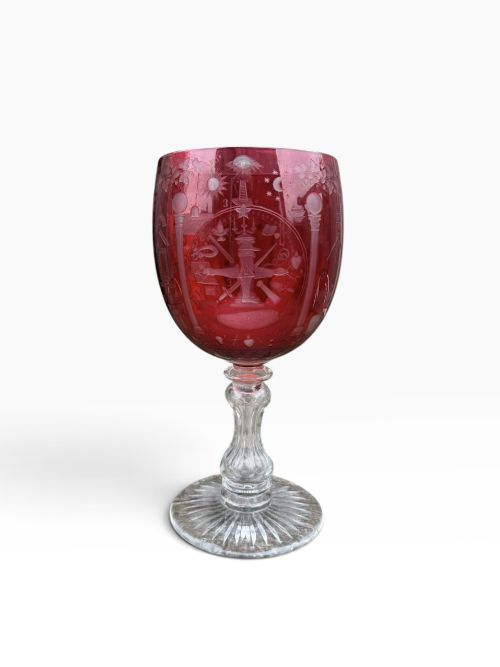
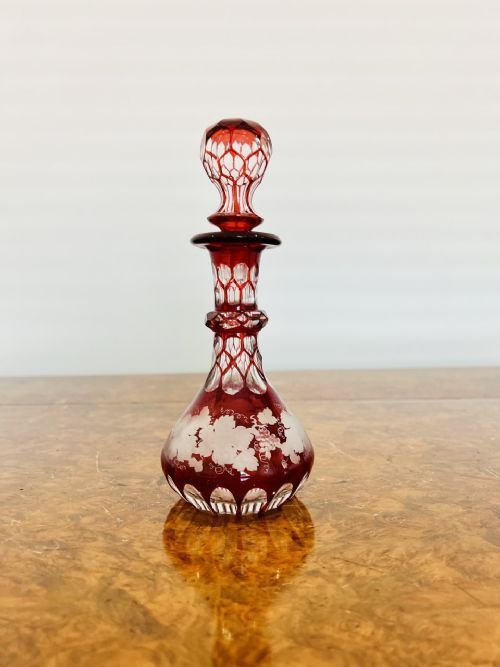
The objects take many functional forms, including claret jugs, perfume bottles, spirit bottles, and hyacinth vases. Pieces often appear in pairs or sets, featuring wheel-engraved motifs cut through a ruby or red overlay to reveal clear crystal beneath.
Materials and methods
The distinctive colour relies on gold chloride added to the molten metal during the glassmaking process. Craftsmen combined cranberry glass with lead crystal or clear glass, frequently employing an overlay technique where a layer of red glass covers a colourless base.
Decorations were applied using copper wheel engraving to cut through the outer ruby layer. Artisans rendered intricate botanical subjects such as fruiting vines, birds, and convolvulus flowers onto the surface.
Engraved Cranberry Glass Retail Price Guide 2026
Typical asking prices for engraved cranberry glass among the pieces listed under this phrase on Sellingantiques today, from the lower quarter to the upper quarter. They describe what is for sale here now, not the wider market.
Some nineteenth-century makers turned their hand to hyacinth glass vases, ensuring Victorian blooms could match the claret jug on the sideboard.
Distinctions in quality
Quality rests upon the depth and precision of the wheel engraving, where crisp details elevate a piece above simpler surface work. Superior examples display balanced proportions, clean overlay contrasts, and careful finishing on handles or silver-plated mounts.
The Engraved Cranberry Glass Glossary
- Cranberry glass
- A transparent pinkish-red glass coloured with gold oxide. It became immensely popular during the Victorian period for tableware and decorative items.
- Overlay
- A technique involving a layer of coloured glass cased over a body of clear glass. Cutting through the outer layer creates sharp two-tone decorative contrasts.
- Coupe
- A broad, shallow-bowled glass traditionally used for champagne or wine. Victorian examples often feature engraved bowls and matching foot rims.
- Claret jug
- A large vessel designed for serving red wine, typically fitted with a handle and a hinged silver-plated lid. Many nineteenth-century versions combine cut crystal bodies with engraved decoration.
Engraved Cranberry Glass: Frequently Asked Questions
Are these pieces English or continental?
Many surviving examples originate from English glasshouses, while significant quantities also come from Bohemian and French workshops such as Baccarat.
Maker attributions often rely on distinctive stylistic motifs, glass weights, and regional engraving techniques typical of the mid to late nineteenth century.
What is the difference between cranberry and ruby glass?
Cranberry glass generally exhibits a brighter, pinker crimson hue achieved specifically through gold chloride suspension.
Ruby glass can sometimes describe a deeper, heavier red tone, though nineteenth-century makers and modern collectors frequently use both terms interchangeably.
Can I use these decanters for wine?
Period decanters and wine jugs function well for serving beverages today, provided you inspect the interior for staining.
Take care when pouring and cleaning, and avoid storing liquids inside antique glass vessels for extended periods.