

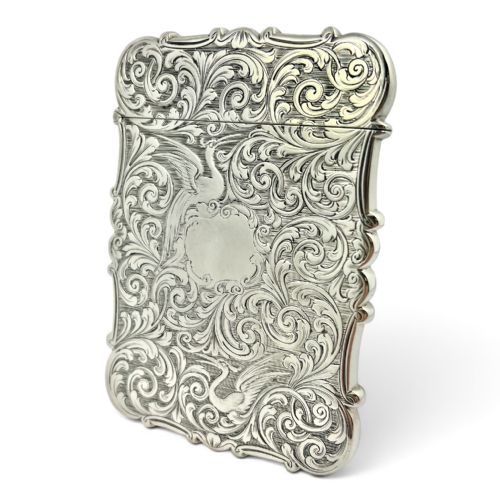
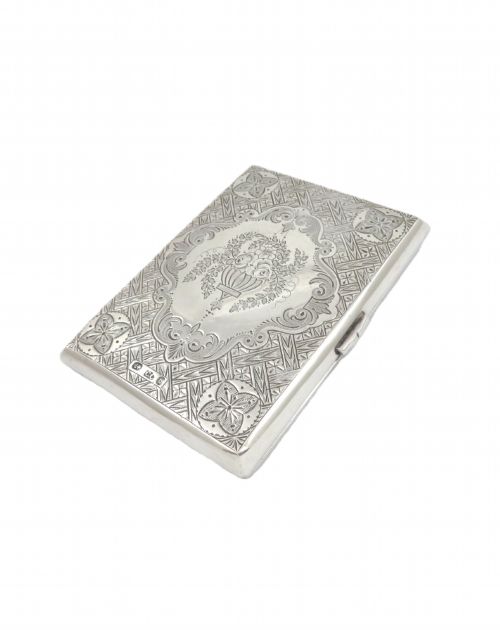
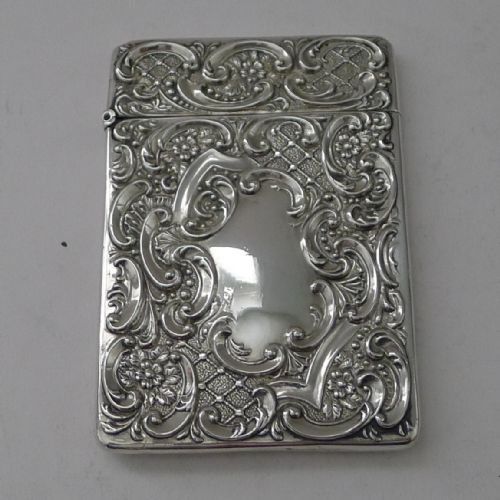


Engraved Card Holder
These engraved card holder pieces range from Victorian sterling silver to Art Deco silver gilt, offering tactile elegance for callers and collectors.
Engraved Card Holder
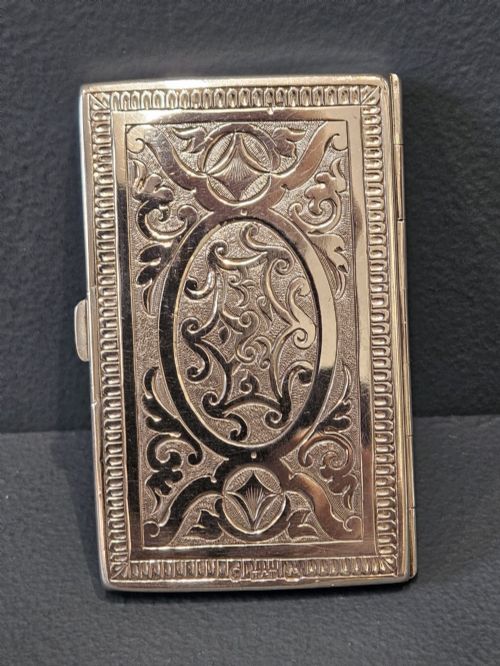
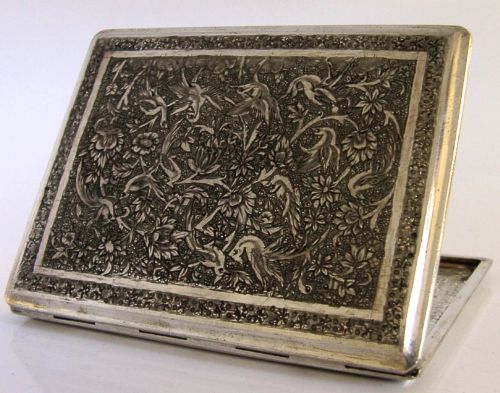
An engraved card holder serves as a pocket receptacle for calling cards, visiting cards, and cigarettes, emerging primarily in Victorian and Edwardian forms. The pieces span card cases, calling card cases, aide memoires, and cigarette cases originating from English, Continental, Russian, and Ottoman workshops.
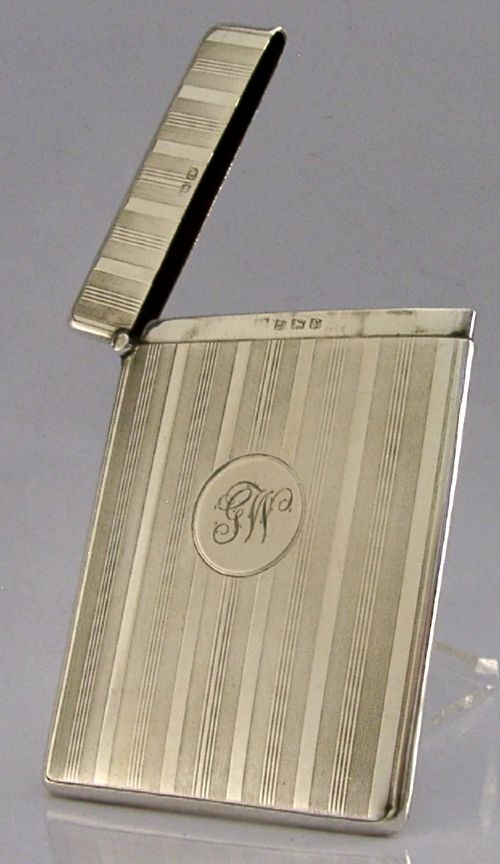
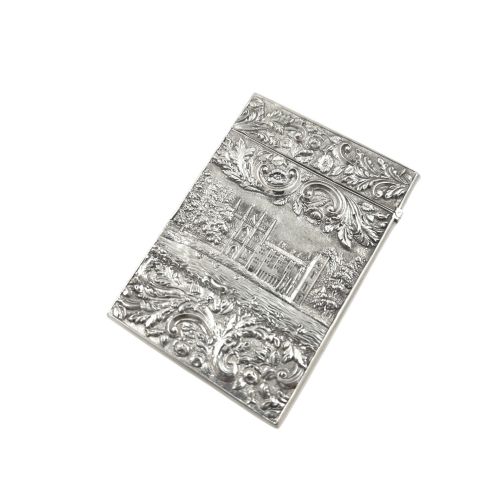
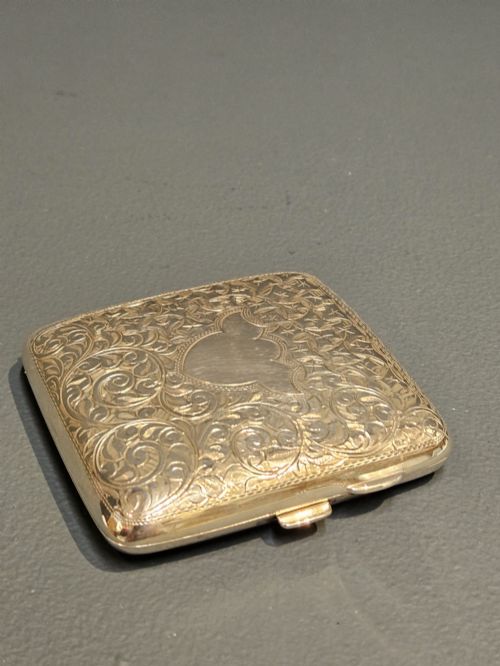
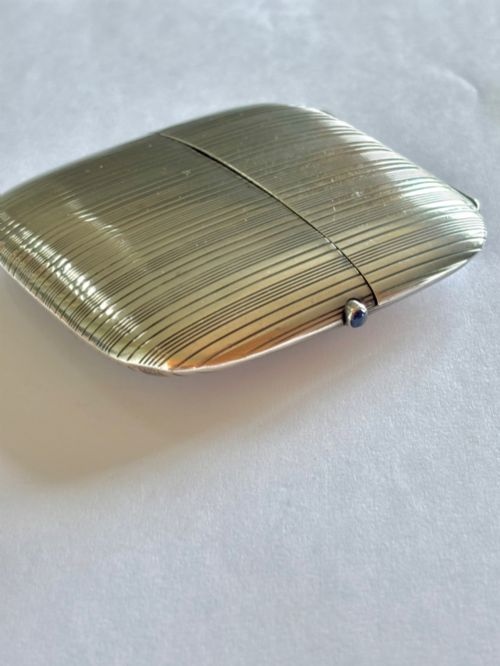
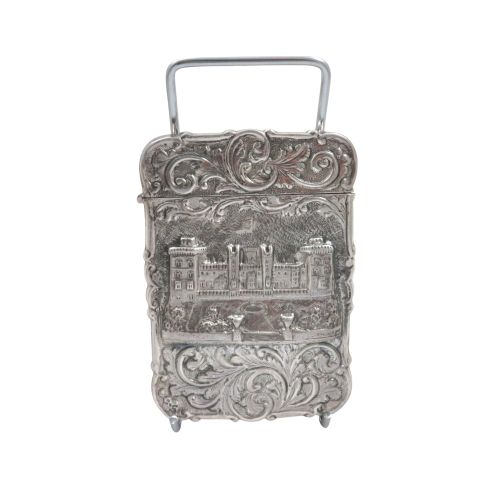
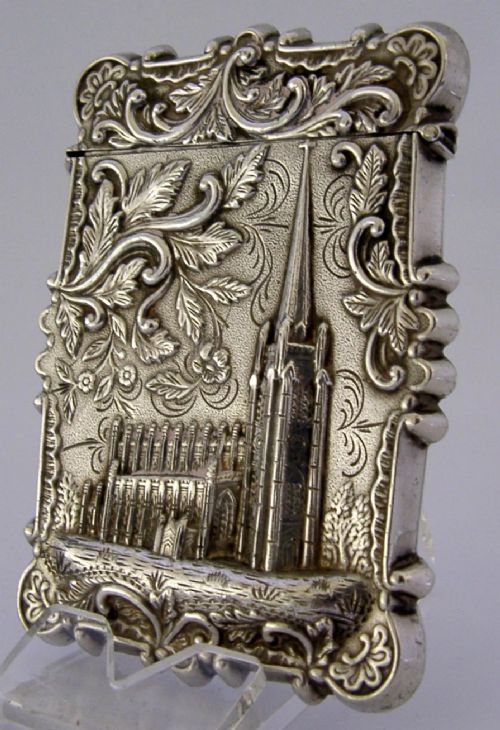
Victorian examples dominate the selection, often featuring intricate surface engraving alongside architectural castle top designs depicting landmarks like Windsor Castle, Trinity Church, and St Paul’s Cathedral. Edwardian and Art Deco iterations follow, bringing sleeker lines, engine turned patterns, and occasional gemstone or Connemara marble accents.
Callers in the nineteenth and early twentieth centuries relied on these accessories to present heavy card stock upon visits, making sturdy hinged construction essential. Surviving specimens range from simple stamped silver to complex silver purses and fitted boxes incorporating silk, velvet, and leather interiors.
Materials and Technique
Silversmiths constructed the bulk of these items from sterling silver and solid silver, frequently applying silver gilt or blue cabochon gemstones for decorative contrast. Leather, silk, velvet, and Connemara marble appear as lining or structural components in select boxes and aide memoires.
Decoration relied heavily on manual hand engraving, engine turning, and casting, particularly in the creation of detailed castle top reliefs on Victorian surfaces. Makers utilised precise hinges, clasps, and unusual opening mechanisms to secure contents while maintaining slim profiles for pocket transport.
Engraved Card Holder Retail Price Guide 2026
Typical asking prices for engraved card holder among the pieces listed under this phrase on Sellingantiques today, from the lower quarter to the upper quarter. They describe what is for sale here now, not the wider market.
Craftsmanship and Distinction
The distinction between standard production and top tier work rests on the depth and crispness of the hand engraving, particularly across pictorial castle top scenes and floral scrolls. Maker attribution also elevates a piece, with documented works by silversmiths like Nathaniel Mills commanding greater attention for their sculptural relief.
Structural integrity of the spring hinges, tight closure of the lid, and retention of original silver gilt interiors distinguish superior survivals from heavily worn or altered examples. The inclusion of uncommon elements, such as detachable purse sections or integrated stamp compartments, separates exceptional utilitarian objects from ordinary pocket cases.
Nathaniel Mills·George Unite·Wright and Davies·Edward Edwards
The Engraved Card Holder Glossary
- Castle top
- A form of relief engraving on a silver box lid depicting a well known building or historic landmark. These scenes require high skill from the silversmith to achieve architectural depth.
- Sterling silver
- An alloy consisting of silver and other metals, typically copper, standardise for durability and lustre. British pieces often bear full sets of hallmarks confirming this standard.
- Engine turned
- A mechanical surface decoration technique producing geometric patterns of fine lines. This method appeared frequently on Georgian and Victorian cigarette and cigar cases.
- Silver gilt
- Silver covered with a thin layer of gold applied through chemical or electrochemical means. This treatment protected the interior metal and added visual warmth.
- Aide memoire
- A small notebook or card case fitted with internal writing tablets or paper leaves. Owners utilised them to jot down social appointments alongside carrying calling cards.
Engraved Card Holder: Frequently Asked Questions
What is an engraved card holder?
An engraved card holder is a pocket sized container fashioned from silver or mixed materials used historically to store and present visiting cards.
Craftsmen decorated the exterior surfaces with floral scrolls, geometric engine turning, or pictorial landmarks to reflect the owner's taste.
How were calling card cases used?
Victorians carried these cases during social visits to present their personal cards when calling upon acquaintances who were not at home.
The rigid metal construction protected delicate paper cards from bending or moisture while tucked into pockets or reticules.
How do I date a silver card case?
Dating relies heavily on British hallmarks stamped onto the silver, which include maker's marks, assay office symbols, and date letters.
Stylistic cues such as Victorian architectural motifs, Edwardian simplicity, or Art Deco geometric lines also help establish the era of manufacture.
Can these cases hold modern cards?
Original nineteenth century calling cards were considerably smaller than modern credit cards or business cards, meaning standard modern cards often do not fit.
Collectors generally display these pieces as cabinet objects or utilise them for slim keepsakes rather than daily modern card carrying.