



Engraved Calling Card Holder
An engraved calling card holder is a pocket-sized silver receptacle for social interaction, offering a tangible connection to nineteenth-century etiquette.
Engraved Calling Card Holder
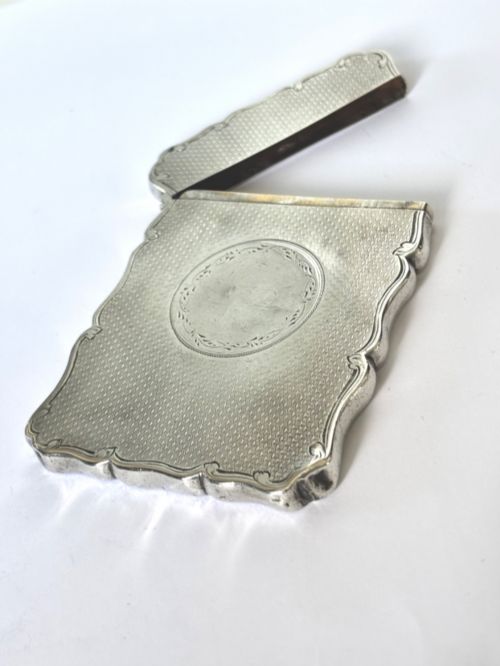
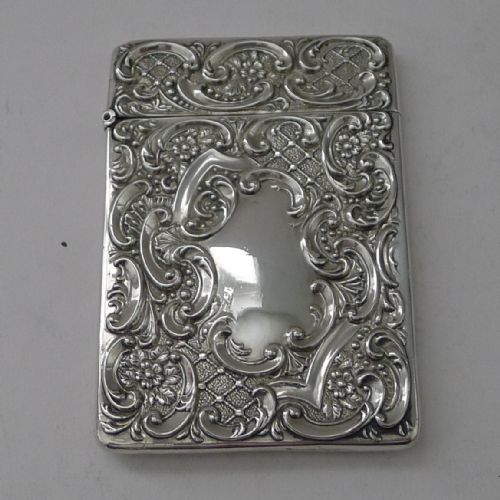
When you search for an engraved calling card holder, you encounter small personal cases designed to hold visiting cards during the Victorian and Edwardian eras. The examples seen here span from the mid-nineteenth century into the twentieth century, appearing as slim card cases, visiting card cases, and card boxes.
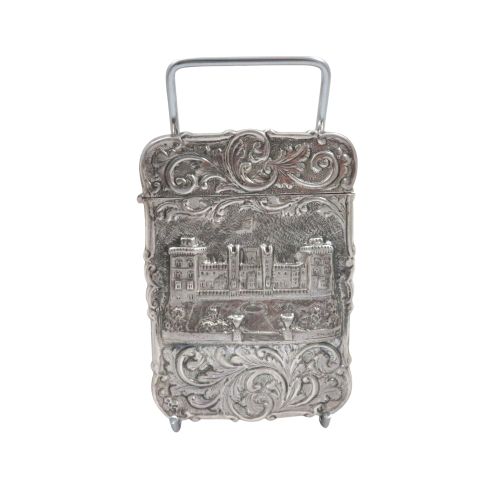
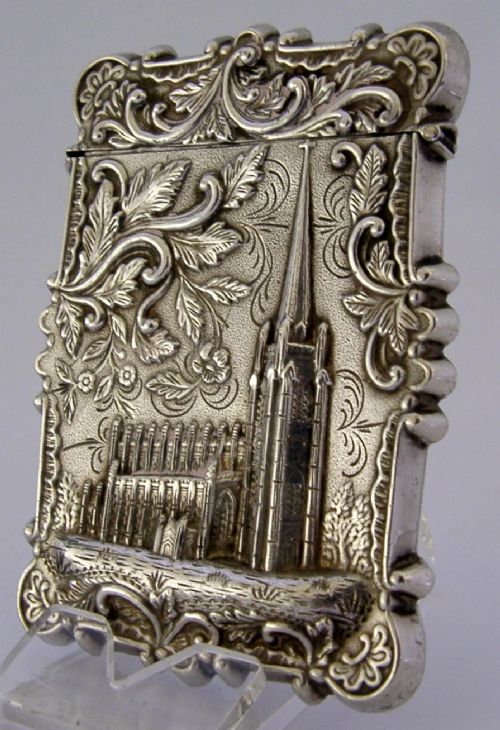
The most frequent form on this page is the flat silver case, often hinged and richly decorated. Alongside standard rectangular models, one encounters architectural castle top designs depicting landmarks like Windsor Castle or St Paul's Cathedral, as well as novelty folding formats and pieces combined with aide-memoires or lined in silver gilt.
Originating predominantly from British workshops, these pieces reflect the social demands of the Victorian period and the refined tastes of the subsequent Edwardian years. Later twentieth-century items, including Art Deco cigarette cases and Soviet era pieces, also appear within the selection.
Materials and Construction
The primary material across the selection is sterling silver, supported by solid silver and silver gilt variants that provide a bright reflective surface. Certain Edwardian pieces incorporate natural materials such as Connemara marble, introducing a contrasting green stonework element to the metal body.
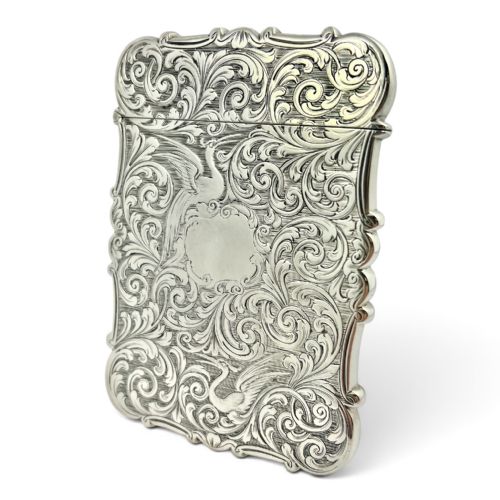
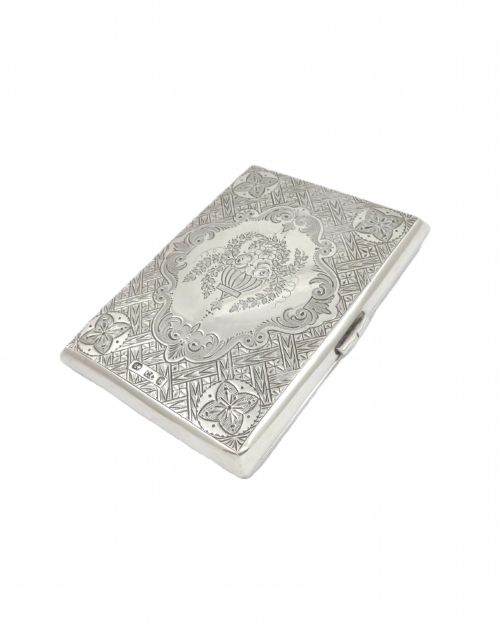
Makers utilised hand engraving techniques to cover surfaces with intricate foliate scrolls, geometric patterns, and pictorial scenes. Castle top variants required specialised relief stamping or detailed chasing to render recognizable architectural landmarks with precision.
The selection includes pieces spanning the Victorian and Edwardian periods, utilising sterling silver, solid silver, and Connemara marble.
Evaluating the Pieces
Quality in an engraved calling card holder rests upon the crispness and depth of the surface decoration. Crisp, deep hand engraving retains its sharpness along the edges, whereas worn or shallow tooling loses definition across the motifs.
The complexity of the form dictates distinction, elevating architectural castle top pieces or unusual opening mechanisms above plain rectangular sleeves. Maker attribution also plays a role, with documented silversmiths commanding attention for superior fabrication and proportion.
Nathaniel Mills·George Unite·Foxall and Co
The Engraved Calling Card Holder Glossary
- Castle top
- A style of card case featuring a detailed relief image of a famous building or landmark on the cover. These architectural depictions are particularly sought after by collectors.
- Sterling silver
- A silver alloy containing substantial pure silver content paired with strengthening metals. This standard material ensures durability for daily pocket use.
- Silver gilt
- Silver covered with a thin layer of gold on the interior surfaces. This treatment provides a warm contrasting finish and protects the metal from tarnishing.
- Aide-memoire
- A small notebook or memorandum tablet incorporated into a card case. It allowed the owner to jot down social engagements alongside storing visiting cards.
- Connemara marble
- An ornamental green stone mined in Ireland, occasionally set into the panels of Edwardian silver cases. Its variegated green tones contrast with polished silver.
Engraved Calling Card Holder: Frequently Asked Questions
How were these cases used?
Victorian and Edwardian society members carried these cases when visiting acquaintances to leave paper cards bearing their names. Leaving a card signified a polite call made when the host was not at home.
The cases kept the cards clean and uncreased until the moment of presentation. Opening the spring-loaded or hinged lid allowed the owner to retrieve a card swiftly upon arrival at a residence.
How do I date a silver card case?
Dating a silver card case relies upon identifying the assay office marks, date letters, and maker's stamps punched into the metal. British pieces usually carry hallmarks that indicate the specific year of manufacture.
Stylistic clues also assist with dating, as Victorian pieces often feature heavy foliate scrolls and architectural castle tops, while Edwardian examples lean towards lighter floral motifs and Art Deco items display geometric lines.
Are these cases suitable for modern cards?
Most antique calling card cases were designed for smaller visiting cards rather than modern business cards. Standard modern credit cards and business cards are frequently too wide or thick to fit inside the historical dimensions.
Buyers often utilise these pieces to hold folded notes, modern lightweight calling cards, or as decorative display objects. Checking the internal measurements of a specific case ensures proper fit for any intended modern use.
What is a castle top case?
A castle top case is a specialised silver card holder featuring a prominent embossed or chased landmark on the cover. Famous subjects include Windsor Castle, St Paul's Cathedral, and Trinity Church.
These architectural scenes represent the pinnacle of Victorian silversmithing skill and remain highly distinctive. The detailed metal relief captures specific historical structures with remarkable fidelity.