




Engraved Brass Timepiece
An engraved brass timepiece brings precision engineering and intricate metalwork together, offering a functional centrepiece with enduring mechanical interest.
Engraved Brass Timepiece
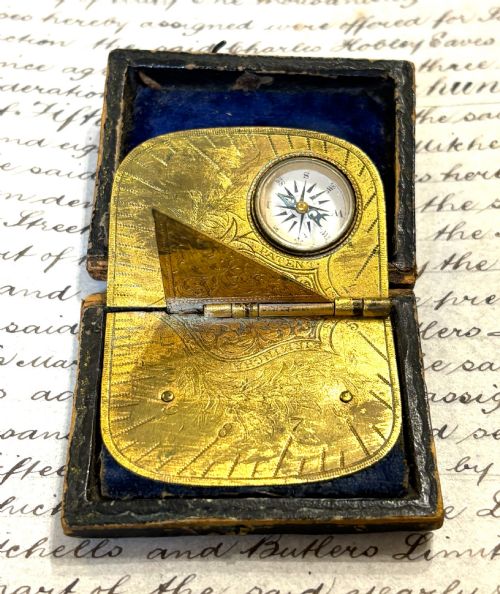
When you search for an engraved brass timepiece, you encounter portable and domestic horological instruments that utilise polished metal cases decorated with chased or incised patterns. These objects range from seventeenth-century English lantern clocks to nineteenth-century French carriage clocks and pocket sundials.
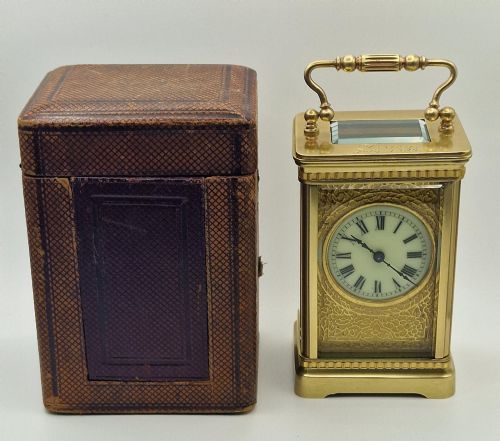
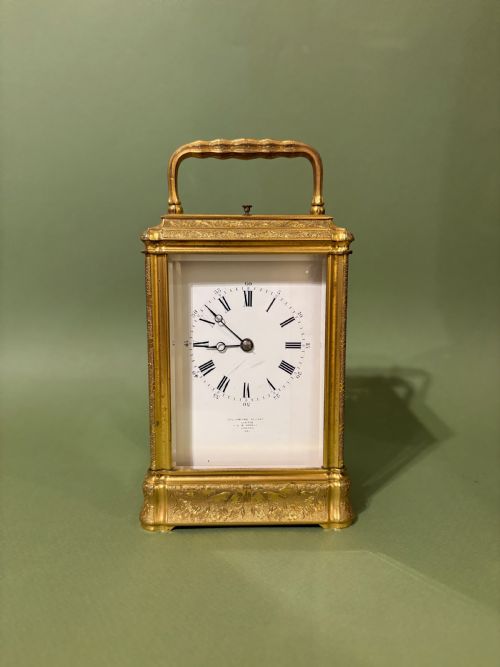
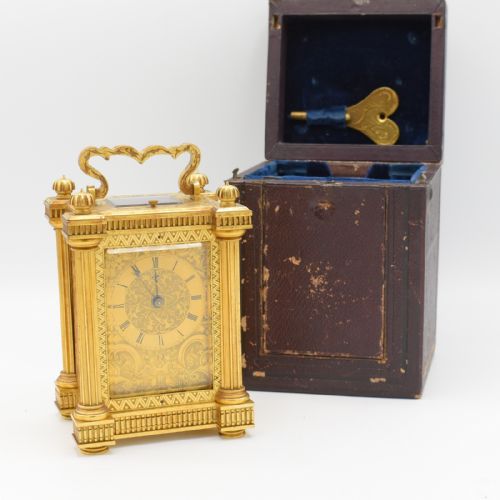
The version you are most likely to meet on this page is the French carriage clock from the Victorian era, typically featuring bevelled glass panels and elaborate floral or geometric engraving across the gilt brass framework. Many of these domestic examples incorporate repeating mechanisms, alarm functions or platform escapements.
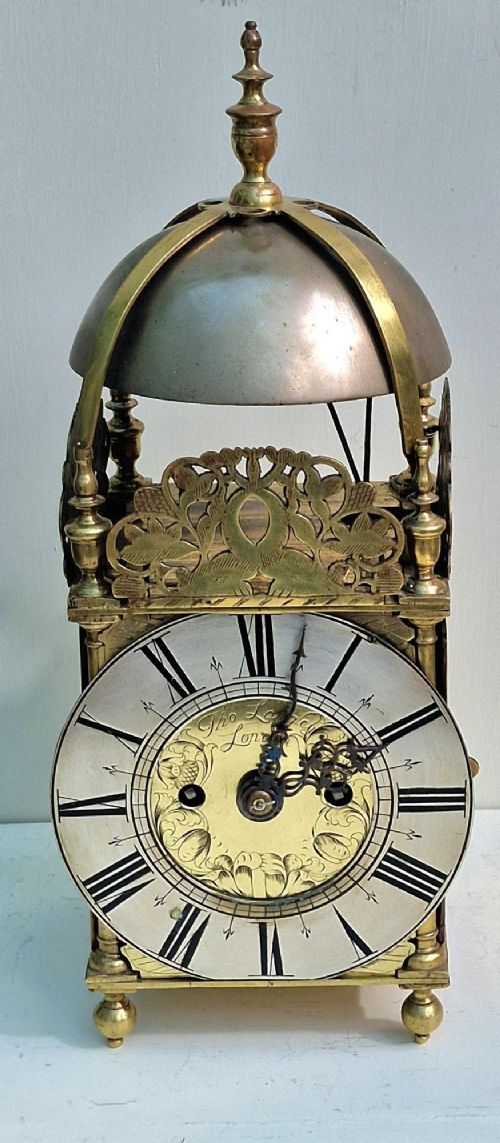
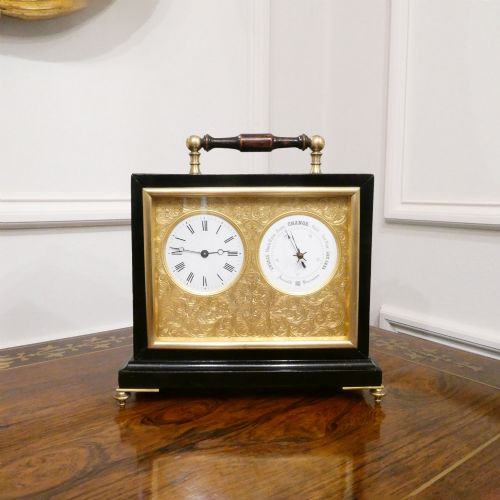
Earlier English examples also appear, such as brass lantern clocks driven by weight and line or fusee movements. Alongside these stand pocket sundials and library clocks housed in brass frames with ebonised wood or leather elements.
How they were made
Makers constructed the structural framework primarily from cast and sheet brass, frequently applying a layer of gilding to enhance the surface colour and protect the metal from tarnishing. Steel and iron components formed the internal gear trains, escapements and springs necessary for accurate timekeeping.
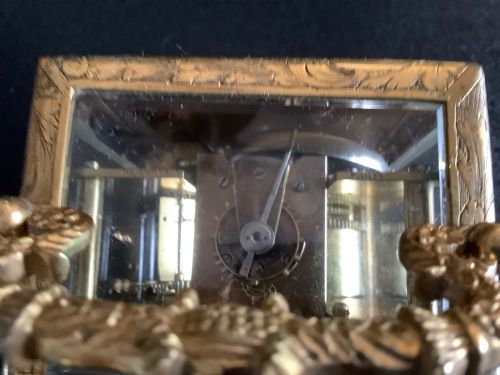
Engravers decorated the brass cases by hand using sharp gravers to cut foliage, scrolls and architectural motifs directly into the metal plates and bezels. Glaziers fitted bevelled glass windows into the sides and top of carriage clocks to display the escapement, while enamel dials provided a clean surface for painted numerals.
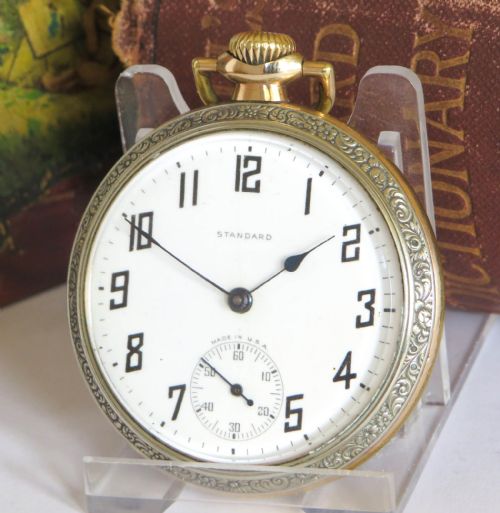
Object types recorded across the inventory include carriage clocks, lantern clocks, mantel clocks, scientific instruments, pocket watches and garden ornaments.
What varies in quality
The depth and clarity of the hand engraving distinguish finer pieces from simpler production, where shallow or mechanical surface decoration lacks crisp definition. Heavy cast brass cases with substantial gilt surfaces indicate superior manufacture compared to thinner stamped alternatives.
Horological complexity also separates standard movements from exceptional ones, particularly the inclusion of platform escapements, striking trains, repeating work or fusee mechanisms. Makers who signed their dials or movements generally produced work with greater attention to mechanical refinement and finishing.
Henri Jacot·Thomas Langley·John Spershott·Peter Closon·Mappin and Webb·Arnold and Frodsham·Thomas Cole·James Cole·Hunt And Roskell·Charles Frodsham·Drocourt·Tiffany·Alfred Hollinge·John Massey
The Engraved Brass Timepiece Glossary
- Carriage clock
- A portable spring-driven timepiece designed for travel during the nineteenth century. These clocks typically feature a rectangular brass case with glass panels and a swing handle.
- Lantern clock
- An early form of domestic weight-driven or spring-driven clock originating in the seventeenth century. They feature brass frames, bell domes on top and pierced frets.
- Fusee
- A conical pulley used in mechanical clocks and watches to maintain even tension on the gear train as the mainspring unwinds. This mechanism improves timekeeping accuracy across the power reserve.
- Platform escapement
- A small, self-contained escapement unit mounted on a bridge within a carriage clock. It replaces the traditional pendulum and allows the clock to keep time while moving.
Engraved Brass Timepiece: Frequently Asked Questions
What is a carriage clock?
A carriage clock is a portable timepiece developed in the nineteenth century for travellers, housed in a rectangular brass case with glass panels.
Most examples are powered by a mainspring and regulated by a balance wheel rather than a pendulum, allowing them to function while transported.
How do lantern clocks work?
Lantern clocks are early mechanical timepieces that traditionally hang on a wall or stand on small feet, driven by weights or springs.
They derive their name from their brass box-like shape and feature a distinctive bell mounted on top above decorative pierced frets.
How do I wind an antique clock?
Antique timepieces require a matching winding key inserted into the dial holes to tension the mainspring or lift the driving weights.
Care must be taken not to overwind the movement, stopping as soon as resistance is felt to protect the internal brass gears.
How do I identify the period of a brass clock?
Period identification relies on examining the case style, the shape of the engraving, the signature of the maker and the type of escapement.
Seventeenth-century pieces display robust brass frames and frets, whereas Victorian carriage clocks feature bevelled glass and machine-gilt surfaces.