


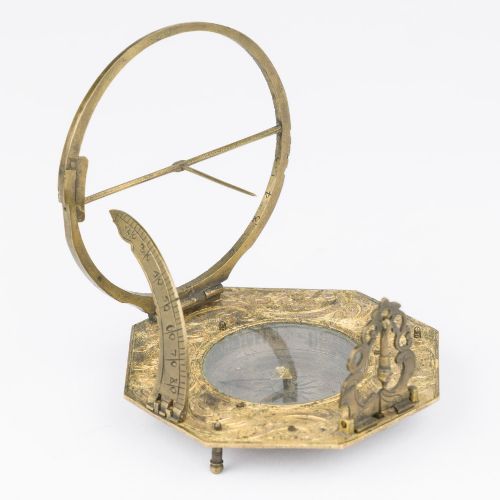
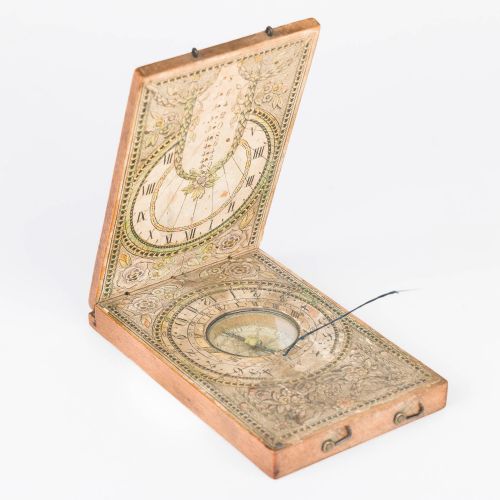


Engraved Brass Dial
An engraved brass dial brings precision and warmth to a room, offering a focal point rooted in centuries of horological skill.
Engraved Brass Dial
When you search for an engraved brass dial, you encounter the decorative and functional faces of clocks, barometers, and scientific instruments. These items originate predominantly from Georgian and Victorian periods, alongside earlier examples spanning the seventeenth and eighteenth centuries.
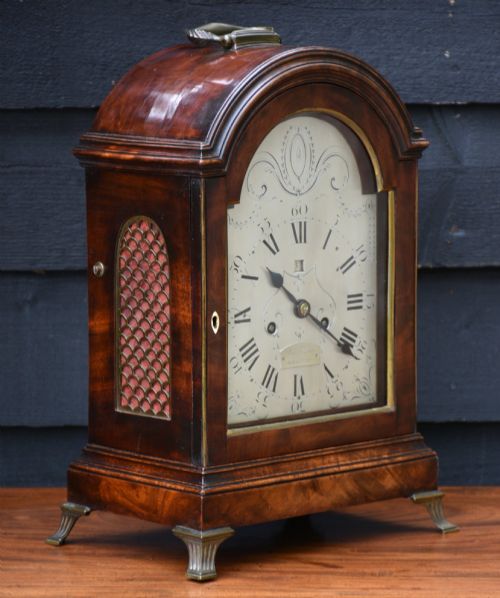
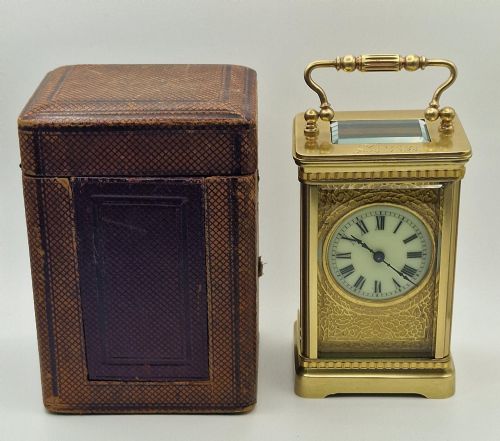
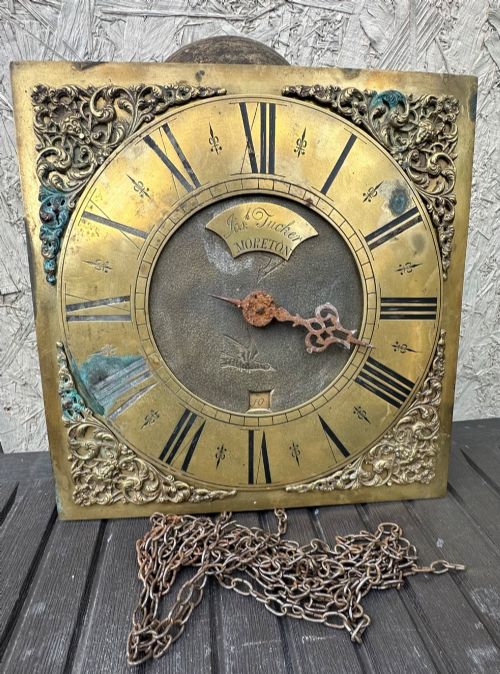
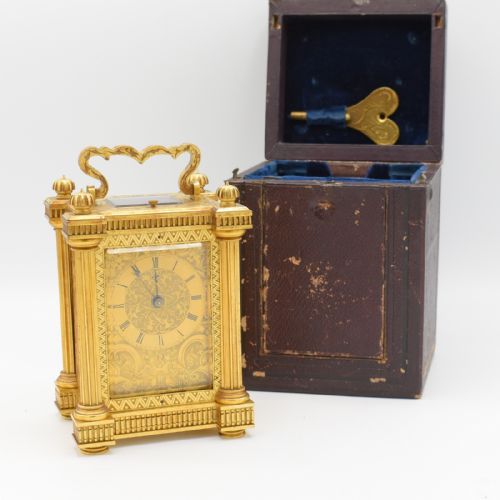
The versions most common on this page appear on carriage clocks, bracket clocks, and longcase clocks. Makers housed these dials within mahogany, rosewood, oak, gilt brass, and leather cases, often incorporating silvered metal and steel components.
Collectors find that an engraved brass dial anchors the entire aesthetic of a timepiece, reflecting the mechanical complexity housed behind the face. Each piece demonstrates the specific regional tastes of English, French, and German workshops.
Materials and Construction
Craftsmen built these dials from solid brass plates, utilising hand-graving tools to cut intricate floral, geometric, or foliate patterns directly into the metal surface. Silvered metal auxiliary rings were frequently pinned to the primary brass plate to provide high-contrast readability for numerals.
Makers integrated glass panels, enamel sub-dials, and gilt brass housings to protect the delicate inner movements of carriage and mantel clocks. Heavy timber cases in mahogany, oak, and rosewood provided sturdy structural support for the weight of brass movements and dials.
Engraved Brass Dial Retail Price Guide 2026
Typical asking prices for engraved brass dial among the pieces listed under this phrase on Sellingantiques today, from the lower quarter to the upper quarter. They describe what is for sale here now, not the wider market.
Listings feature mahogany, rosewood, oak, and leather alongside glass, enamel, and gilt brass components.
Distinctions in Quality
The depth, clarity, and crispness of the hand-cutting separate superior examples from standard production pieces. Master engravers achieved clean, sharp lines that catch the light, whereas lesser pieces display shallow or repetitive machine-pressed patterning.
The integration of the dial with high-grade mechanical movements, such as fusee or platform escapement systems by renowned makers, elevates the overall standard of the piece. Superior specimens retain their original fire-gilding and silvering without modern refinishing.
Cousens And Whiteside·Andreas Vogler·John Spershott·John Waller·Delépine Barrois·Gontard And Bolviller·Thomas Cole·Charles Frodsham·Holingue Frères·Drocourt·Paul Garnier·Mappin And Webb
The Engraved Brass Dial Glossary
- Fusee
- A conical pulley used in mechanical clocks to maintain even power delivery as the mainspring unwinds. This mechanism ensures consistent timekeeping across the running duration.
- Carriage clock
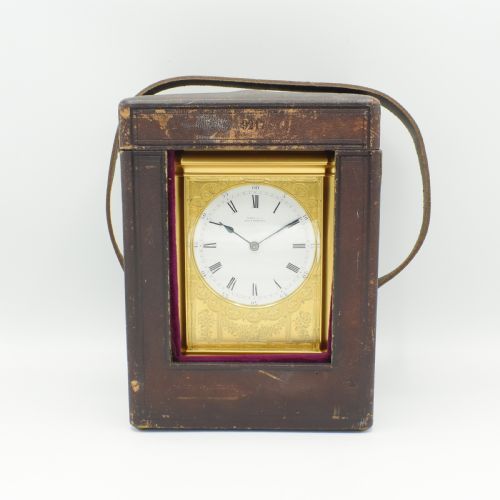
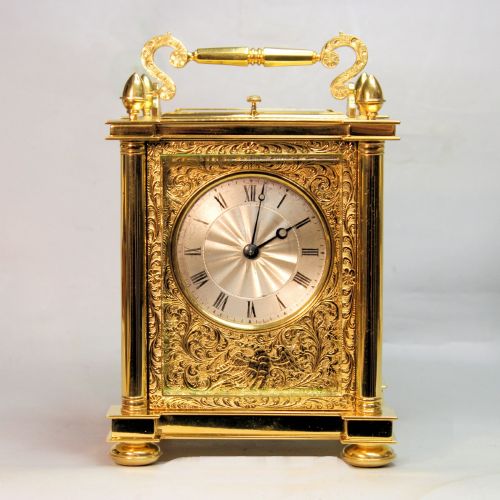
- A portable spring-driven timepiece designed for travellers, typically housed in a brass-framed glass case with a swing handle. These pieces frequently feature finely engraved gilt brass masks surrounding the dial.
- Silvered metal
- A brass or copper base treated with a silver solution to create a bright, frosted white surface for chapter rings. This treatment improves legibility against the darker brass background.
- Escapement
- The internal mechanism that controls the release of gear train energy to maintain the pendulum or balance wheel motion. Platform escapements are common in portable nineteenth-century timepieces.
- Bracket clock
- A portable table clock historically placed upon a matching wall bracket or furniture surface. These clocks often display elaborate engraved brass backplates and arched dials.
Engraved Brass Dial: Frequently Asked Questions
What periods do these engraved brass dial clocks come from?
The pieces span the seventeenth, eighteenth, and nineteenth centuries, with a strong representation of Georgian and Victorian design.
Craftsmen across England, France, and Germany produced these items for domestic use and export markets.
How do I care for an antique brass dial?
Keep the piece away from direct sunlight and excessive moisture to protect the delicate lacquer and silvered metal surfaces.
Dust the glass and case gently with a dry, soft cloth without applying harsh chemical cleaners to the engraved metal.
Were these dials made primarily for clocks?
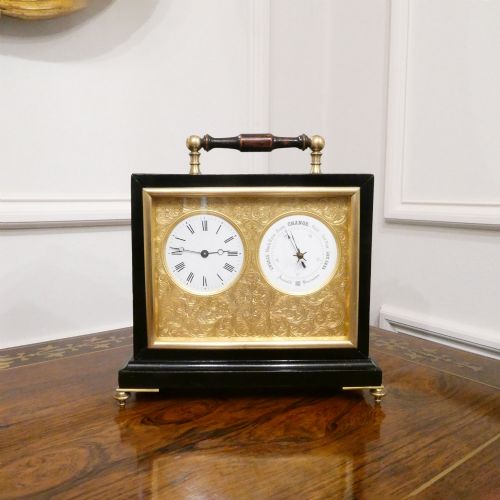
While most appear on bracket clocks, longcase clocks, and carriage clocks, similar engraved brass work also surfaces on barometers and scientific instruments.
Each application utilised the same hand-cutting techniques to display operational scales and time markers.
How do I distinguish French and English carriage clocks?
English examples often feature heavy fusee movements housed in robust wooden or brass cases, emphasising mechanical longevity.
French pieces commonly employ platform escapements within gilt brass glass-panelled cases, frequently showcasing intricate floral engravings on the dial mask.