



Engraved Brass Case
An engraved brass case offers a combination of heavy metalwork and precise surface decoration, usually seen on nineteenth-century carriage clocks, travel pieces, and scientific instruments.
Engraved Brass Case
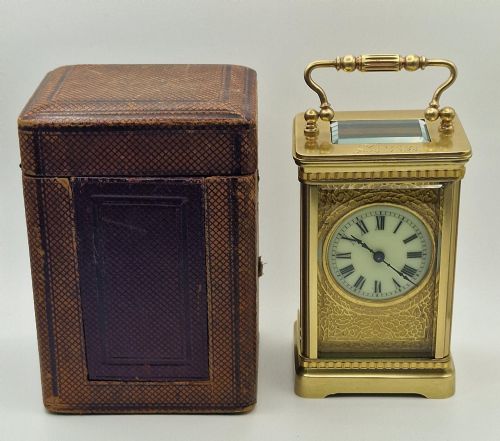
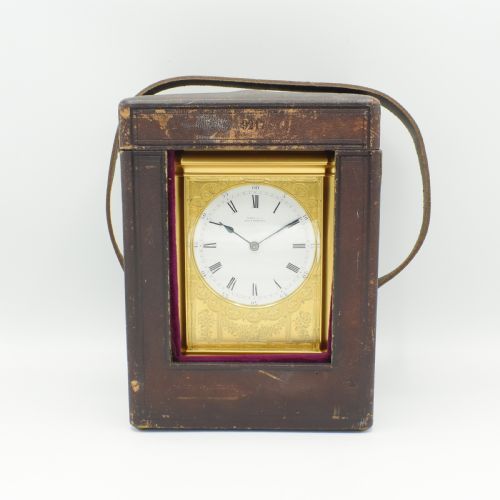
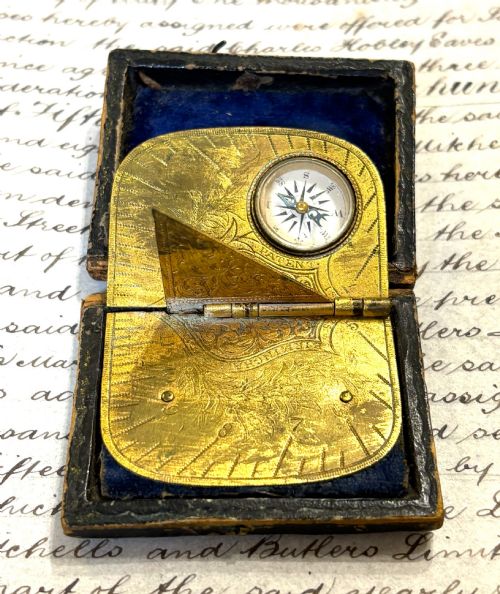
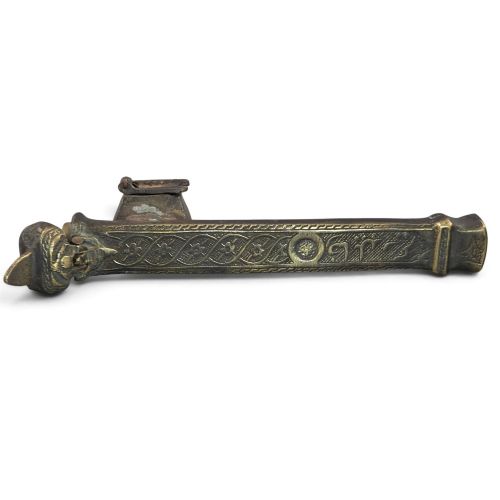
An engraved brass case typically houses mechanical timepieces, travel instruments, and desk accessories originating from nineteenth-century France and Britain. These items range from large repeating carriage clocks and library clocks to smaller pocket sundials and travelling pen cases.
The most common examples on this page are French carriage clocks and repeating timepieces featuring detailed hand-cut foliage, scrollwork, or geometric patterns across the metal housing. Alongside clocks, buyers encounter scientific instruments, trench art shell cases, and games boxes incorporating brass elements.
Origins stretch from the eighteenth century through the Victorian era and into the early twentieth century, taking in Georgian work, Ottoman pieces, and military trench art. The primary focus remains the marriage of a sturdy metal housing with deliberate surface engraving.
Materials and construction
Makers utilised solid brass, gilt brass, and sometimes copper shell cases as the foundational structure for these housings, often pairing the metal with bevelled glass panels or enamel dials. Oak and mahogany occasionally form the internal framing or secondary boxes for larger clocks and desk sets.
Surface decoration was applied by hand using gravers and chisels to cut intricate floral scrolls, architectural motifs, or military insignia directly into the metal plate. Gifting or gilding was frequently applied to the finished brass surface to provide a bright, reflective finish that resisted tarnish.
Engraved Brass Case Retail Price Guide 2026
Typical asking prices for engraved brass case among the pieces listed under this phrase on Sellingantiques today, from the lower quarter to the upper quarter. They describe what is for sale here now, not the wider market.
Listings feature 19th-century Victorian works alongside 18th-century pieces, incorporating brass, glass, enamel, leather, velvet, oak, and mahogany.
Assessing quality and execution
The depth, precision, and consistency of the hand-engraving set individual pieces apart, with finer works displaying crisp lines and balanced symmetry across every visible panel. Maker attribution also plays a central role, as signed examples from established workshops command greater attention than unmarked output.
The integration of secondary materials such as polychrome enamel panels, bevelled glass lights, and functioning mechanical movements elevates the overall standard of the object. Heavier gauge brass housings that retain their original gilding and structural integrity represent the upper tier of surviving examples.
Margaine Of France·Drocourt·Holingue·Alfred Hollinge·John Massey
The Engraved Brass Case Glossary
- Carriage clock
- A portable spring-driven clock designed for travellers, typically housed in a brass case with a glass top and sides. They often feature elaborate engraving on the mask and pillars.
- Gorge
- A specific style of carriage clock case featuring a stepped, stepped-cornice top profile. This frame shape provides distinct flat planes ideally suited for continuous hand engraving.
- Repeater
- A mechanical clock complication that chimes the hours and quarters on demand when a button or pendant is pressed. These mechanisms are frequently enclosed within heavily engraved brass housings.
- Trench art
- Decorative items created by soldiers, prisoners, and civilians from war debris and munitions scrap during active conflicts. Brass artillery shell cases form the primary medium for this category.
- Sundial
- An instrument that indicates the time of day by the sun's shadow cast upon a calibrated plate. Folding pocket versions often utilise engraved brass plates with hinged gnomons.
Engraved Brass Case: Frequently Asked Questions
What periods do these cases come from?
The pieces span the eighteenth century through to the early twentieth century, with the majority belonging to the Victorian era and the nineteenth century. French carriage clocks and scientific instruments form the most prominent chronological groups.
Earlier examples include Georgian longcase clocks and eighteenth-century Ottoman travelling pieces, while later entries extend into early twentieth-century military trench art.
How do I identify a quality engraved brass case?
Examine the crispness and depth of the incisions in the metal, as superior hand engraving displays sharp, confident lines without slip marks. The weight of the brass and the clarity of any glass panels or enamel dials also indicate higher production standards.
Signed pieces or those bearing known workshop marks often demonstrate finer internal mechanics and superior finishing on concealed surfaces.
Were these pieces meant for travel?
Many of the clock housings and pocket instruments were specifically engineered for mobility, featuring protective leather outer cases and sturdy brass frames. Carriage clocks and folding sundials were essential equipment for nineteenth-century journeys.
Desk accessories and large library clocks, by contrast, remained stationary within domestic studies and public offices.
How should I care for an engraved brass housing?
Keep the metal clean by dusting gently with a soft, dry cloth to prevent dirt from accumulating within the recessed engraved lines. Avoid abrasive metal polishes that can wear away gilding or soften the crisp edges of the hand-cut decoration.
Maintain stable indoor humidity levels to protect any integrated glass, wood, or enamel components housed within the metal structure.