






English Wood Tray
These English wood tray pieces bring practical service and traditional character to a room, offering genuine historical utility for modern interiors.
English Wood Tray
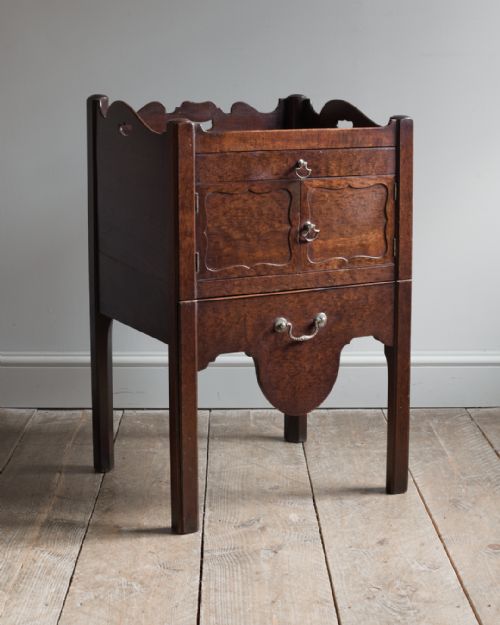
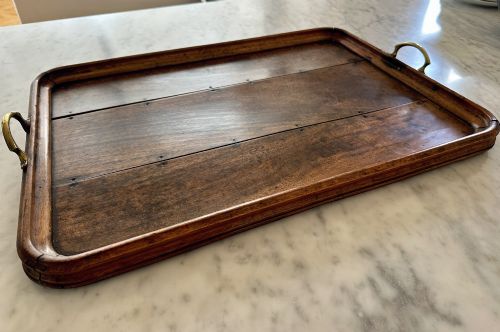
Mahogany forms the primary material foundation across the selection, often enriched with contrasting stringing like boxwood and ebony, or paired with brass hardware. Buyers frequently encounter forms designed for hospitality and domestic service, ranging from portable serving platters to fixed tray-top side tables.
The objects cross multiple decades of English craftsmanship, taking shape as folding garden party tables, rotating lazy susans, and specialised cartographer's serving trays. Each piece reflects the specific domestic requirements of its era, utilising native and imported timbers to balance structural durability with refined appearance.
What varies in quality
Quality differences emerge in the selection of timber grain and the precision of decorative inlay work, where crisp geometric stringing separates superior examples from plainer items. The integration of functional hardware, such as solid brass carrying handles and stable folding mechanisms, indicates the original grade of manufacture.
Proportion and surface finish define the upper tier of these objects, showing careful attention to edge moulding and polished timber patination. Pieces that retain their original structural integrity without excessive timber replacement demonstrate better preservation of their initial craftsmanship.
English Wood Tray Retail Price Guide 2026
Typical asking prices for english wood tray among the pieces listed under this phrase on Sellingantiques today, from the lower quarter to the upper quarter. They describe what is for sale here now, not the wider market.
Listings show items spanning the eighteenth through the early twentieth century, constructed from mahogany, walnut, ash, and brass.
The English Wood Tray Glossary
- Dumb waiter
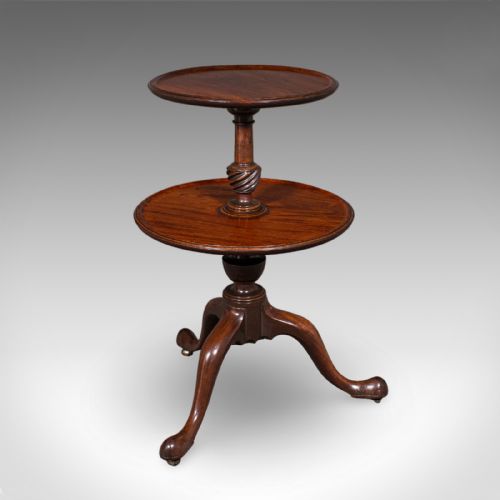
- A multi-tiered serving stand designed to hold food or tableware without the need for a servant present in the room. These pieces typically feature two or three graduating circular trays supported by a central column and tripod base.
- Stringing
- A narrow strip of contrasting timber inlaid into the surface of a piece to create decorative borders or geometric patterns. Makers frequently used boxwood and ebony against a mahogany background.
- Tunbridge ware
- A specialised form of decorative woodwork originating from Kent, featuring mosaic patterns assembled from thousands of tiny tinted wood blocks. These detailed designs often adorn small dishes and boxes.
- Gallery
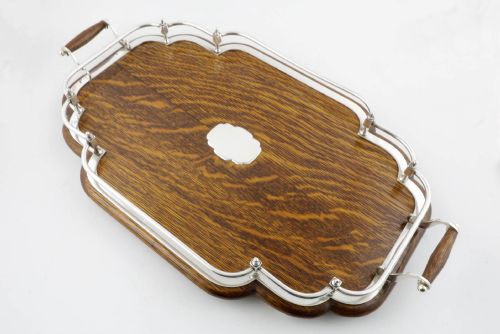
- A raised wooden border surrounding the edge of a tray or table top to prevent items from sliding off during service. Galleries can be solid, pierced, or constructed with spindles.
- Treen
- Small handmade wooden domestic objects valued for their tactile quality and historical utility. These items include platters, bowls, and turned containers shaped from native timbers.
English Wood Tray: Frequently Asked Questions
How do I care for antique wooden trays?
Keep wooden trays away from direct heat sources and strong sunlight to prevent the timber from drying out and the veneer from cracking. Occasional application of a suitable wax polish helps maintain the finish and protects the surface from moisture.
Avoid using water or chemical cleaners on antique wood, using instead a soft, dry cloth for routine dusting. Care should be taken with inlaid surfaces to prevent moisture from seeping into the joints between contrasting woods.
How can I date an English wooden tray?
Dating relies on examining the timber species, construction methods, and secondary woods used in the piece's assembly. Georgian examples often feature rich mahogany with fine hand-cut dovetails, while Victorian and Edwardian pieces may incorporate machine-sawn elements or different hardware styles.
Stylistic markers such as Sheraton revival inlay patterns or specific turning styles on dumb waiters provide further clues to the period of manufacture.
Were dumb waiters used as dining tables?
Dumb waiters functioned as supplementary serving furniture placed beside the main dining table to hold dishes, glasses, and cutlery. They allowed diners to help themselves during meals without constant interruption from domestic staff.
The rotating tiers and multi-level design provided convenient access to various courses and condiments within a compact floor space.