



English Wine Cooler
An English wine cooler brings historical dining ritual into the room, offering heavy timber or gleaming metal to chill bottles with stately gravity.
English Wine Cooler
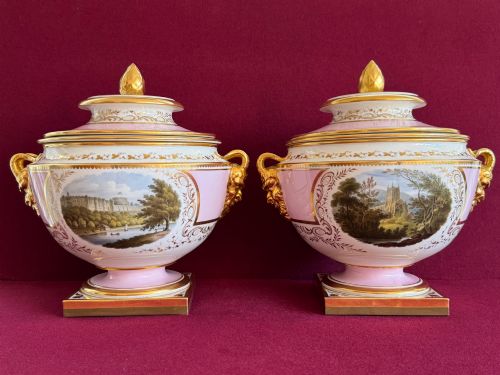
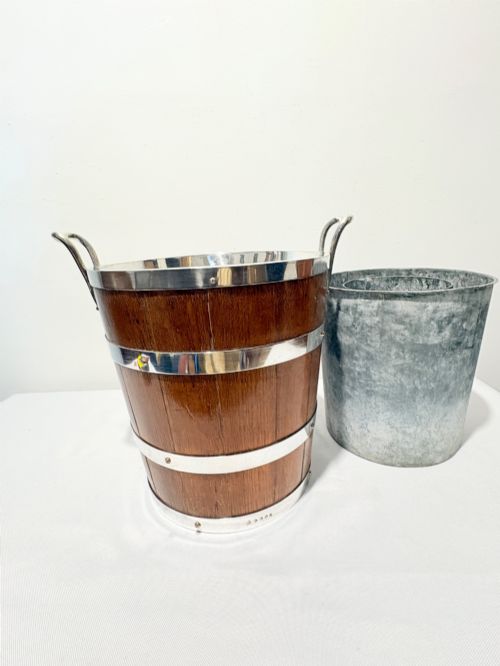
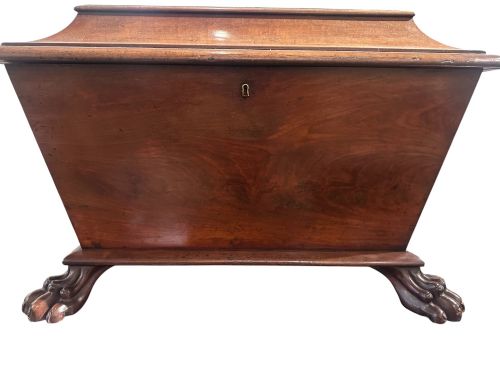
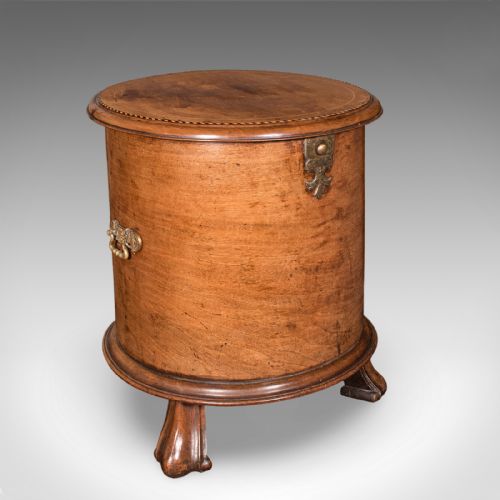
An English wine cooler encompasses traditional timber cellarettes, ceramic ice pails, and metal presentation vessels designed to keep bottles at temperature during formal meals. The examples on this page span the Georgian, Regency, and Victorian periods, manifesting primarily as sarcophagus-shaped boxes, oval coopered buckets, and classical campana vessels.
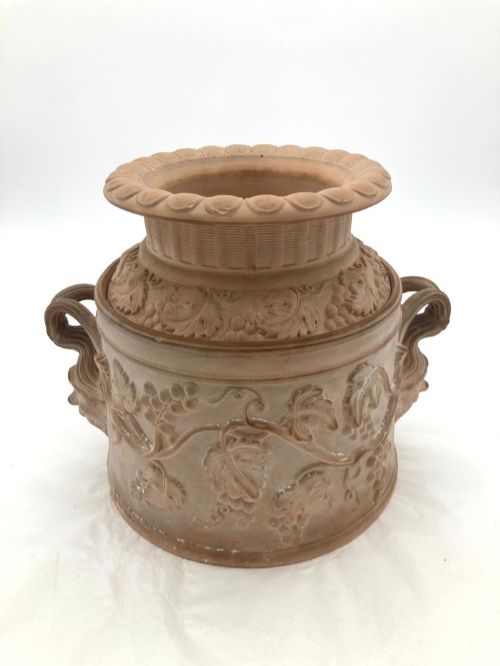
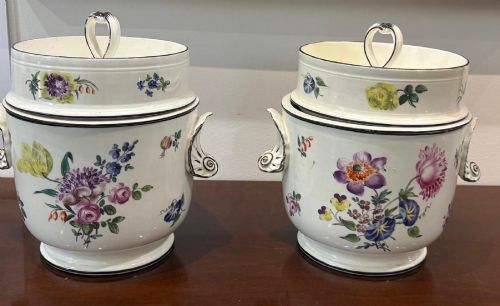
The standard timber form is the mahogany cellarette, frequently banded in brass and raised on feet or integrated into a stand for placement beneath the dining sideboard. Alternatively, ceramic iterations in creamware, terracotta, and stoneware provide bright, moulded surfaces suited to holding ice and bottles.
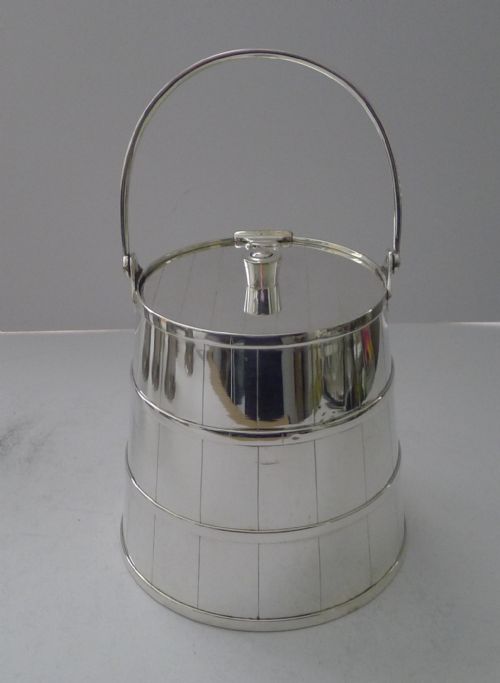
Metal variations range from Old Sheffield Plate and silver plate to sterling silver and copper, often taking the form of monteith bowls or champagne buckets. These diverse shapes share a singular purpose: managing ice and wine storage with structural integrity and decorative presence.
Materials and Construction
Cabinetmakers utilised dense timbers such as mahogany, oak, and walnut, employing precision joinery and coopered stave construction to hold liquids and ice safely. Brass bands, spindle galleries, and handles were fastened securely to reinforce heavy wooden bodies against moisture and weight.
Ceramic pieces relied on moulded earthenware, creamware, and stoneware pastes fired in kilns to achieve durable, glazed vessels capable of retaining coolness. Metal items utilised hand-hammered copper, spun silver plate, or Old Sheffield Plate fused over base metals to create reflective, rust-resistant surfaces.
Several timber cellarettes include hidden internal compartments designed to keep the wine keys safely away from thirsty guests.
Evaluating Craft and Condition
Quality rests in the precision of the timber selection, such as richly figured flame mahogany or tightly grained coopered oak, paired with crispness in cast brass fittings and mounts. Superior pieces display harmonious proportions, secure joints, and original linings or interior partitions rather than modern replacements.
In ceramics and glassware, clarity of moulding, depth of glaze, and the absence of firing faults mark the higher tier of production by makers like Worcester or Davenport. Metal vessels show refinement through clean soldered seams, substantial weight, and well-preserved plating or hallmarking.
Flight Barr and Barr·Chamberlain Worcester·Alexander Clarke and Co·Davenport
The English Wine Cooler Glossary
- Cellarette
- A lockable container used to store bottles of wine near the dining table. They frequently mirror miniature sarcophas or chests.
- Campana
- A bell-shaped vessel design derived from classical antiquity. These forms often appear in silver plate or ceramic ice pails.
- Coopered
- Constructed from wooden staves bound with metal hoops, resembling barrel-making techniques. This method ensures waterproof strength in plant stands and wine buckets.
- Monteith
- A punch bowl featuring a scalloped or notched rim. Glasses were hung by their bases in the indents to chill.
- Creamware
- A refined earthenware developed in Yorkshire featuring a warm, pale yellow glaze. It became widely popular for domestic tablewares.
- Old Sheffield Plate
- A composite material formed by fusing a thin sheet of silver to a thicker copper base. It predates electroplating.
English Wine Cooler: Frequently Asked Questions
How were these coolers used historically?
These vessels sat on the floor or on stands near the dining table, packed with ice or cold water to chill wine bottles between servings.
Servants would draw bottles from the cellarette as needed during long, multi-course meals.
Can I use an antique cooler for ice today?
Many timber cellarettes contain metal or lead linings originally intended for ice and water containment.
Checking the interior condition determines whether a piece safely holds melting ice or serves better for dry bottle storage.
How do I distinguish Regency from Georgian pieces?
Georgian examples often feature straight lines, carved bracket feet, and restrained brass mounts reflective of classical proportions.
Regency coolers frequently adopt heavier classical motifs, including paw feet, bold brass ring handles, and sarcophagus silhouettes.
Where should I place a wine cooler at home?
These substantial pieces anchor dining rooms well when positioned beside a sideboard or beneath a console table.
Smaller ceramic pails and silver buckets suit side tables or open shelving as functional decorative items.