

English Windsor Seating
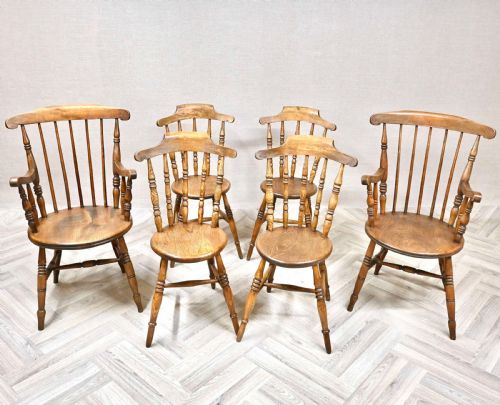
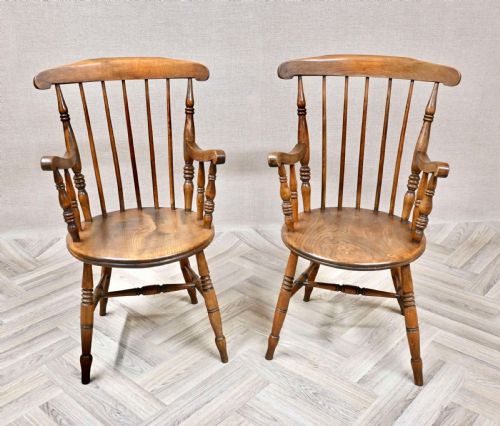
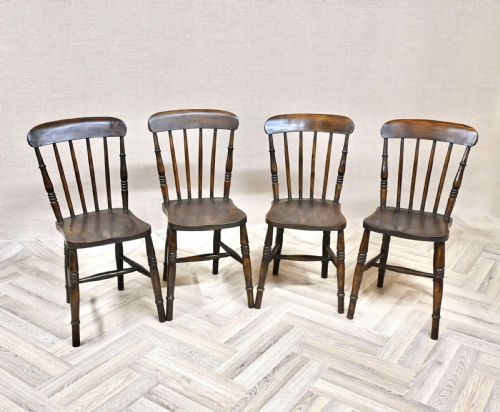
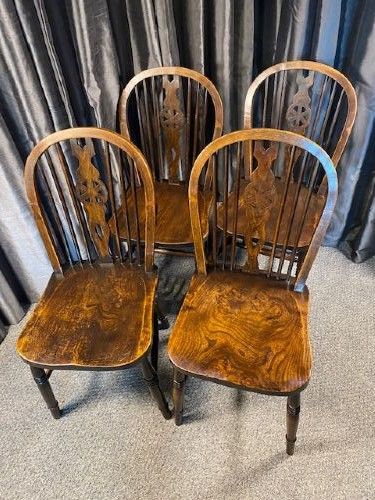
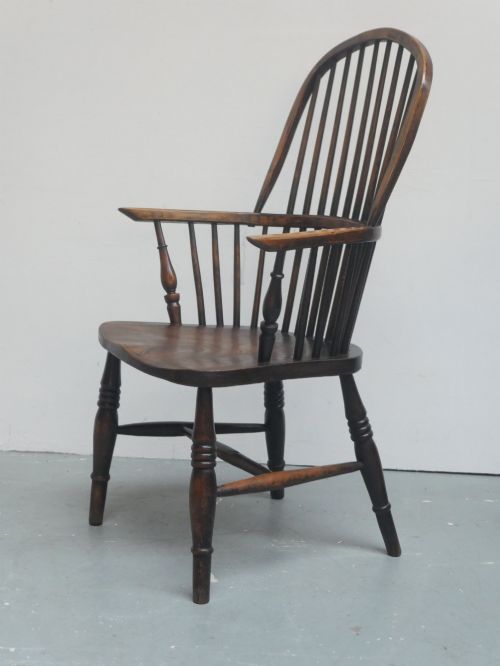
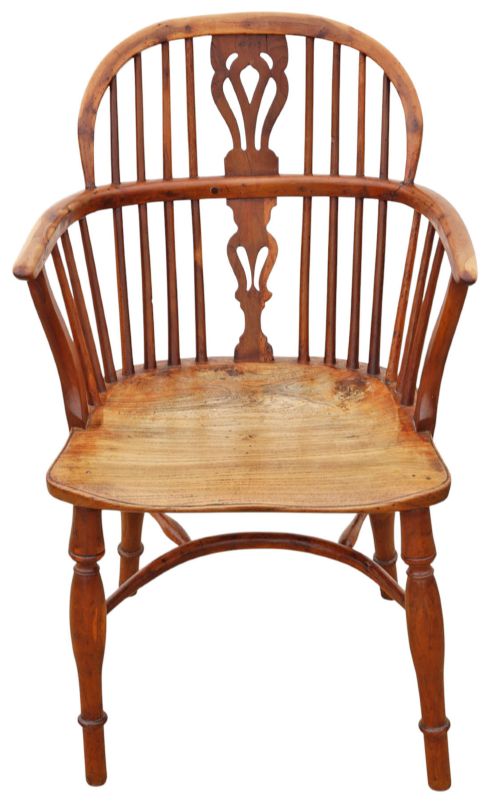
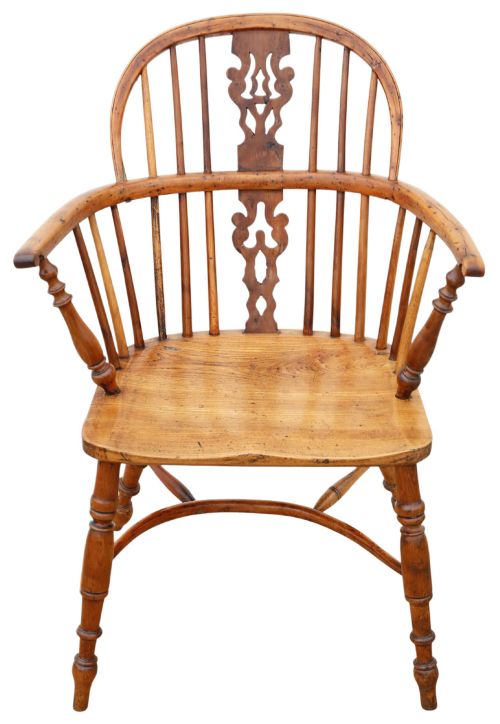
These English windsor seating pieces bring robust country character to an interior through traditional timber construction and sculpted seats.
English Windsor Seating
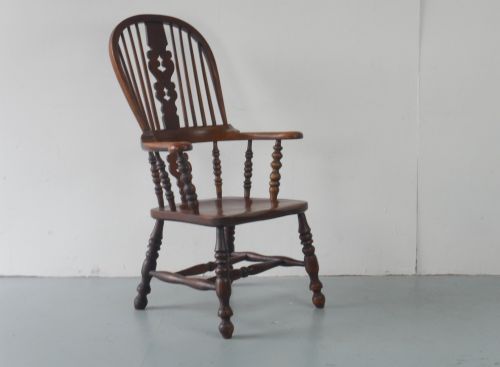
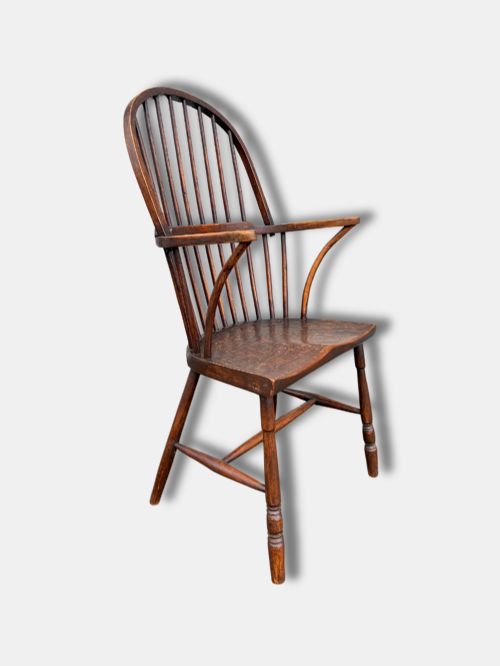
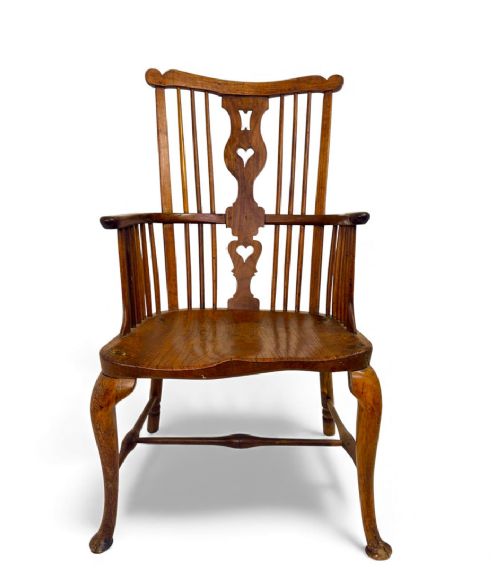
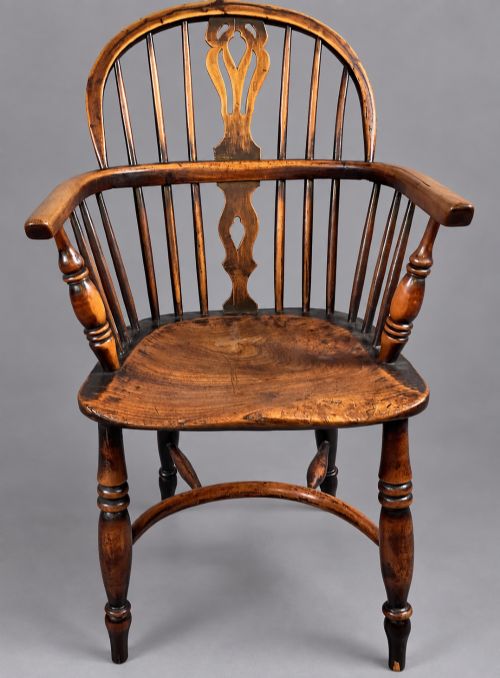
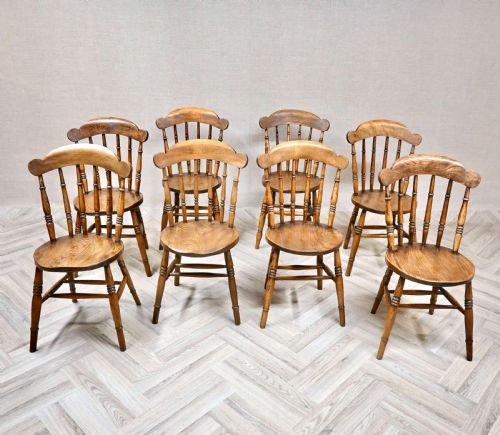
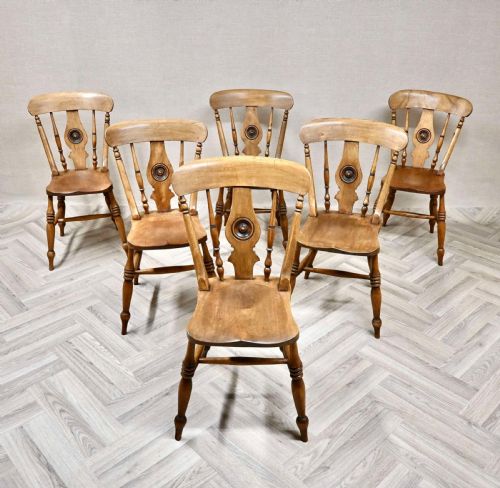
English windsor seating encompasses armchairs, dining chairs, stools, benches, and settles shaped by rural joinery traditions. The pieces on this page span the eighteenth, nineteenth, and early twentieth centuries, drawing on styles such as Georgian, Victorian country, and English country vernacular. Buyers encounter single armchairs, pairs, and larger matched sets suited for farmhouse kitchens and country houses.
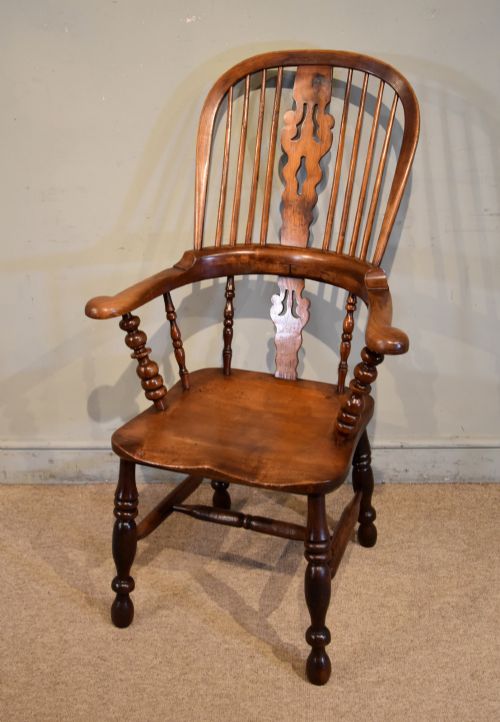
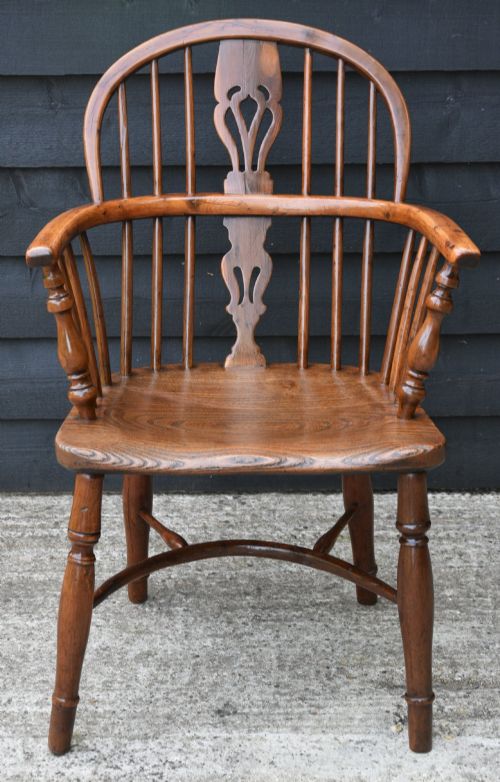
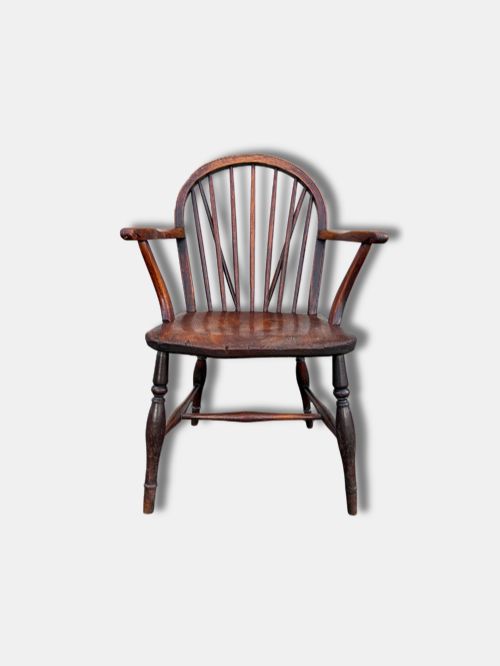
Armchairs dominate the selection, featuring variations like hoop backs, comb backs, stick backs, and broad arms. Regional iterations such as Thames Valley and High Wycombe designs appear alongside primitive and country house forms. Stools and benches offer alternative seating formats rooted in the same vernacular woodworking practices.
Construction and Materials
Maker construction relies on a combination of woods chosen for specific structural properties. Elm provides strong, stable timber for sculpted seats, while ash and beech form rigid spindles, legs, and bow frames. Yew appears frequently in high-status armchairs, valued for its rich grain and warm tone.
Traditional construction methods involve wedging legs and spindles directly into thick solid seats using tenons. Hoop backs and arms utilise steam-bent timber to achieve continuous curves. Component parts are shaped with drawknives and spoke shaves before final assembly.
English Windsor Seating Retail Price Guide 2026
Typical asking prices for english windsor seating among the pieces listed under this phrase on Sellingantiques today, from the lower quarter to the upper quarter. They describe what is for sale here now, not the wider market.
Listings feature woods including elm, ash, yew, beech, oak, and rush across eighteenth, nineteenth, and early twentieth-century periods.
Judging Quality
Quality rests upon the selection of timber and the depth of the sculpted seat. Yew wood examples with distinct figuring generally command greater appreciation than simpler utilitarian beech or ash versions. The harmony of proportions between the spindle rake and the turning of the legs defines the success of the piece.
Structural integrity depends on the tightness of the original joints and the survival of the timber without excessive replacement. The subtlety of the comb or hoop back profile separates standard provincial seating from finer vernacular cabinet work. Wear patterns on the seat reveal the authentic patina accumulated through generations of use.
John Brand of Sleaford·Worksop
The English Windsor Seating Glossary
- Hoop back
- A continuous bentwood bow forming the backrest and arm supports of a chair. This steam-bent member distributes weight evenly down to the wooden seat.
- Comb back
- A high chair back featuring vertical spindles topped by a horizontal headpiece resembling a traditional hair comb. These designs often date to the eighteenth century.
- Smoker's bow
- A low-backed Windsor arm chair with a rounded continuous rail and turned spindles, also known as a captain's chair. Such forms are common in nineteenth-century domestic and commercial interiors.
- Thames Valley
- A regional style of Windsor seating associated with workshops along the river Thames. These examples frequently incorporate yew wood and elaborate wheel or splat motifs.
- Broad arm
- An armchair featuring one widened wooden arm rest designed for writing or practical utility. This form appears across nineteenth-century vernacular seating.
English Windsor Seating: Frequently Asked Questions
How do I date an antique windsor chair?
Dating relies on observing tool marks, wood combinations, and the evolution of back designs from eighteenth-century comb backs to nineteenth-century wheel backs. Regional characteristics also offer clues to the period of manufacture.
Examination of the seat thickness and leg turnings helps narrow the decade of production.
Are windsor chairs comfortable for daily use?
The sculpted wooden saddles of windsor seats provide ergonomic support designed for extended sitting. Their robust construction handles daily dining and living room use without difficulty.
Adding loose squab cushions can alter the seat height and softness according to personal preference.
What is a Thames Valley windsor chair?
Thames Valley windsor chairs represent a distinct regional tradition utilising high-grade timbers such as yew wood and elm. Workshops in this area produced sophisticated forms with refined turnings and crinoline stretchers.
These pieces often display superior grain patterns and sculptural back splats compared to provincial alternatives.