






English Weather Instrument
An English weather instrument records the turning air in timber, glass and silvered metal, bringing precision science into domestic rooms.
English Weather Instrument
An English weather instrument covers barometers, barographs and scientific instruments spanning Georgian, Victorian and Edwardian periods. These devices measure atmospheric pressure to forecast meteorological shifts using mercury or aneroid mechanism inside fitted wooden cases.
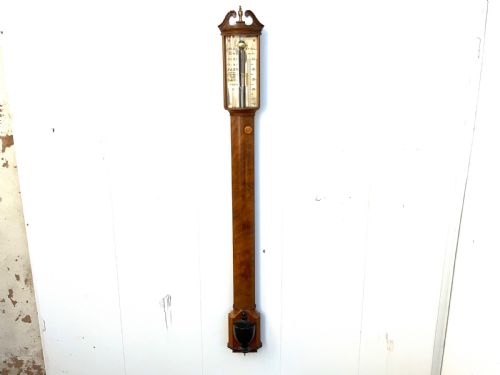
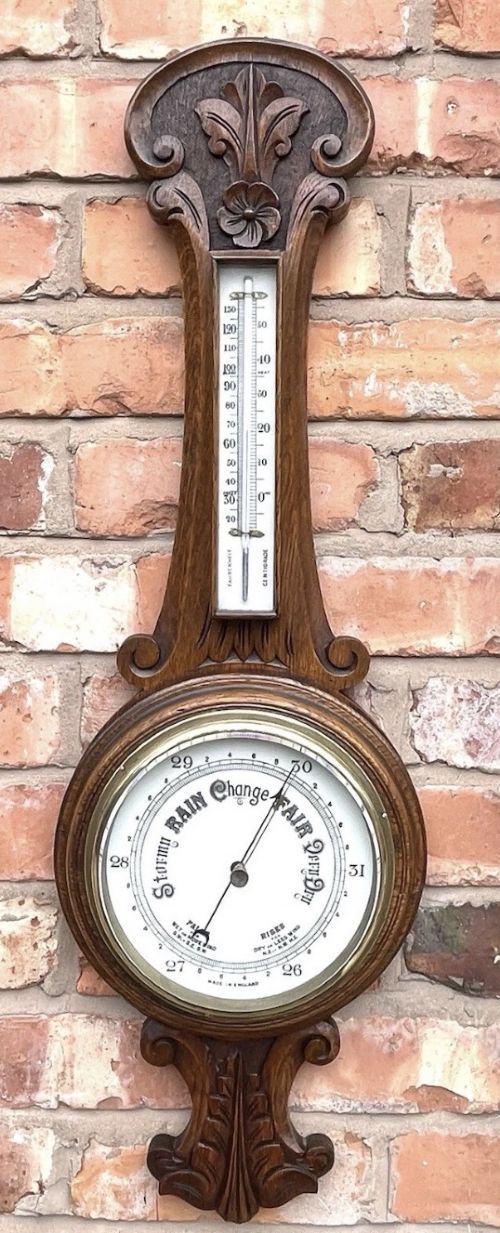
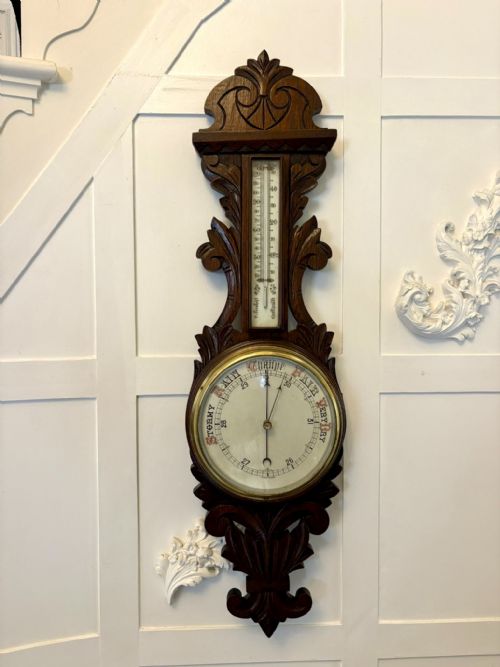
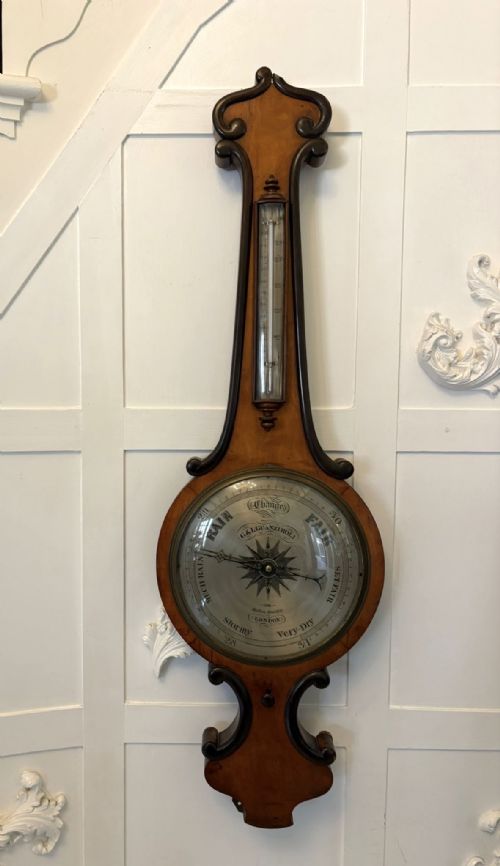
The domestic forms on this page include banjo barometers, wheel barometers, marine stick barometers and recording barographs housed in mahogany, oak or walnut. Examples stretch from late eighteenth century stick models to interwar aneroid instruments.
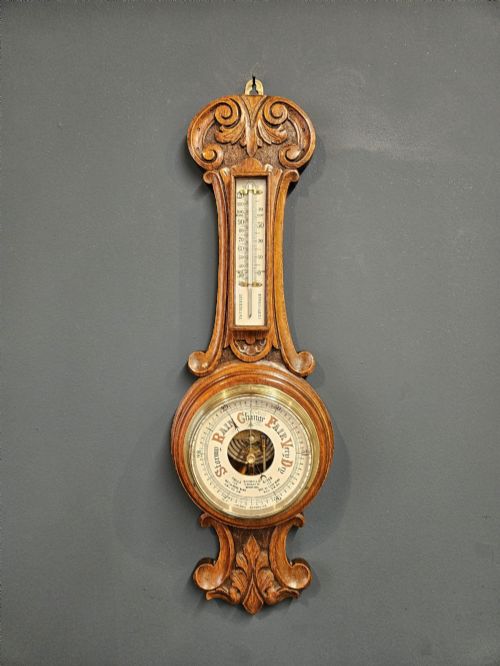
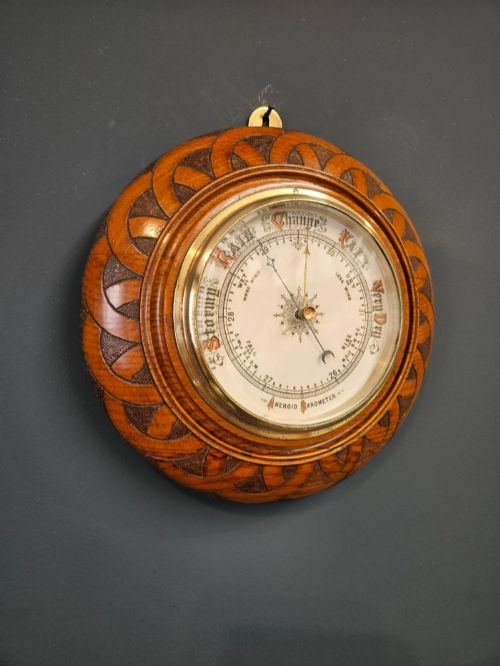
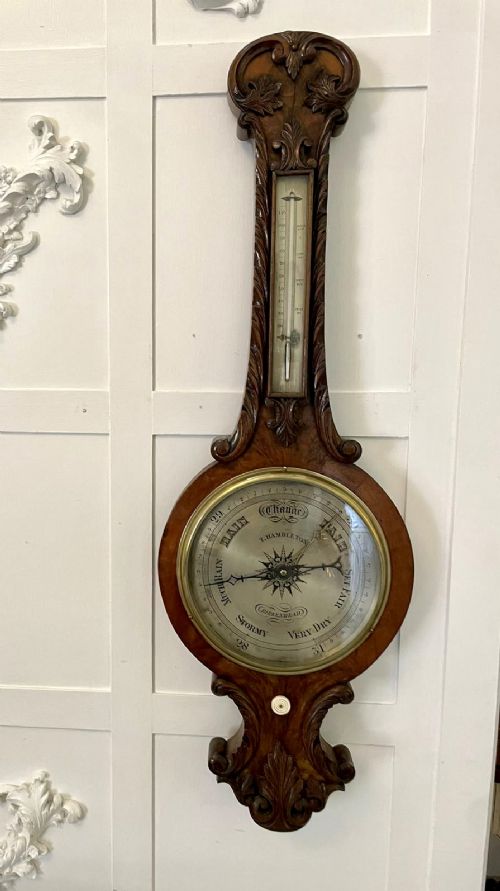
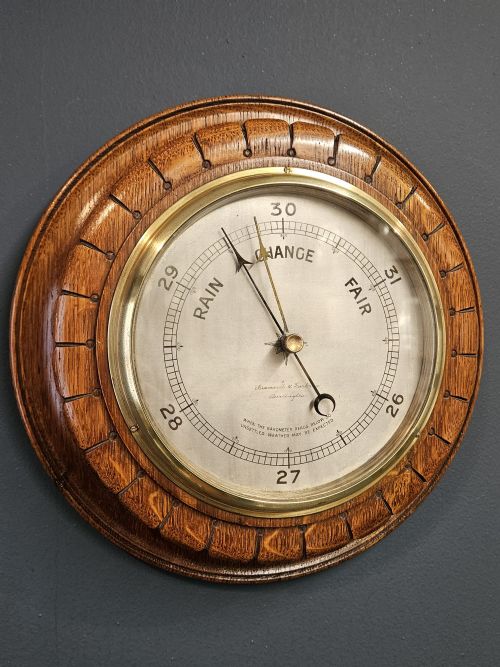
Wheel barometers and aneroid banjo formats dominate the selection, often incorporating boxed thermometers, bone adjustment dials and bevelled glass panels. Regional makers and London firms sign many of the silvered brass dials.
Materials and Construction
Cabinetmakers built the housings from dense hardwoods like mahogany, satinwood, rosewood and oak, frequently turning the timber or carving scrollwork and pediments. Some Georgian stick barometers employ boxwood stringing and delicate inlay upon the trunk.
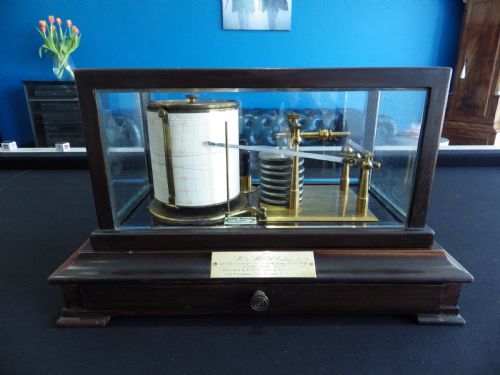
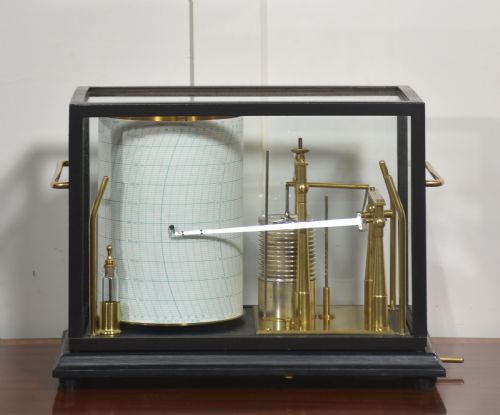
Dials utilise silvered metal, porcelain or painted brass, engraved with barometric scales and maker signatures. Aneroid and clockwork barograph movements rely on brass gears, glass ink pens and paper chart drawers housed beneath five glass panels.
English Weather Instrument Retail Price Guide 2026
Typical asking prices for english weather instrument among the pieces listed under this phrase on Sellingantiques today, from the lower quarter to the upper quarter. They describe what is for sale here now, not the wider market.
Listings feature oak, mahogany, walnut, brass and glass across Georgian, Victorian and Edwardian periods.
Judging Quality
Quality rests in the precision of the mechanical movement, the crispness of the engraved silvered dial and the integrity of the timber case. Finer pieces display refined proportions, carved detail and signed movements by known scientific makers rather than plain commercial production.
Original glass panels, intact mercury tubes or functioning aneroid capsules separate well-preserved instruments from those altered by later repairs. The crispness of the cabinetwork and the legibility of the scale divisions dictate the standing of each piece.
Short & Mason·Negretti & Zambra·George Dollond·J Hughes London·W Watson & Sons
The English Weather Instrument Glossary
- Aneroid barometer
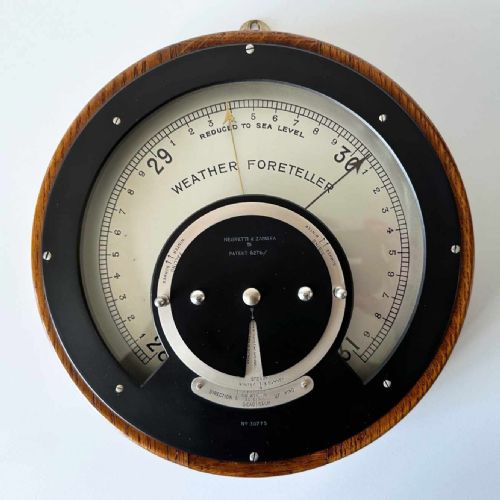
- A weather instrument measuring atmospheric pressure through the expansion and contraction of a sealed metal capsule, without using liquid mercury. This design allows for compact wall-hanging banjo shapes.
- Barograph
- A self-recording meteorological instrument that draws a continuous line of barometric pressure onto a rotating paper chart. These machines sit inside glazed mahogany or oak cases fitted with a clockwork drum.
- Stick barometer
- A tall, narrow instrument containing a vertical tube of mercury to show atmospheric pressure. Georgian and Victorian examples often feature exposed scales and architectural wooden pediments.
- Wheel barometer
- A round dial instrument connected by a pulley system to a mercury siphon tube, commonly known as a banjo barometer. The pointer sweeps across a wide circular scale indicating weather changes.
- Silvered metal
- A brass dial plate treated with a silver solution to create a bright, reflective surface for engraved lettering and numbers. It provides high contrast against black-filled graduations.
English Weather Instrument: Frequently Asked Questions
What is an aneroid barometer?
An aneroid barometer measures air pressure using a flexible metal box that expands or contracts as pressure shifts, moving a dial needle without liquid mercury.
Invented in the nineteenth century, this mechanism allowed barometers to take on compact banjo shapes and smaller desk formats suitable for domestic interiors.
How does a barograph work?
A barograph records air pressure continuously onto a rotating paper chart wrapped around a clockwork drum, driven by an airtight aneroid mechanism.
The ink arm traces a daily or weekly line, letting observers see weather trends at a glance inside glazed wooden display cases.
Where should I place a barometer?
Hang your barometer on an interior wall away from direct sunlight, radiators and exterior doors to prevent extreme temperature fluctuations from affecting the internal mechanism.
Most traditional instruments require minor calibration using a reference point before they sit accurately in a new room.
How do I date a barometer?
Dating relies on combining the timber case style, dial materials, maker signatures and technological markers like aneroid movements versus mercury tubes.
Georgian instruments favour clean mahogany stick cases, while Victorian and Edwardian pieces often introduce carved oak, aneroid capsules and elaborate wheel dial layouts.