





English Walnut Ottoman
These English walnut ottoman pieces span centuries of seating design, offering practical comfort and rich timber character for the modern home.
English Walnut Ottoman
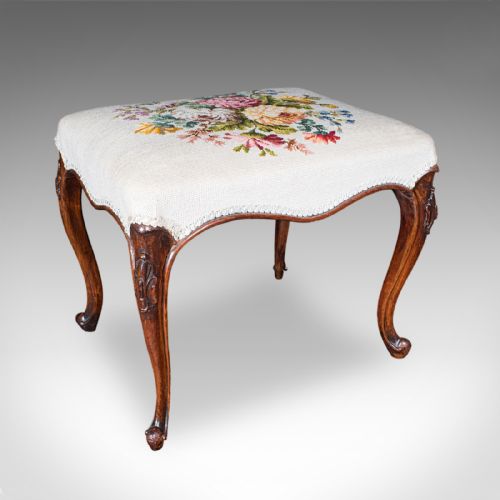
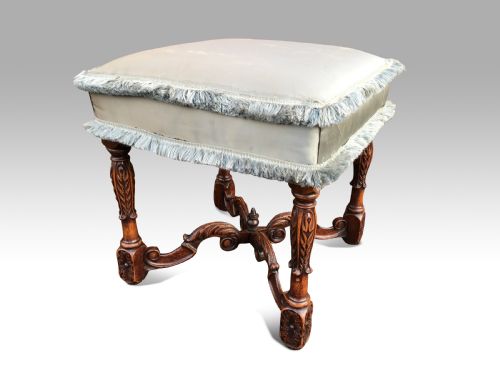
When you search for an english walnut ottoman, you find a variety of low seating forms including footstools, fireside stools, piano stools, and storage boxes. The pieces on this page range from compact mid nineteenth century gout stools to large Victorian coffee table conversions and Art Deco dressing seats.
Early examples include pieces from the Queen Anne period and eighteenth century styles, alongside robust Victorian designs in walnut with needlepoint, tapestry, wool, fabric, and red leather upholstery. Twentieth century pieces bring storage functionality and distinct Art Deco lines to the walnut framework.
How they were made
Makers shaped these frames from solid walnut and oak, employing traditional joinery to support padded tops covered in textile, woven fabric, wool, tapestry, or hand dyed leather. Buttoning and needlepoint feature prominently among the Victorian textiles, requiring skilled hand work for the upholstery.
The timber surfaces show the natural grain of walnut, finished to highlight the rich colour of the wood across different eras. Storage versions integrate internal compartments beneath the upholstered lids, combining cabinetry with seating.
English Walnut Ottoman Retail Price Guide 2026
Typical asking prices for english walnut ottoman among the pieces listed under this phrase on Sellingantiques today, from the lower quarter to the upper quarter. They describe what is for sale here now, not the wider market.
Storage functionality appears in both nineteenth century box stools and twentieth century Art Deco dressing variants.
What varies in quality
Quality rests in the crispness of the walnut framing and the integrity of the original timber construction, distinguishing simpler production from finer cabinet work. Pieces with period upholstery like needlepoint, tapestry, or hand dyed leather show greater hand craftsmanship.
Proportion and scale separate standard footstools from grander salon or fireside seating, while fitted storage mechanisms add complexity to twentieth century examples.
Harry and Lou Epstein
The English Walnut Ottoman Glossary
- Ottoman
- A low seat or stool with an upholstered top, often featuring internal storage or serving as a footrest. These pieces function in various rooms as seating or makeshift tables.
- Gout stool
- A specialised Victorian footstool featuring an adjustable inclined top designed to support a foot. These small walnut pieces appear frequently in mid nineteenth century collections.
- Needlepoint
- Hand stitched yarn worked over a canvas mesh, commonly found covering Victorian fireside footstools. This textile adds decorative texture and colour to the walnut frame.
- Art Deco
- A design style from the early twentieth century characterised by sleek lines and geometric forms, seen here in walnut dressing stools from makers like Harry and Lou Epstein.
English Walnut Ottoman: Frequently Asked Questions
What is an english walnut ottoman?
An english walnut ottoman is a low seating piece built from walnut timber, encompassing footstools, fireside stools, and lidded box seats.
These items range from Victorian upholstered footstools to Art Deco dressing seats with storage compartments.
How were these stools used?
They served primarily as footrests by the fireside, low seats for dressing tables, or piano benches for musicians.
Some designs included internal trunk space to store household items while providing a comfortable surface.
How do I date a walnut stool?
Dating relies on the style of the walnut frame, the upholstery materials such as needlepoint or red leather, and construction methods.
Victorian pieces often feature heavy buttoning, whereas Art Deco examples display twentieth century geometric styling.
Are these pieces suitable for daily use?
Most of these sturdy walnut frames handle regular placement in living spaces as footstools or coffee table alternatives.
Upholstery condition varies by piece, with some retaining antique textiles and others featuring later recovered surfaces.