



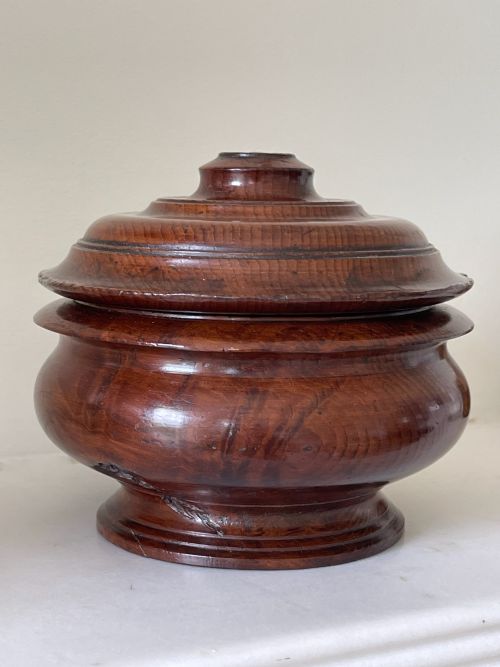


English Treen Container
An english treen container brings domestic history into your hands, crafted from dense hardwoods to hold household commodities long before modern packaging.
English Treen Container
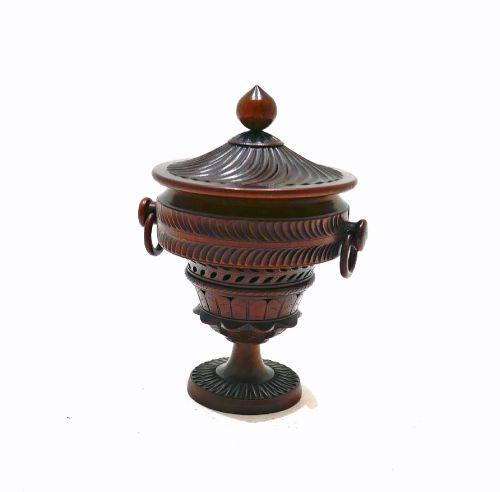
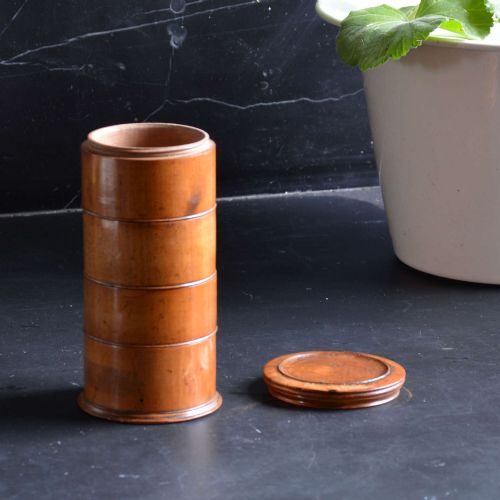
Buyers seeking an english treen container encounter small-scale turned vessels designed for specific household tasks rather than general storage. Spice towers with multiple stacked tiers, lidded pomanders, and spill vases dominate the forms present. Each object reflects the practical demands of historic households where wood served as the primary material for everyday containers.
How they were made
Makers shaped an english treen container using timber such as boxwood, sycamore, fruitwood, and yew wood on a pole lathe or foot-powered lathe. The natural grain of the hardwood dictated the final profile, often enhanced by tight turning rings and smooth, fitted lids. Craftsmen selected dense timbers that resisted splitting during the repeated handling of dry goods and spices.
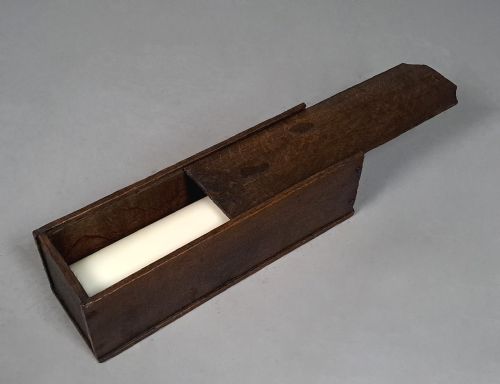
Joinery for larger hanging items like candle boxes relied on pegged or nailed board construction rather than turning. Smaller vessels and spice tiers required precise fitting between sections to keep aromatic contents secure. Surface finishes typically remained unpainted or developed a natural patina through decades of human touch.
English Treen Container Retail Price Guide 2026
Typical asking prices for english treen container among the pieces listed under this phrase on Sellingantiques today, from the lower quarter to the upper quarter. They describe what is for sale here now, not the wider market.
Some turned spice towers unscrew like miniature wooden skyscrapers built exclusively to keep kitchen cinnamon out of the damp.
What varies in quality
The quality of an english treen container rests on the crispness of the turning and the proportional balance of the vessel. Superior examples show confident tool marks, thin wall sections achieved by skilled hands, and well-preserved lids that fit their original bases precisely. Lesser pieces exhibit clumsy proportions or thick, heavy walls that lack the elegance of the best turnery.
Material choice and surface wear also determine the distinction between average and exceptional pieces. Dense timbers like boxwood and yew wood retain sharp details far better than softer woods over centuries of use. A surface with an undisturbed, warm patina and deep honey tones elevates the standing of any turned container.
The English Treen Container Glossary
- Treen
- Small handmade wooden domestic objects. The term derives from the old English word for tree.
- Spice tower
- A multi-tiered turned wooden container with stacked compartments. These vessels held various culinary spices in Georgian kitchens.
- String holder
- A hollow turned wooden vessel designed to dispense twine through a central aperture. They often feature a domed lid and a sturdy base.
- Patina
- The surface sheen and colour developed by wood over long periods of handling and exposure to light. It serves as a sign of age and genuine use.
- Fruitwood
- Timber sourced from fruit-bearing trees such as apple, pear, or cherry. Woodturners favoured it for its fine grain and stability.
English Treen Container: Frequently Asked Questions
What did they store inside?
An english treen container held dry goods including spices, loose tobacco, candle wax, and twine. Different forms matched specific domestic tasks around the historic home.
Tiered towers kept culinary spices separated in compartments, while lidded jars and boxes protected delicate items from moisture and pests.
How do I clean them safely?
Cleaning requires only a dry microfibre cloth to remove dust from the carved surfaces and crevices. Water and modern detergents strip natural oils and ruin historic finishes.
Keep wooden containers away from direct sunlight and sudden humidity shifts to prevent the timber from warping or splitting over time.
How old are these objects?
The pieces span from the early eighteenth century through the Edwardian period, with the majority originating in the Georgian and Victorian eras.
Turners produced these household items by hand long before mass industrial manufacturing replaced traditional woodturning techniques.
What woods were used most?
Makers selected dense hardwoods such as sycamore, boxwood, fruitwood, and yew wood for their stability and fine grain. These timbers allowed turners to cut thin walls and detailed mouldings.
Oak appeared more frequently on larger wall-hanging pieces like candle boxes where board construction suited the form better than turning.