

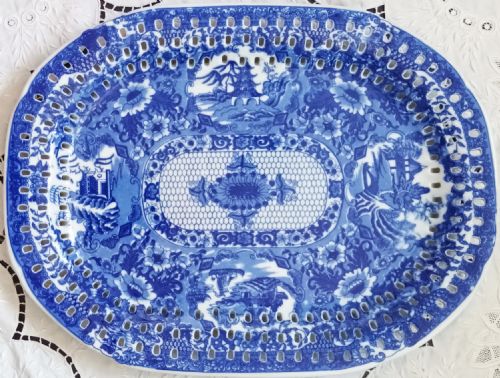
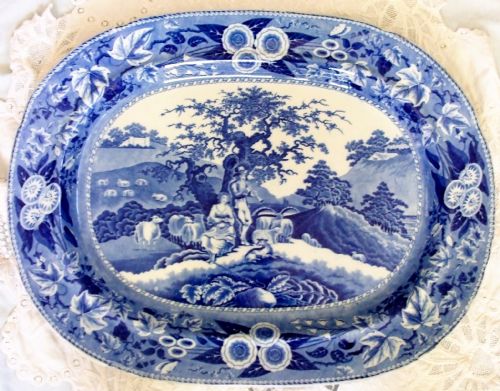


English Transferware Platter
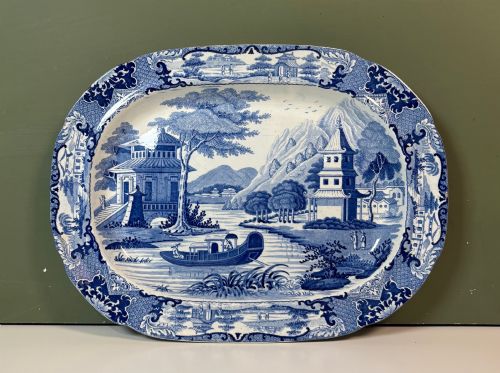
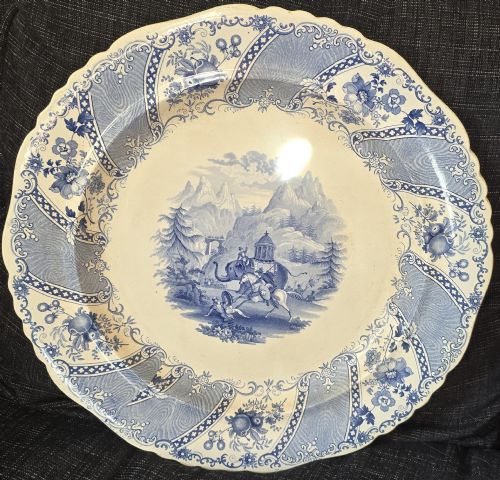
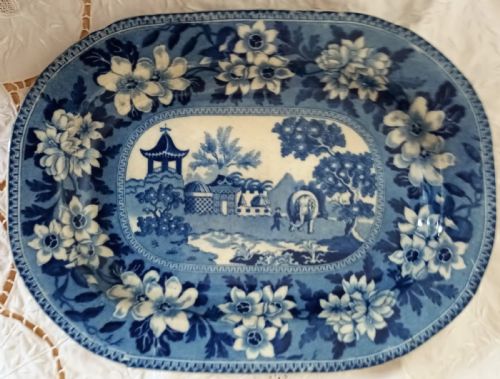
An english transferware platter brings bold pictorial scenes into service, offering durable earthenware decorated with blue pigment transferred from engraved copper plates.
English Transferware Platter
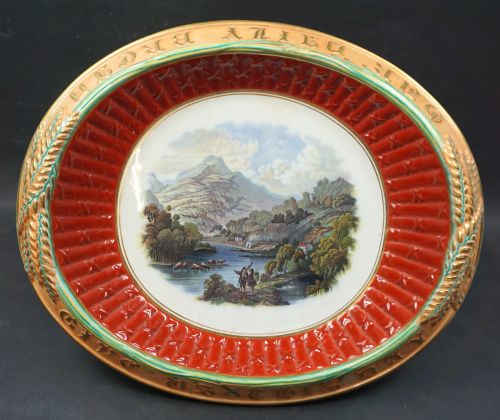
When you search for an english transferware platter, you encounter large serving dishes made across the nineteenth century, including Georgian, Regency, and Victorian periods. The pieces display printed pictorial designs ranging from romantic ruins and exotic animals to topographical views and traditional landscape scenes. Most examples use deep blue pigments on white or cream bodies, created to serve heavy joints of meat at formal and domestic dining tables.
The serving platters often share space with related forms such as meat drainers, cheese dishes, and sauce tureen stands that utilise the same decorative technique. Many feature specialised shapes like pierced borders or reservoirs designed to catch juices during carving. These items emerge from historic Staffordshire potteries and related English manufactories operating during the height of the industrial ceramic trade.
Materials and production methods
Potters formed the base of each dish using earthenware, pearlware, ironstone, or stoneware, shaping the clay by hand or mould before an initial bisque firing. Artisans then applied cobalt pigment onto tissue paper from engraved copper plates, transferring the ink impression directly onto the porous ceramic surface. A glossy glaze sealed the design before a final high-temperature kiln firing fixed the pigment permanently beneath the surface.
The integration of cobalt pigment with ceramic glaze produced the distinctive deep blue coloration characteristic of early nineteenth-century production. Ironstone and pearlware bodies provided durable surfaces that resisted thermal shock and daily wear during heavy kitchen use.
English Transferware Platter Retail Price Guide 2026
Typical asking prices for english transferware platter among the pieces listed under this phrase on Sellingantiques today, from the lower quarter to the upper quarter. They describe what is for sale here now, not the wider market.
Listings feature pearlware and ironstone platters decorated with cobalt pigment scenes spanning the Georgian and Victorian eras.
Judging quality and execution
The sharpness of the transferred print determines the visual clarity of the pattern, separating crisp, detailed impressions from blurred or smudged transfers. Well-executed pieces show precise alignment where the edges of the printed paper meet, avoiding heavy overlap lines or smeared ink.
The weight and refinement of the ceramic body also signal standard, with finer pearlware and ironstone platters offering thinner walls and more precise moulding compared to heavier utilitarian earthenware. Potter skill shows in the evenness of the glaze application and the stability of the large platter surface during kiln firing.
John Rogers & Son·Thomas Lakin·Brameld & Co.·J. & R. Clews·John Ridgway
The English Transferware Platter Glossary
- Transfer printing
- A decoration method where an engraved copper plate transfers an inked design onto tissue paper, which is pressed onto a ceramic body. This technique allowed factories to produce uniform pictorial patterns at speed.
- Pearlware
- A refined earthenware developed in the late eighteenth century featuring a subtle bluish glaze that pooled in crevices. It bridged the gap between creamware and later white ironstone.
- Ironstone
- A dense, durable type of heavy ceramic patented in the early nineteenth century to imitate Chinese porcelain. It withstands heavy use and resists chipping.
- Meat drainer
- A ceramic insert perforated with holes or slots that rests inside a serving platter. It lifts joint meats above accumulated juices during carving.
- Cobalt pigment
- A metallic oxide used to achieve deep blue colouration under ceramic glazes. It withstands high kiln temperatures without burning away.
English Transferware Platter: Frequently Asked Questions
What were transferware platters used for?
These large ceramic platters served roasted meats and heavy dishes at the centre of nineteenth-century dining tables. Their durable bodies and deep surfaces handled daily service in busy households.
Some examples included integrated wells or separate drainer inserts to manage juices produced during carving at the table.
How do I date an antique platter?
Dating relies on ceramic body composition, backstamps, and the style of the printed border patterns. Early nineteenth-century pieces often utilise pearlware bodies with blue floral or scenic prints.
Later Victorian examples tend to feature denser ironstone bodies and different colour palettes beyond traditional blue and white.
How should I display my platter?
Large platters suit wall mounting using coated wire hangers or secure display ledges that support their considerable weight. Ensure the hanging hardware grips the rim firmly without placing stress on historical cracks or repairs.
Alternatively, display them flat on sideboards or within cabinets where the surface patterns remain fully visible.
Are these platters safe for food use?
Historic earthenwares and ironstones can contain older lead-based glazes that may leach when exposed to acidic foods or prolonged moisture. Most collectors prefer to use these pieces strictly for display rather than active dining.
Hand washing in warm water without harsh detergents protects the fragile glaze and historic ceramic body from further wear.