



English Study Chair
An English study chair provides a firm seat for reading and desk work, combining practical support with traditional craftsmanship.
English Study Chair
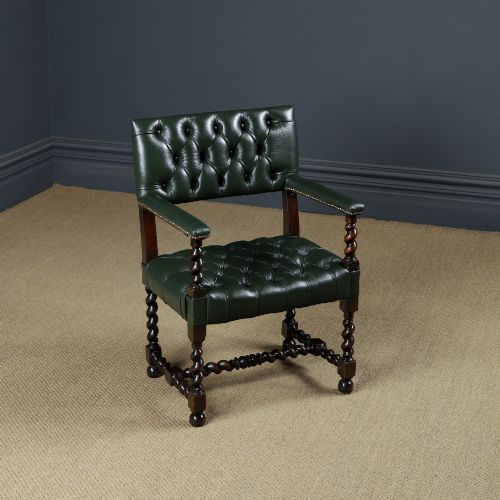
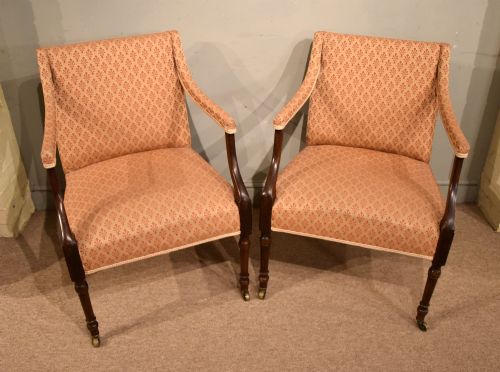
An English study chair encompasses various seating forms designed for writing, reading, and administrative tasks in domestic and professional spaces. These pieces span multiple centuries, including Georgian, Regency, and George V periods, reflecting evolving requirements for comfort and utility.
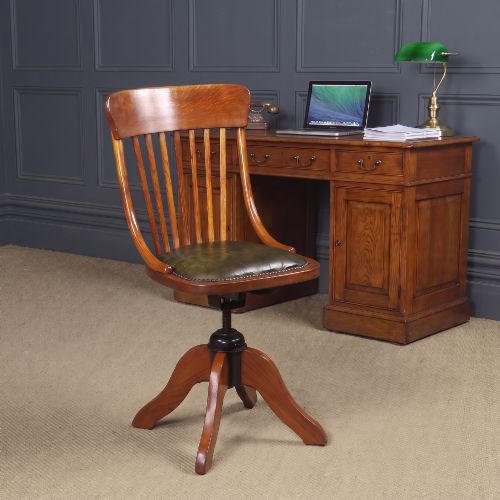
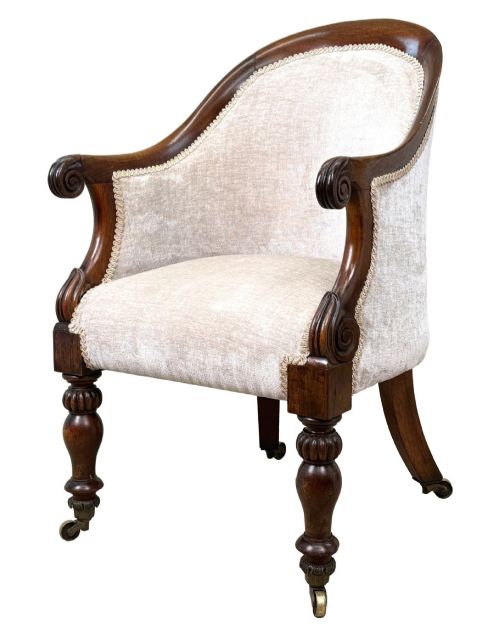
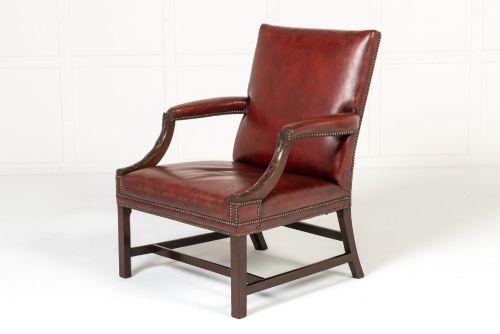
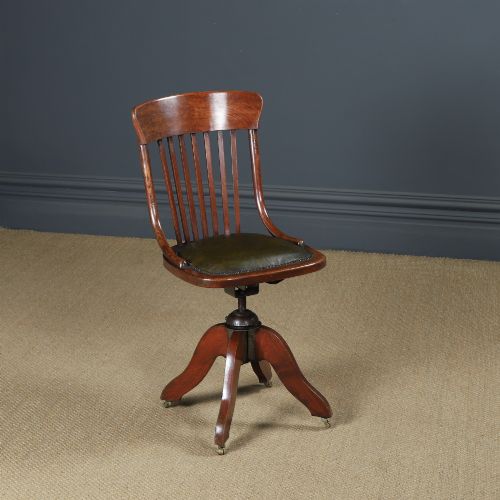
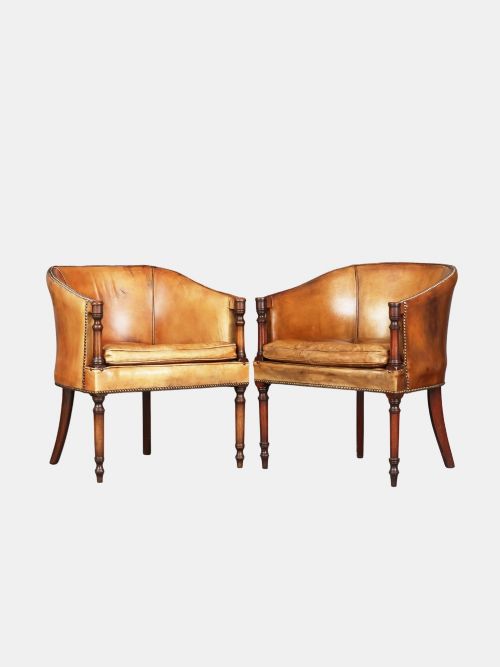
Buyers encounter distinct configurations, from revolving office designs with brass mechanisms to stationary armchairs like Gainsborough and tub library styles. These forms originate from workshops employing traditional English cabinet-making methods across the eighteenth, nineteenth, and early twentieth centuries.
How They Were Made
Cabinet makers utilised solid timbers such as mahogany, oak, and rosewood for structural frames, ensuring long-term durability and stability under daily use. Joinery techniques relied on mortise and tenon joints to secure legs, rails, and backrests without excessive reliance on modern fasteners.
Upholstery incorporated traditional stuff-over methods, fixing leather or textile coverings directly to padded seats using metal tacks. Brass castors frequently appeared on desk and office chair legs to permit smooth movement across floors.
Revolving mechanisms on later office models combined timber frames with iron and brass components to allow rotation and mechanical adjustment.
English Study Chair Retail Price Guide 2026
Typical asking prices for english study chair among the pieces listed under this phrase on Sellingantiques today, from the lower quarter to the upper quarter. They describe what is for sale here now, not the wider market.
The inventory includes revolving office chairs fitted with brass and iron hardware alongside stationary library armchairs.
What Varies in Quality
The selection of primary timber and secondary framing woods dictates the structural integrity and visual depth of each piece. Superior examples display dense grain patterns in mahogany, walnut, or rosewood, whilst lesser pieces utilise simpler utility timbers.
The execution of carved details, such as those found on Georgian and Regency frames, reveals the skill of the original maker. Crisp, well-defined mouldings and joints separate high-workshop production from basic commercial output.
The preservation of original leather upholstery, patination on wooden surfaces, and working mechanical parts influence the overall character and integrity of surviving examples.
The English Study Chair Glossary
- Gainsborough chair
- A type of upholstered armchair with an open-framed arm design, originating in the eighteenth century. It was traditionally used at a desk or in a library.
- Tub library armchair
- A seating form featuring a continuous curved back and armrest rail enclosing the sitter. This design provides supportive enclosure for reading.
- Revolving office desk chair
- A pivoting chair fitted with a central spindle and frequently mounted on castors. These pieces facilitated movement around a desk or workspace.
- Sheraton taste
- A late eighteenth-century design style characterised by classical restraint, straight tapering legs, and geometric proportions. It reflects the pattern books of Thomas Sheraton.
- Patina
- The surface sheen and colour developed by wood, leather, and metal through age and handling. It indicates natural wear over decades of use.
English Study Chair: Frequently Asked Questions
What is an English study chair used for?
An English study chair provides seating for administrative work, reading, and writing at a desk or table. These chairs combine supportive backrests with durable seats to accommodate extended periods of use.
Historical examples accommodated the specific posture required for handwriting and studying in libraries, studies, and offices. Their sturdy construction ensured they withstood daily domestic and professional routines.
How do I identify a Georgian study chair?
Georgian study chairs are identified by their use of mahogany or walnut, structural proportions, and classical decorative details. These pieces date from the eighteenth and early nineteenth centuries and often feature carved woodwork.
Key indicators include traditional joinery, sturdy frame construction, and period-appropriate upholstery styles such as leather or woven textiles. Cabinet makers during this era focused on functional elegance and robust stability.
Can I use an antique office chair daily?
Antique office chairs constructed from solid oak or mahogany remain sturdy enough for regular daily seating. Their robust timber frames and mechanical components are built to endure active use.
Users should check the stability of joints and the condition of revolving mechanisms before heavy daily application. Proper maintenance of wooden surfaces and leather upholstery preserves their condition over time.