



English Street Scene Painting
These pieces of english street scene painting capture urban and rural townscapes in watercolours and oils.
English Street Scene Painting
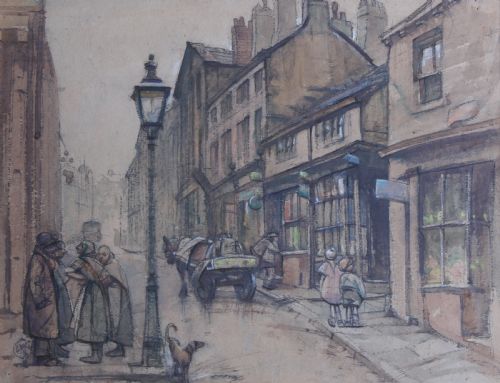
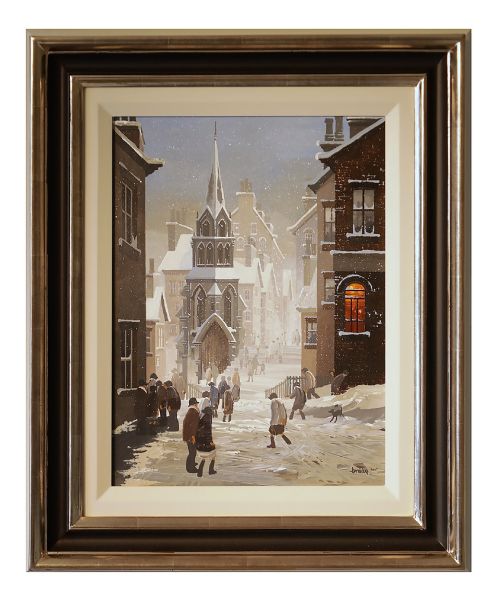
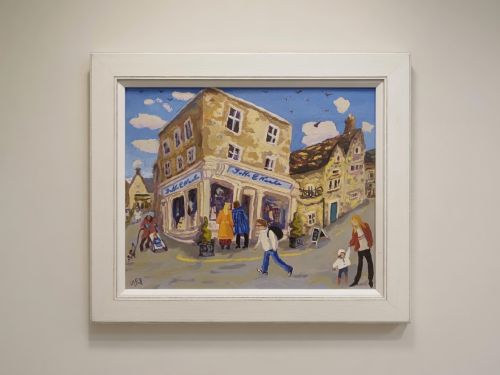
An english street scene painting records townscapes, village lanes, and market places across the country. These works document specific locations such as Whitby, York, and various rural settlements, anchoring urban and suburban life to particular historical moments.
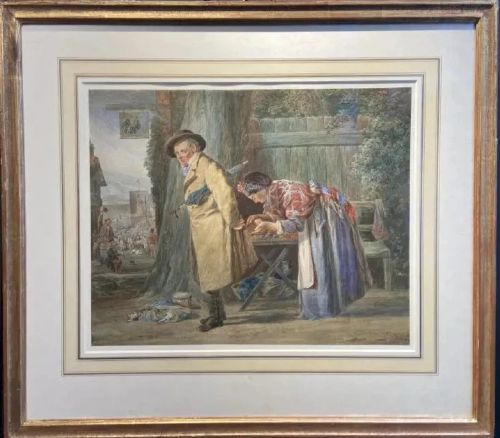
The selections encountered here range from nineteenth century depictions of historic thoroughfares to mid twentieth century impressions. Watercolours on paper and oils on canvas form the core of these visual records.
Makers capture architectural details, local commerce, and everyday figures against recognizable backdrops like provincial inns and market squares. Each composition serves as a direct window into the topography and social texture of past eras.
Materials and Techniques
Artists primarily employ watercolours on paper or oil paint on canvas, wood, and card. These mediums dictate the texture and luminosity of each work, whether through the transparent washes typical of watercolour or the heavier impasto of oils.
Framed works frequently utilise protective glass over paper pieces, while canvas works maintain the direct application of oil paint. Support materials vary from traditional stretched canvas to stiff card and paper sheets.
Techniques span from precise architectural rendering to looser interpretations associated with British impressionism and primitive folk art. Pigments are applied with varying brushwork to define stonework, figures, and atmospheric weather conditions.
English Street Scene Painting Retail Price Guide 2026
Typical asking prices for english street scene painting among the pieces listed under this phrase on Sellingantiques today, from the lower quarter to the upper quarter. They describe what is for sale here now, not the wider market.
Listings feature watercolours on paper and oil paintings on canvas and card, spanning periods from the nineteenth century to modern times.
Factors of Quality
Top tier works demonstrate a confident command of perspective, light, and local atmosphere that brings the townscape to life. The skill of the brushwork in capturing human figures and architectural stonework distinguishes accomplished hands from simpler sketches.
Provenance and legibility of signature add distinct weight to a piece, particularly when connected to documented topographical artists. The preservation of the medium, whether oil or watercolour, maintains the visual integrity intended by the maker.
Lucy Pratt·Joseph H Barnes·Brian Shields Braaq·Louie Stanley Maurice Prince·John Smith Atherton·George Whyatt·Robert Hollands Walker·Rowland Henry Hill·Angus Rands·Walter Emsley·William Greaves·Fred Lawson·Tom Dudley·Annie L Lee·Donald Wood·Alfred Leyman·T Fairfax·John Ward Knowles
The English Street Scene Painting Glossary
- Watercolour
- A paint consisting of a pigment suspended in a water-soluble vehicle. It is typically applied to paper to achieve translucent layers of colour.
- Oil on Canvas
- A painting technique where oil paint is applied to a stretched canvas support. This method allows for rich colour blending and textured brushwork.
- Impressionism
- A style of painting that focuses on capturing the visual impression of the moment, particularly shifting light and atmosphere. British practitioners applied these principles to domestic landscapes.
- Folk Art
- Art produced by self-taught or untrained makers working within traditional community idioms. These pieces prioritise direct expression over academic perspective.
English Street Scene Painting: Frequently Asked Questions
What periods do these paintings cover?
The works span from the nineteenth century through the Edwardian era and into the mid twentieth century. Later examples extend past nineteen sixty.
This timeline shows shifts in artistic styles from Victorian realism to modern British approaches.
How should these paintings be displayed?
Watercolours require framing behind glass to protect the paper from moisture and light damage. Oil paintings on canvas or card suit standard wall mounting away from direct sunlight.
Maintaining stable indoor environments preserves both the pigments and the supporting materials.
Where do the depicted locations come from?
Artists record specific English towns, cities, and villages such as York, Whitby, and various rural parishes. Many titles identify exact streets, inns, and landmarks.
These local details provide a clear geographical record of the settlements.
Are these works signed by the artists?
Many examples bear signatures, monograms, or attribution to specific painters active during their respective periods. Documentation often links works to named individuals or regional schools.
Unsigned pieces rely on stylistic markers and period context for identification.