

English Storage Trunk
An English storage trunk brings centuries of utility and timber into a room, offering robust containment for linens or household goods.
English Storage Trunk
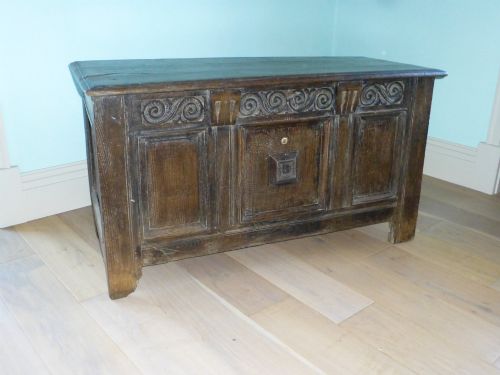
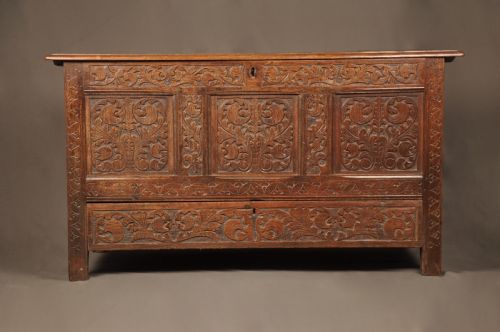
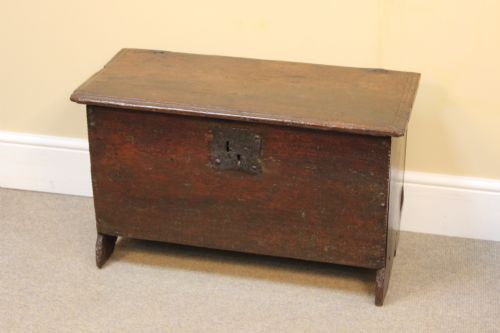
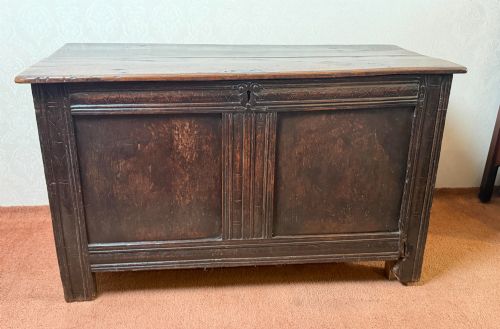
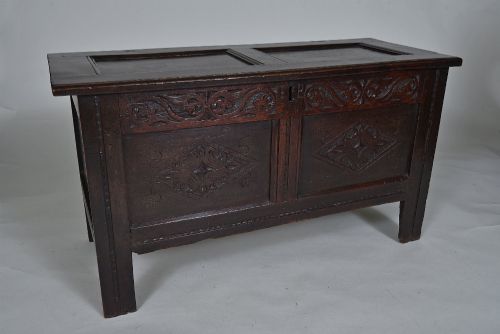
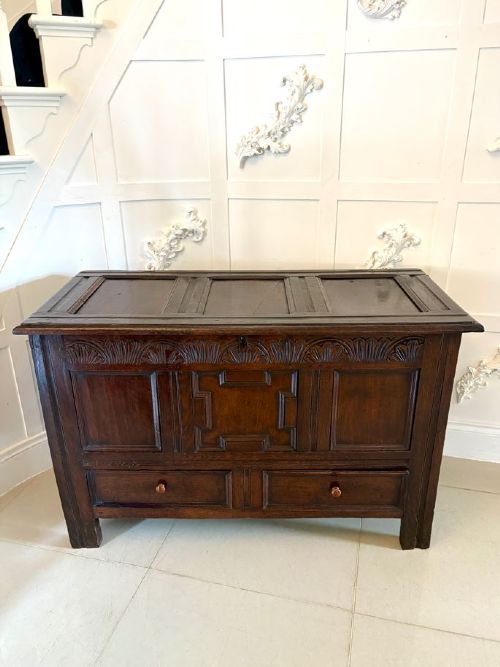
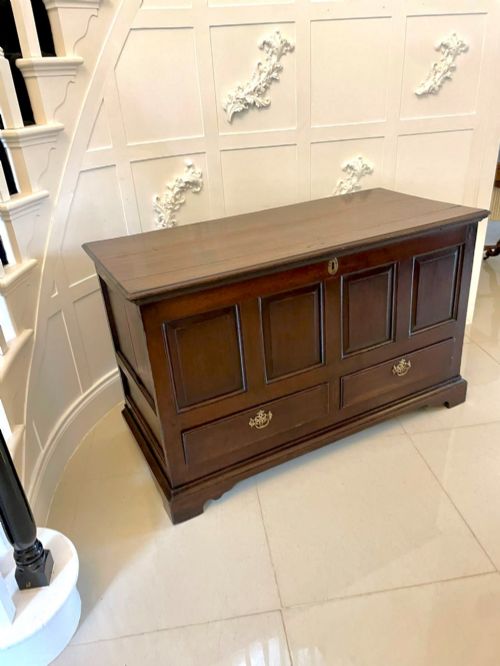
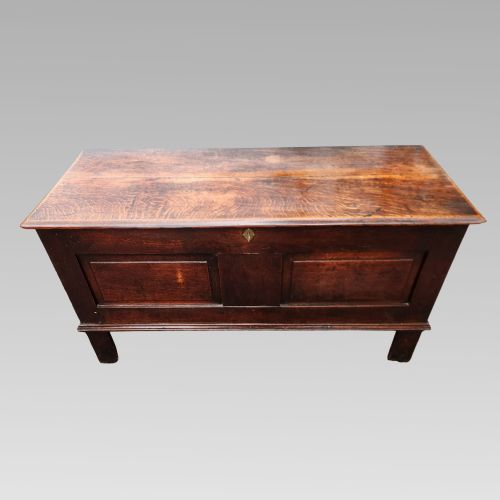
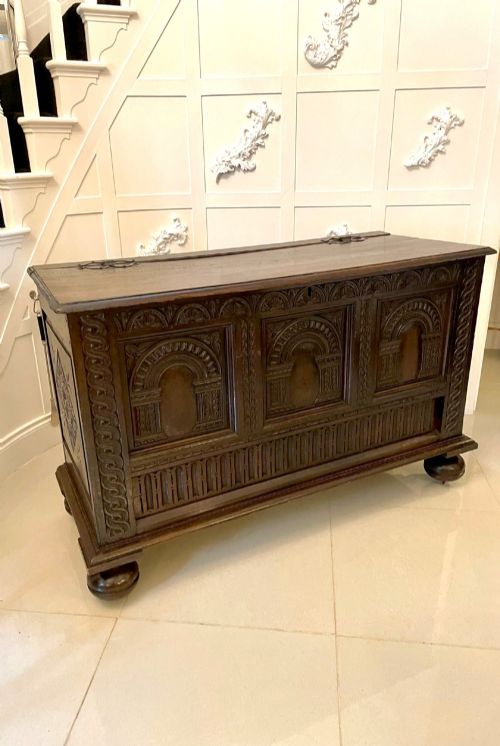
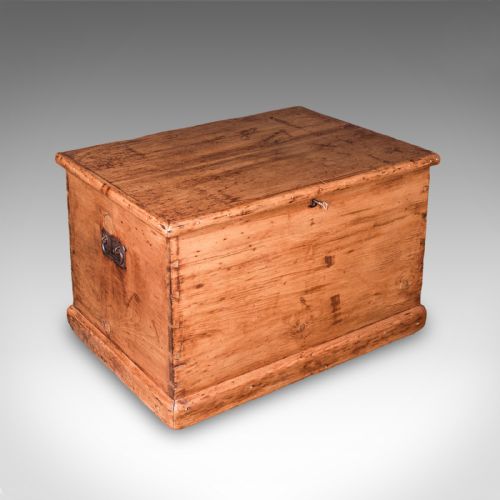
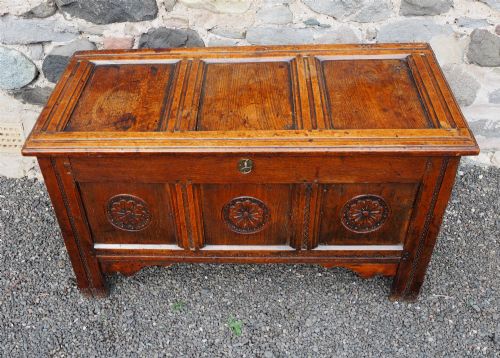
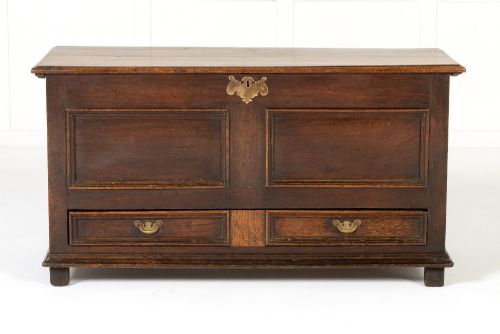
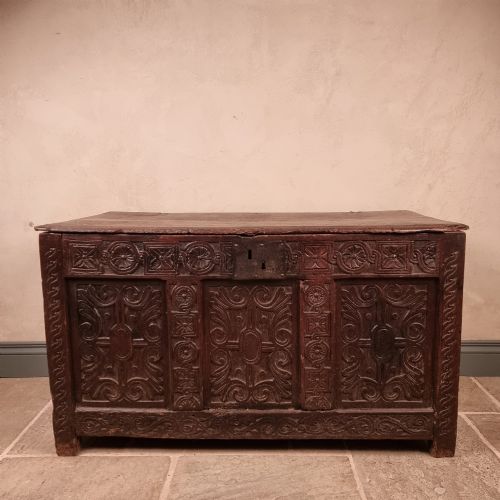
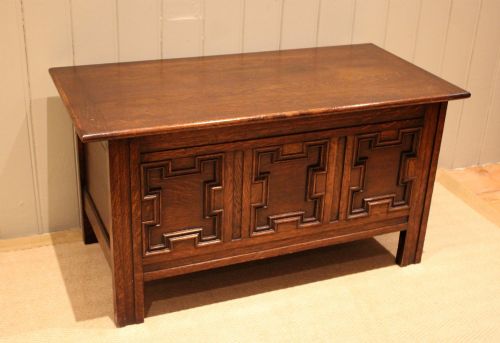
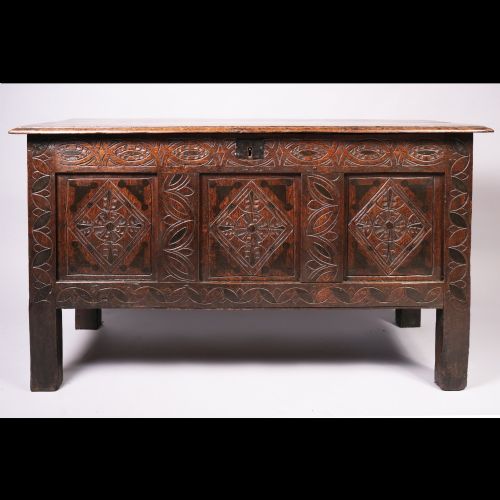
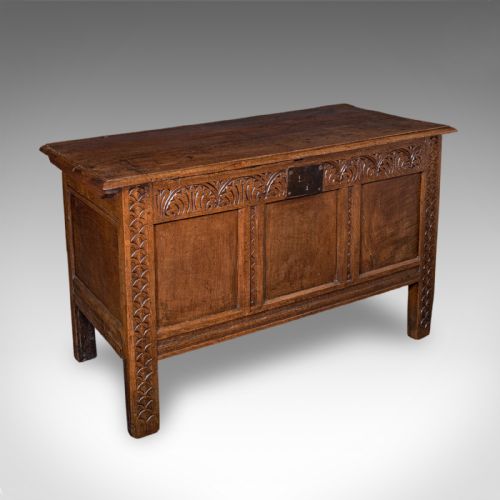
An English storage trunk most frequently appears on this page as an oak coffer or mule chest dating from the sixteenth century through the Georgian and Victorian periods. These pieces range from boarded sixteenth-century examples to panelled seventeenth-century coffers and drawer-fitted mule chests of the eighteenth century. Buyers seeking an English storage trunk will encounter sturdy country house pine boxes alongside heavily carved seventeenth-century oak pieces.
The nomenclature shifts across periods between coffers, blanket boxes, carriage chests, and silver trunks, yet the primary domestic function remains identical. Seventeenth-century examples often display arcaded or carved panels associated with Jacobean and William III styles. Later nineteenth-century versions utilise pine, iron, and steel bindings for shipping, tool storage, and travel.
Defining Quality
Quality in these pieces rests upon the integrity of the timber, the depth and crispness of period carving, and the retention of original structural elements like hinges and locks. Trunks that maintain their original boards, feet, and ironwork command greater respect than heavily restored or altered examples. The thickness of the oak panels and the complexity of the stile and rail framing also distinguish superior cabinet work from basic utilitarian boxes.
English Storage Trunk Retail Price Guide 2026
Typical asking prices for english storage trunk among the pieces listed under this phrase on Sellingantiques today, from the lower quarter to the upper quarter. They describe what is for sale here now, not the wider market.
The documented forms range from early boarded Elizabethan coffers to Victorian iron-bound shipping trunks and shipwright tool chests.
The English Storage Trunk Glossary
- Coffer
- A heavy wooden chest traditionally used for storing valuables, documents, or textiles. These pieces form the bulk of early domestic storage.
- Mule chest
- A storage chest featuring one or more drawers beneath the main compartment. This form bridges the evolution between the simple coffer and the chest of drawers.
- Arcaded
- Decorated with a series of rounded arches carved in relief onto the timber panels. This decorative technique frequently appears on seventeenth-century oak furniture.
- Boarded construction
- A method of building chests by joining solid upright planks of timber together with nails or pegs rather than utilising framed panels.
- Stile and rail
- A rigid framework of vertical stiles and horizontal rails enclosing a central panel. This technique accommodated the natural expansion and contraction of solid timber.
English Storage Trunk: Frequently Asked Questions
How were antique coffers used?
These trunks served as primary household furniture for storing heavy woolen blankets, church vestments, and family valuables. In medieval and early modern homes, they also functioned as tables, benches, or beds when necessary.
Because they possessed secure locks, people trusted them with currency, silver, and important legal documents. Their heavy construction allowed them to double as luggage during travel before the advent of specialised wardrobes.
How do I date an oak coffer?
Dating relies on observing construction methods, tool marks, and stylistic ornament such as arcading or linenfold carving. Sixteenth-century pieces often employ simple boarded construction, while seventeenth-century examples typically feature sophisticated frame and panel assembly.
Changes in hinge types, lock mechanisms, and the presence of added bottom drawers indicate later periods like the Georgian era. Subtle shifts in carving depth and proportion separate Jacobean work from later country interpretations.
Where should I place a storage chest?
These trunks adapt well to living rooms, entryways, or bedrooms as functional focal points that provide concealed storage. Placing them beneath bay windows allows them to serve simultaneously as seating benches and blanket depositories.
Proper placement avoids direct heat sources and severe humidity fluctuations, which can cause ancient oak timbers to split or warp. Allowing adequate airflow around the piece preserves the stability of the dry wood.
What is a mule chest?
A mule chest is an evolution of the traditional storage chest that incorporates one or more drawers beneath the main lifting lid. This hybrid form gained popularity during the late seventeenth and eighteenth centuries as domestic storage needs expanded.
The inclusion of drawers allowed household members to access smaller items like linens without having to disturb heavy objects piled on top of the main compartment.