





English Sterling Silver Knife
An english sterling silver knife brings practical weight and period detail to a desk or dining table, spanning Georgian utility and Art Deco design.
English Sterling Silver Knife
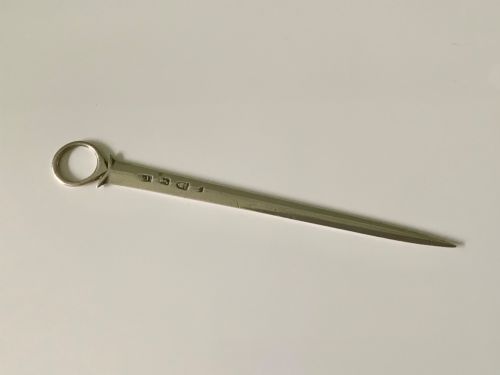
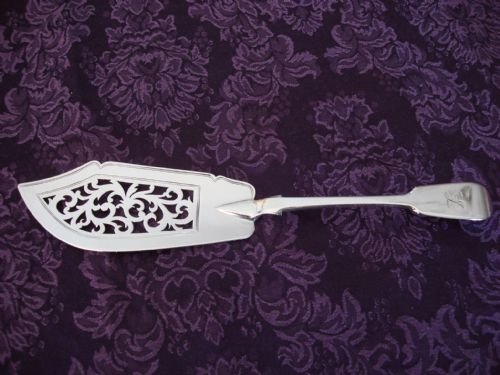
An english sterling silver knife encompasses small fruit knives, butter spreaders, paper knives and letter openers found across this page. These pieces emerge chiefly from Victorian and Georgian periods alongside later twentieth-century iterations.
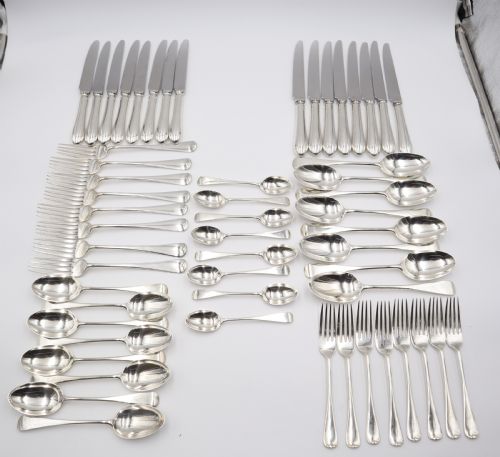
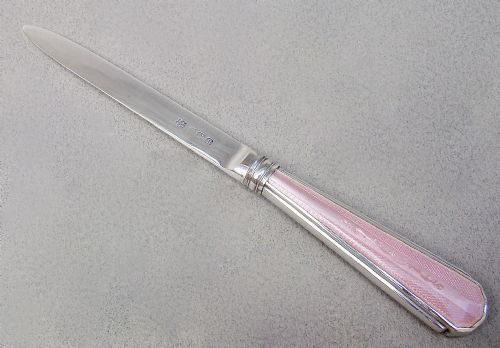
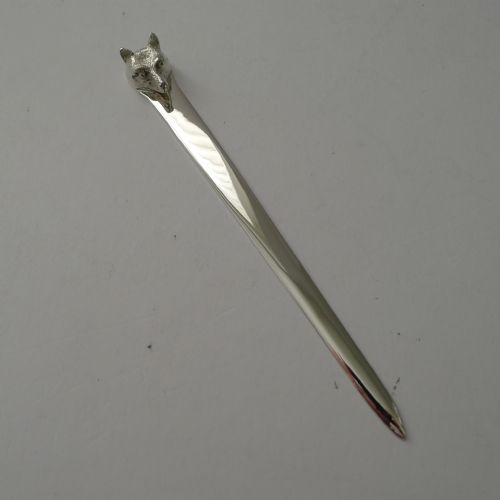
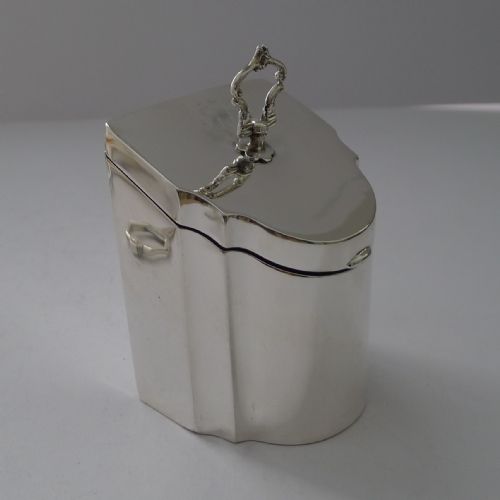
Buyers encounter fruit knives paired with mother of pearl handles, butter knives with tortoiseshell, and letter openers shaped as animals or finished with enamel. The selection draws together cutlery sets, tea caddy accessories and desk items.
Georgian and Victorian examples sit alongside Art Deco and Mid-Century Modern designs. Each form reflects the specific domestic habits of its decade, from formal dining settings to personal correspondence.
Materials and technique
Makers shaped these items using sterling silver, steel, enamel and mother of pearl, frequently combining metal blades with organic handles. Tortoiseshell, ivory, glass, velvet and leather appear in supporting roles across boxes and paper knives.
Silver smiths utilised piercing, engraving and casting techniques, incorporating specialised hallmarks to record assay office origins and dates of manufacture. Handles of shell and mother of pearl were riveted to metal tangs with precise craftsmanship.
English Sterling Silver Knife Retail Price Guide 2026
Typical asking prices for english sterling silver knife among the pieces listed under this phrase on Sellingantiques today, from the lower quarter to the upper quarter. They describe what is for sale here now, not the wider market.
Listings feature sterling silver, steel, enamel, mother of pearl, tortoiseshell, and ivory across Victorian, Georgian, and Art Deco periods.
Judging the work
Quality rests in the crispness of the assay marks, the integrity of the handle material against the metal blade, and the precision of any enamel or engraved detail. A well-balanced piece maintains secure joins between organic handle sections and the silver shank.
Novelty forms and signed works by recognised makers demonstrate higher sculptural ambition than standard utility cutlery. The survival of original fitted boxes and matching components elevates the standing of individual pieces.
The Barker Brothers·A Barrett·Sampson Mordan And Co·Adie Brothers·George Adams·William Comyns
The English Sterling Silver Knife Glossary
- Hallmark
- Official stamps struck into precious metals to indicate the standard of silver, the assay office, and the year of production. These marks provide the primary documentation for dating British items.
- Guilloche enamel
- Decorative mechanical engraving beneath a translucent coloured enamel layer, commonly seen on Art Deco desk accessories. The technique creates repetitive geometric patterns that catch the light.
- Tang
- The extension of the blade that inserts into the handle of a knife or letter opener. Secure construction ensures stability between blade and grip.
- Page turner
- A large paper knife designed for slicing the folded uncut pages of bound books and periodicals. These items frequently feature elongated tortoiseshell or mother of pearl blades.
- Assay office
- An official organisation responsible for testing the purity of precious metals and applying hallmark stamps. Towns such as Birmingham, Sheffield, London, and Chester operated distinct offices.
English Sterling Silver Knife: Frequently Asked Questions
How do I date an antique silver knife?
Dating relies upon the stamped hallmarks found on the silver components, which include maker marks, standard marks, and date letters corresponding to specific assay offices.
Comparing these punches against historical registry records reveals the precise year and town of manufacture.
What is the difference between a fruit knife and a letter opener?
Fruit knives feature folding or fixed steel and silver blades historically designed for slicing acidic fruits without tarnishing standard dining cutlery. Letter openers and paper knives possess longer, non-cutting blades meant for opening envelopes or turning pages.
Desk items often incorporate decorative materials like tortoiseshell, enamel, or novelty animal forms.
How should I clean sterling silver and mother of pearl?
Sterling silver requires a specialised non-abrasive polish applied with a soft cloth to remove tarnish while preserving the underlying metal. Mother of pearl handles must be kept away from harsh chemical dips and hot water to prevent delamination.
Gentle wiping with a damp cloth and immediate drying protects organic inserts.
Did Victorians use specific knives for butter and tea?
Victorian dining culture utilised dedicated implements for individual table courses, including small butter knives with silver blades and tea caddy knives shaped for specific canisters. These forms reflected an era of specialised domestic hospitality.
Matching sets and boxed pairs indicate formal presentation and dining habits.