

English Station Wall Clock
An English station wall clock brings practical timekeeping and bold circular dials into domestic and public spaces alike.
English Station Wall Clock
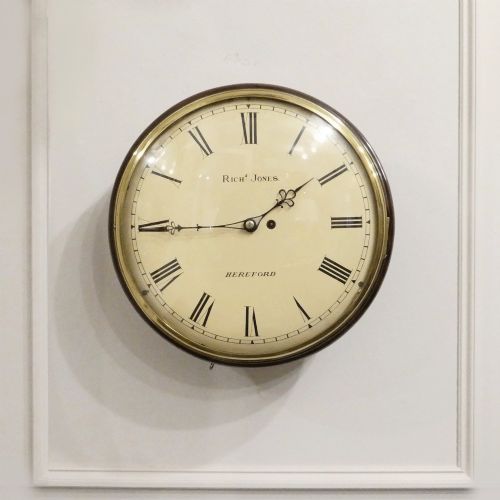
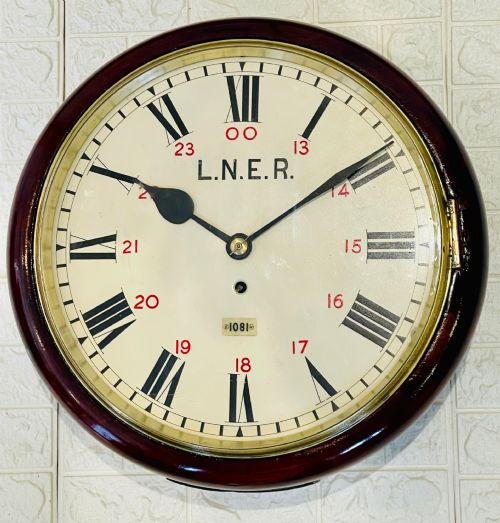
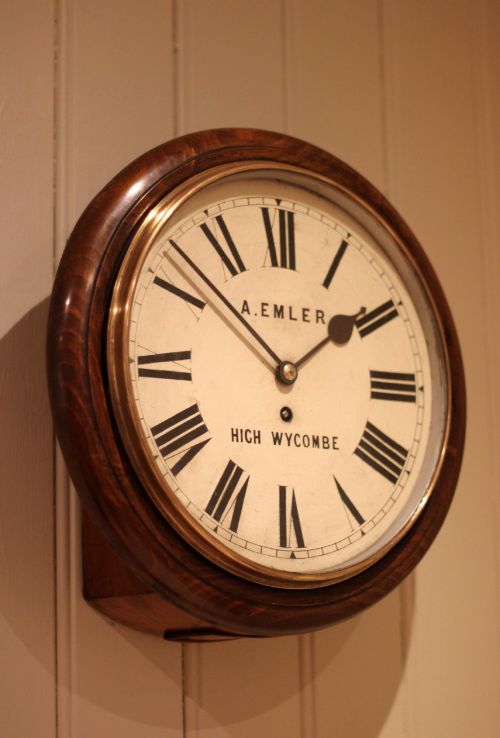
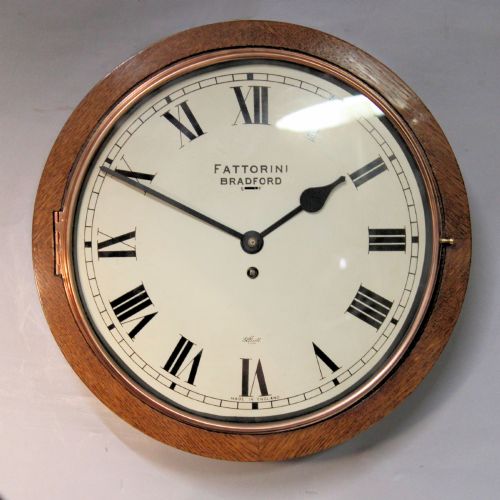
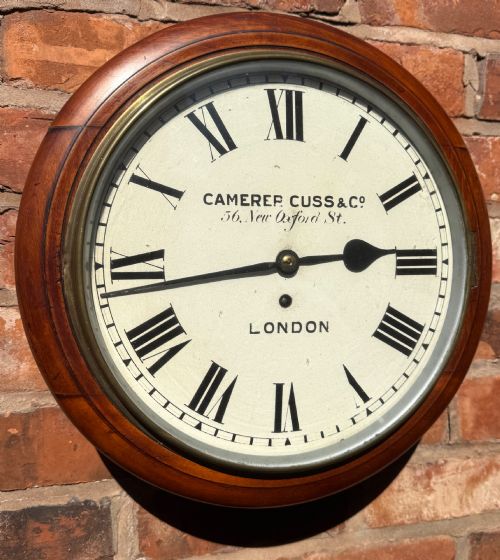
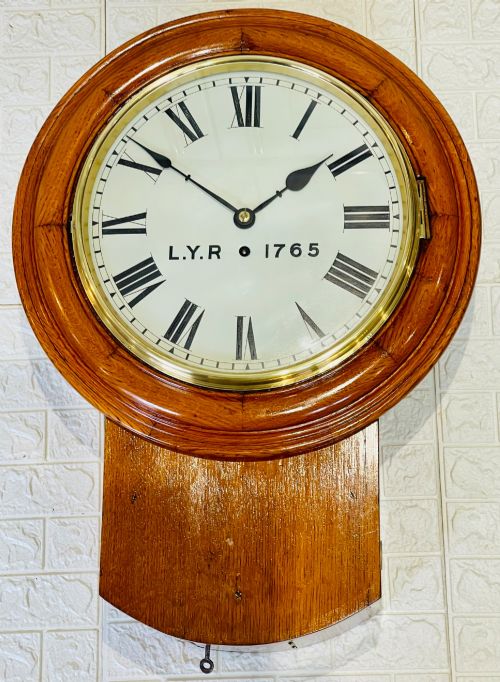
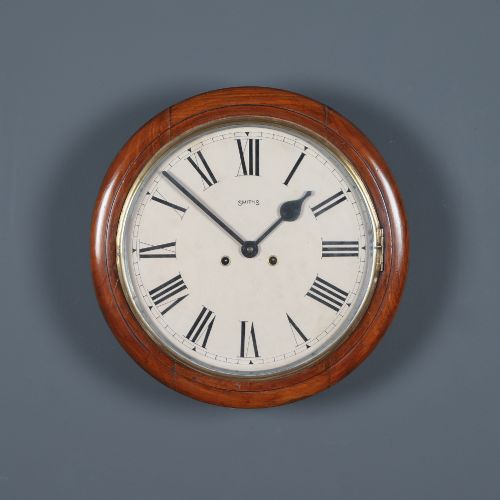
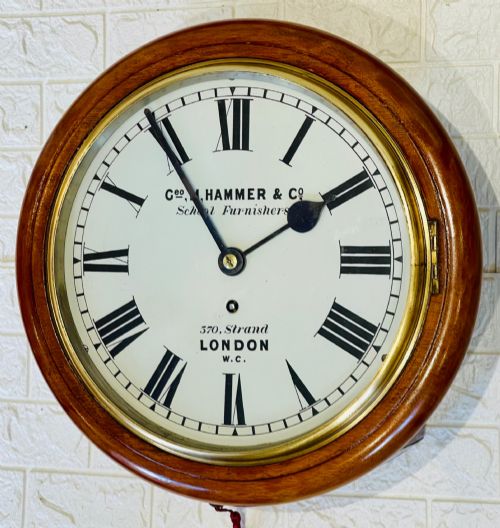
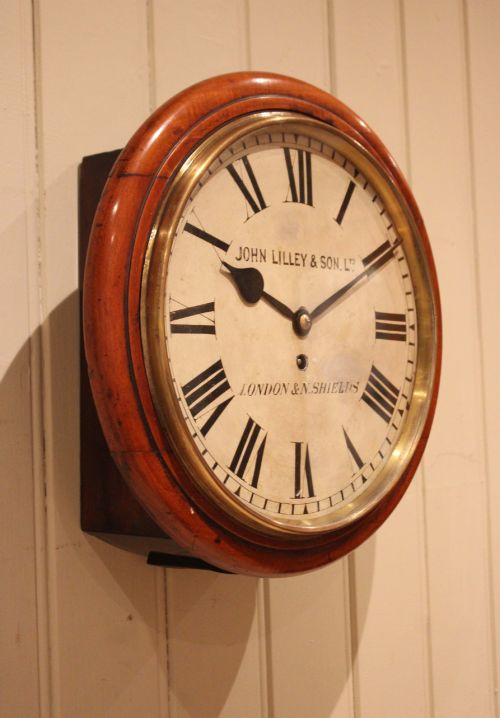
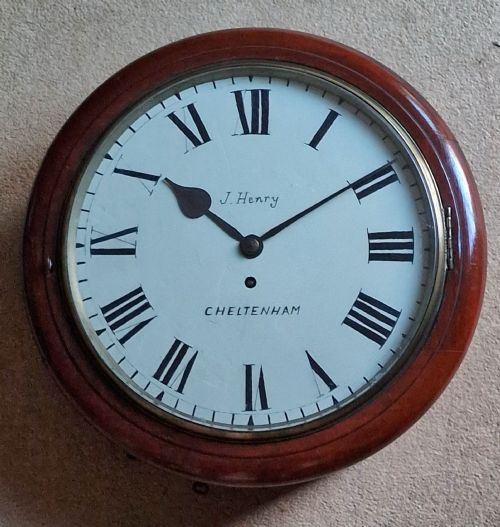
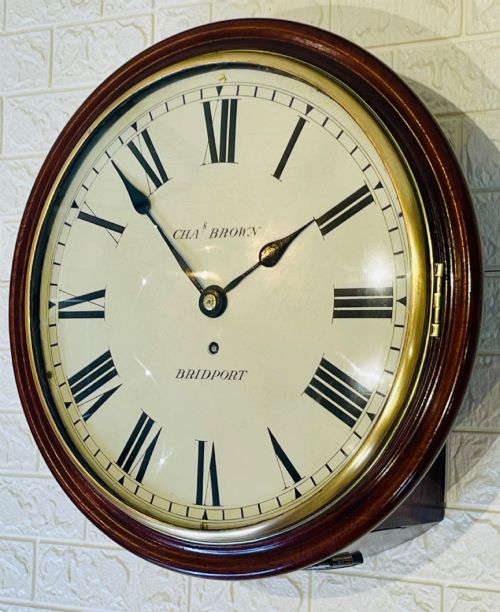
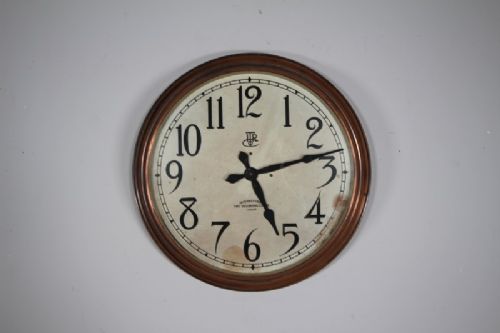
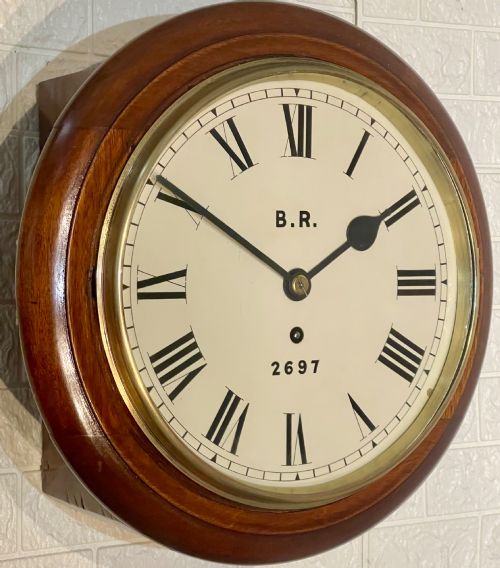
An English station wall clock is a robust timepiece designed to be read clearly from a distance in transport hubs, offices, and platforms. These round clocks appear frequently in mahogany, oak, and rosewood cases, often bearing the names of railway companies or provincial makers on their painted dials.
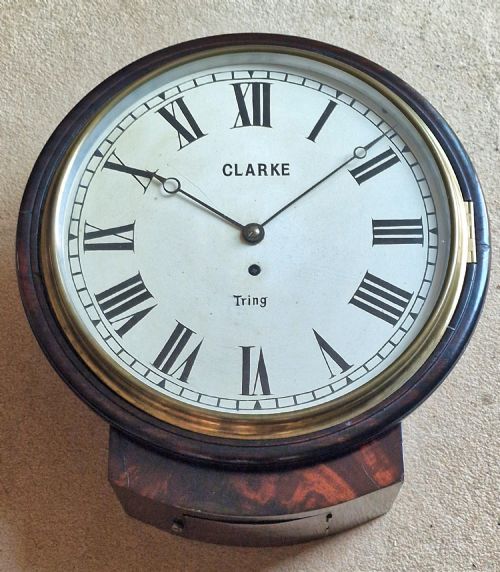
The pieces seen on this page span the Victorian, Edwardian, and Georgian periods up to the twentieth century. Examples range from simple single-chain timepieces to larger drop-dial and striking variations.
Railway and institutional variants dominate the selection, linking domestic interiors directly to the heritage of the British transport network. Buyers find both compact eight-inch dials and larger twenty-four-hour formats.
How they were made
The construction relies heavily on sturdy timber surrounds turned or joined from mahogany, oak, beech, and rosewood. These deep housings protect the mechanical movements and hold the heavy glass bezels securely in place.
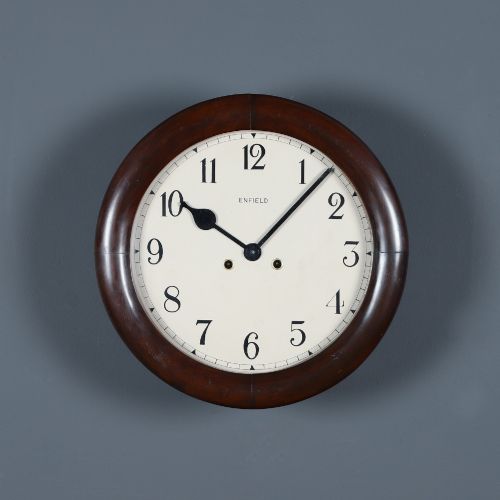
Movements are driven predominantly by fusee mechanisms, utilising a conical pulley and chain or cord to maintain even tension as the mainspring unwinds. Dials are typically painted iron or wood with clear Roman or Arabic numerals designed for instant legibility.
Listings feature oak, mahogany, and rosewood cases housing traditional fusee movements spanning the Victorian period through to the nineteen-thirties.
What varies in quality
Quality rests in the precision of the fusee movement and the crispness of the dial signwriting by makers such as John Walker or Camerer Cuss. Superior pieces retain original case timbers and clean, unblemished brass bezels.
The depth of the timber housing and the sophistication of the escapement, whether lever or anchor, distinguish standard commercial wall clocks from specialised station instruments.
Richard Jones of Hereford·Camerer Cuss and Co London·J Henry Cheltenham·George Clarke Tring·Joseph Bird of Stroud·L Morris Islington·John Walker London·Dent of London
The English Station Wall Clock Glossary
- Fusee
- A conical pulley connected to the mainspring by a chain or cord, designed to equalise the torque as the spring unwinds. This mechanism ensures consistent timekeeping across the duration of the wind.
- Drop dial
- A clock case featuring a circular dial at the top and an extended lower trunk, often with a pendulum window. This shape accommodates a longer drop for the pendulum and weight or fusee arrangement.
- Escapement
- The mechanical linkage that controls the release of the gear train and gives impulses to the pendulum. Common types include lever and anchor variations found in these movements.
- Convex dial
- A clock face that curves outward toward the viewer to reduce glare from windows and gas lighting. It is typically painted iron and protected by a hinged brass bezel with curved glass.
English Station Wall Clock: Frequently Asked Questions
How do fusee movements work?
A fusee movement uses a specially shaped conical pulley paired with a chain to regulate the power delivered from the mainspring. As the spring loses tension, the chain rides higher on the cone to maintain steady force.
This clever mechanical design ensures the clock maintains consistent accuracy throughout its running cycle without losing time as it winds down.
Where were these clocks used?
These clocks hung in railway stations, telegraph offices, schools, and municipal buildings across Britain. Their clear dials ensured staff and travellers could check the time at a glance.
Today, they transition easily into kitchens, hallways, and living rooms, bringing industrial heritage and reliable timekeeping to modern walls.
How do I date an English wall clock?
Dating relies on examining the timber of the case, the style of the dial lettering, and any railway company ciphers painted on the face. Victorian and Edwardian examples often feature specific company initials or maker signatures.
Internal movement components and the presence of fusee chains rather than later spring barrels also help narrow down the period of manufacture.
Are railway clocks difficult to maintain?
These movements are built for durability and commercial service, making them straightforward to care for with regular professional servicing. Proper wall mounting on a secure fixing is essential for the pendulum to beat evenly.
Wind them gently at the correct intervals using the appropriate key, and keep them away from damp environments and direct heat sources.