






English Silver Pitcher
An english silver pitcher brings weight and gleam to the table, and the pieces here range from Georgian cream jugs to Victorian claret ewers.
English Silver Pitcher
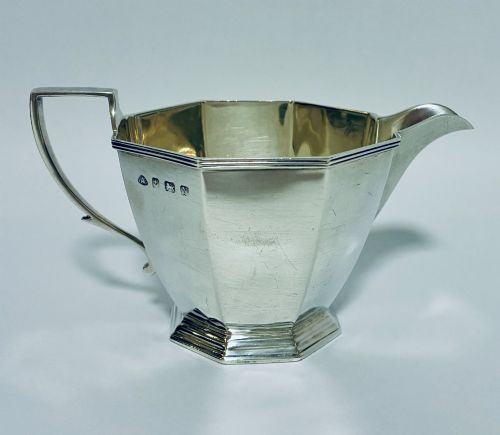
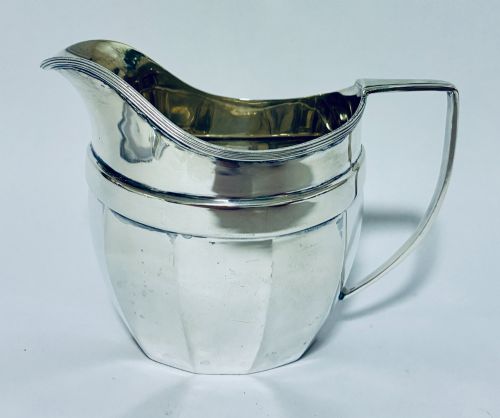
When you search for an english silver pitcher, you find a broad family of pouring vessels spanning cream jugs, milk jugs, claret ewers, and large harvest pitchers. The most common forms on this page are domestic table vessels intended for serving cream, milk, wine, or water during meals.
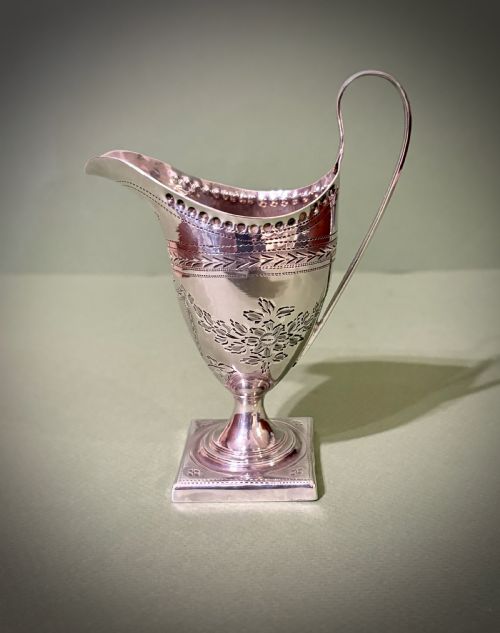
The objects cross several centuries of design, taking in George I sparrow beak jugs, George III helmet cream jugs, and Edwardian cut crystal wine jugs with silver mounts. They appear in solid sterling silver, silver plate, glass, stoneware, and lead glaze, often pairing precious metal with utilitarian earthenware or crystal bodies.
How they were made
Makers shaped these vessels using sterling silver, silver plate, cut crystal, stoneware, and glass, frequently combining materials within a single piece. Silver components were formed by hammering, casting, or spinning, then mounted onto glass bodies or fitted with hinged lids.
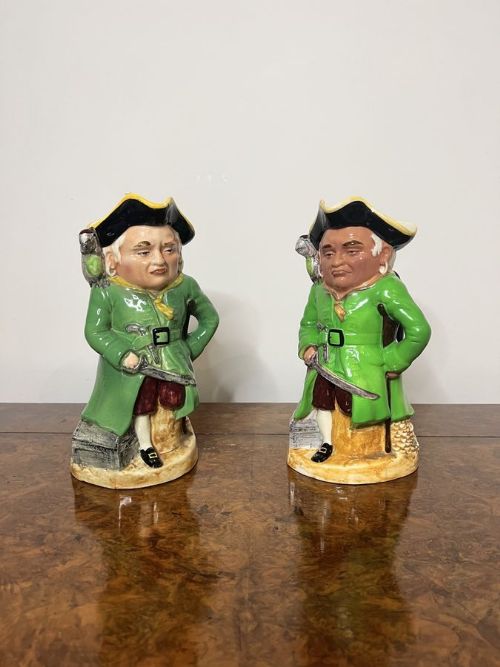
Ceramic forms such as Mortlake ale pitchers, Doulton Lambeth harvest jugs, and Staffordshire Toby jugs utilised traditional pottery techniques with added silver rims or lids. Cut glass and cut crystal ewers required skilled wheel-cutting to create faceted surfaces before the application of silver spouts and handles.
English Silver Pitcher Retail Price Guide 2026
Typical asking prices for english silver pitcher among the pieces listed under this phrase on Sellingantiques today, from the lower quarter to the upper quarter. They describe what is for sale here now, not the wider market.
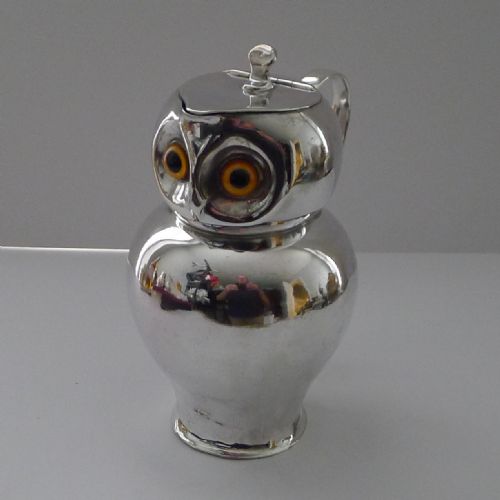
One notable Victorian novelty jug takes the form of an owl complete with blinking glass eyes.
What varies in quality
Quality in these vessels rests on the crispness of the metalwork, the weight of the silver or plate, and the integration between different materials like glass and metal. Higher quality examples show precise chasing, sturdy hinged mounts, and heavy crystal bodies without distortion.
Design ambition also separates standard items from finer works, such as novelty owl jugs with glass eyes, zodiac decoration, or sculptural helmet forms. The calibre of the maker and the balance of the proportions determine whether a piece stands as a utilitarian tool or a decorative centrepiece.
George Fox·Doulton Lambeth
The English Silver Pitcher Glossary
- Sparrow beak jug
- A small eighteenth-century cream jug characterised by a distinct, protruding spout resembling a bird's beak.
- Claret ewer
- A tall serving jug, typically glass or crystal with silver plate mounts, designed specifically for pouring red wine.
- Helmet cream jug
- A Georgian milk or cream jug shaped with a flared rim and footed base that mirrors the profile of a classical helmet.
- Harvest jug
- A large stoneware or pottery vessel, often featuring a silver rim, traditionally used for ale during agricultural gatherings.
English Silver Pitcher: Frequently Asked Questions
How do I clean an antique silver pitcher?
Use a soft cloth and a gentle silver polish specifically formulated for antiques to preserve the patina and avoid abrasive scratching.
Keep polishing compounds away from glass bodies, ceramic surfaces, and fitted interiors to maintain the overall integrity of the piece.
Were silver pitchers used for wine or water?
Different forms served different functions, with claret jugs and cut crystal ewers dedicated to wine, while larger vessels handled water or ale.
Smaller pieces functioned as cream jugs or milk jugs for tea service, reflecting the specific domestic rituals of their period.
How can I tell a Georgian jug from a Victorian one?
Georgian examples often display restrained neoclassical lines, such as the helmet cream jug shape or sparrow beak profiles from the eighteenth century.
Victorian and later pieces frequently introduce heavier ornamentation, novelty designs like owls, or combinations of cut crystal and silver plate.
What is the difference between solid silver and silver plate?
Solid silver pieces are made entirely of sterling silver throughout the body and carry official hallmarking indicating their metal purity.
Silver plate involves a base metal, such as copper or pewter, coated with a thin layer of silver through electroplating or older fusion methods.