

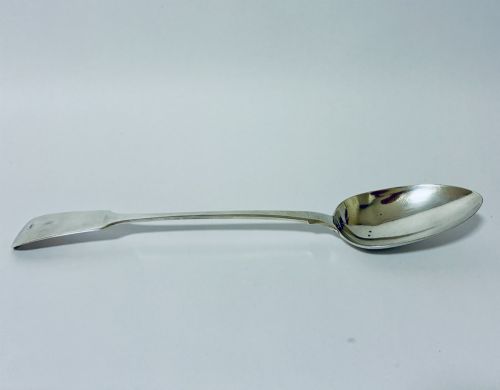
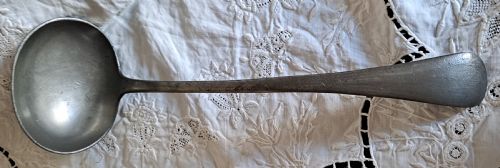


English Silver Basting Spoon
An English silver basting spoon is a substantial utensil designed for serving large joints of meat, and these pieces bring authentic Georgian and Victorian craft to the table.
English Silver Basting Spoon
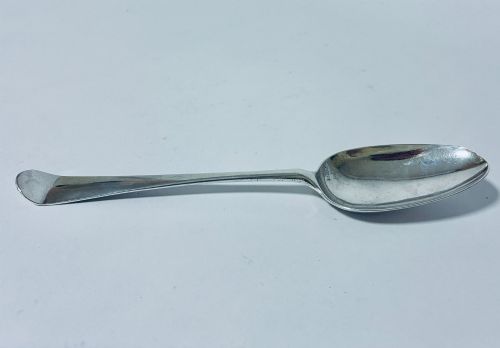
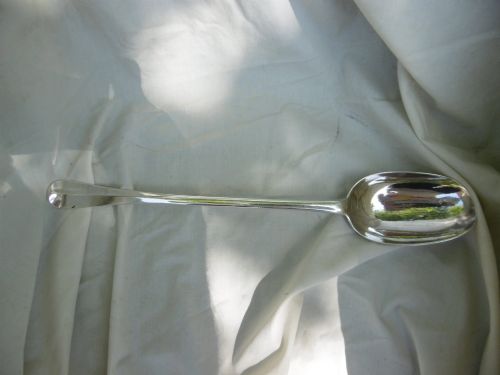
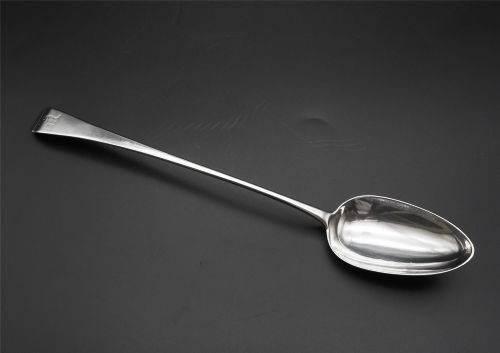
An English silver basting spoon is a large utensil designed for serving meat and poultry, appearing across the Georgian and Victorian eras in forms such as hash spoons, stuffing spoons, and gravy straining spoons. These implements are substantially longer than standard table spoons, measuring over thirty centimetres to reach deep into roasting pans and serving dishes.
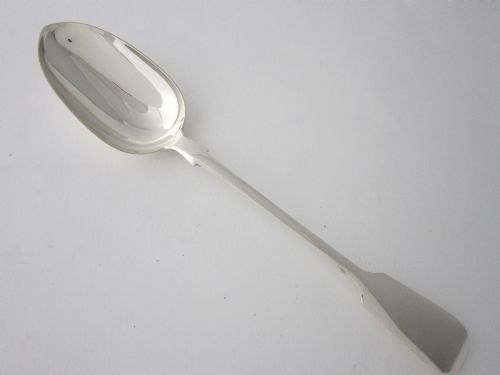
The versions most frequently met on this page belong to the Georgian and Victorian periods, often fashioned in the Old English or Fiddle patterns. They serve as tangible evidence of formal dining practices from the eighteenth and nineteenth centuries, when heavy silver was standard on prosperous tables.
Makers from both London and provincial assay offices, including York and Inverness, produced these utensils in solid sterling silver alongside occasional examples in pewter. Each piece reflects the functional demands of large-scale domestic hospitality combined with the refined aesthetics of its respective period.
Materials and construction
These utensils are principally fashioned from solid sterling silver or pewter, hammered and shaped to withstand the heavy work of kitchen and dining service. Silversmiths formed the elongated handles and deep bowls by hand, often incorporating reinforced drops on the reverse of the bowl for added structural strength.
Hallmarks struck directly into the metal record the assay office, the date letter, and the maker's mark, providing a secure method for dating each piece. Pattern variations like Old English or Fiddle were applied using punches and dies to create crisp decorative lines along the stem.
English Silver Basting Spoon Retail Price Guide 2026
Typical asking prices for english silver basting spoon among the pieces listed under this phrase on Sellingantiques today, from the lower quarter to the upper quarter. They describe what is for sale here now, not the wider market.
Listings for this phrase include solid sterling silver and pewter pieces spanning the eighteenth and nineteenth centuries.
Distinctions in quality
Quality in these spoons is largely determined by the weight of the metal and the crispness of the original hallmarks. Heavier gauge silver resists bending over long lengths, maintaining the structural integrity required for a functional serving tool.
The preservation of maker marks and provincial town marks adds significant character, as does the retention of original crests or engraving on the terminal. Well-balanced proportions and minimal wear to the bowl rim distinguish superior examples from heavily used pieces.
Andrew Archer·John Yates·John Wilks·Hampston and Prince·Bateman
The English Silver Basting Spoon Glossary
- Hash spoon
- An alternative term for a large basting or serving spoon used in eighteenth-century dining. It refers to the deep bowl designed for serving saucy dishes.
- Stuffing spoon
- A large spoon utilised for serving meat dressing or stuffing during formal meals. This form shares the extended length typical of basting implements.
- Gravy straining spoon
- A specialised serving utensil featuring a partition or pierced grid in the bowl to separate juices from meat. Provincial examples of this type are recorded from regional assay offices.
- Old English pattern
- A traditional flatware design characterised by a downward-turned handle terminal with a crisp central ridge. It appears frequently on Georgian silver spoons.
- Fiddle pattern
- A nineteenth-century handle design featuring shoulders above the stem that resemble the body of a violin. This style gained wide popularity in the Victorian era.
English Silver Basting Spoon: Frequently Asked Questions
What is an English silver basting spoon used for?
These utensils were originally created for spooning pan juices over roasting meat and serving large portions at the dining table.
Today, they function well as decorative serving pieces or as striking additions to a flatware collection.
How can I tell a Georgian basting spoon from a Victorian one?
Georgian examples often display simpler lines or Old English patterns alongside crisp, early hallmarks without duty marks.
Victorian pieces frequently utilise the Fiddle pattern and carry monarch profile duty marks indicating the tax paid on silver.
Why are some basting spoons pierced?
Pierced or straining variants include a built-in guard or grid across the bowl to hold back fat and herbs while pouring gravy.
These specialised tools highlight the functional demands of large historical kitchens.
How do I care for antique silver serving spoons?
Gentle washing in warm soapy water with a soft cloth keeps the silver clean without damaging the patina built up over centuries.
Avoid abrasive cleaners that wear down hallmarks and the crisp edges of maker stamps.