




English Seascape Art
English seascape art captures coastal life and maritime scenes along the British shore through historical paintings and watercolours.
English Seascape Art
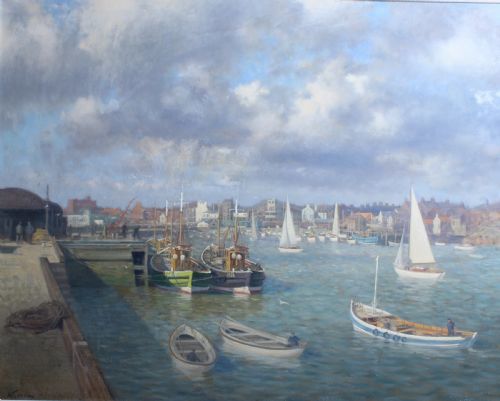
When searching for English seascape art, buyers encounter historical depictions of the British coast, harbours, and fishing vessels created across the nineteenth and twentieth centuries.
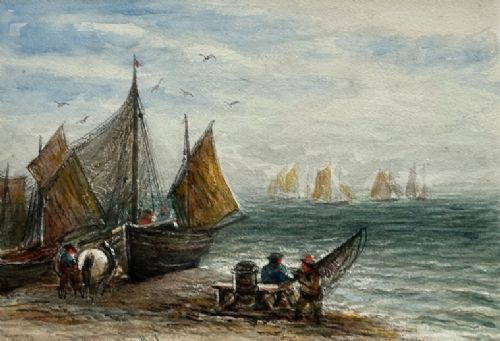
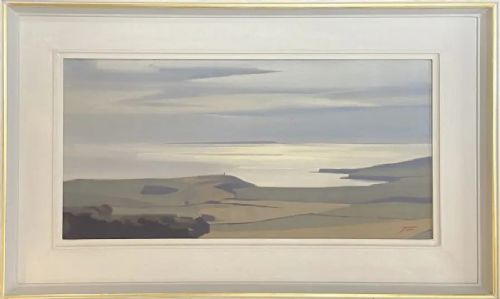
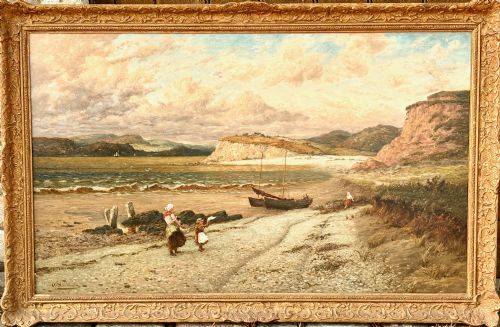
The pieces appearing on this page range from traditional Victorian watercolours of Cornish fishing ports to mid-century oil paintings depicting stormy northern estuaries and sandy shores.
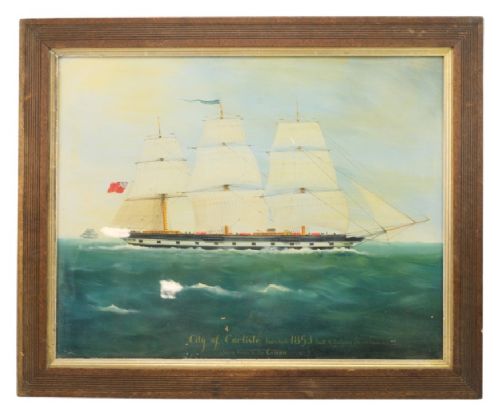
Most examples focus on maritime subjects such as local shipping, coastal cliffs, and pier architecture rendered by regional British artists and schools.
Materials and Technique
The works rely primarily on traditional mediums, combining oil on canvas or board with delicate watercolours on paper to capture changing coastal light.
Many historical examples retain their original giltwood frames, which complement the maritime subject matter and protect the painted surface.
Artists utilised techniques ranging from fine, detailed brushwork in Victorian watercolours to heavy impasto strokes in later mid-century coastal scenes.
English Seascape Art Retail Price Guide 2026
Typical asking prices for english seascape art among the pieces listed under this phrase on Sellingantiques today, from the lower quarter to the upper quarter. They describe what is for sale here now, not the wider market.
Several canvases capture bustling Victorian pleasure piers, reminding us that nineteenth-century holidaymakers loved a bracing stroll by the waves just as much as we do.
Evaluating Quality
Quality rests upon the artist's ability to render atmospheric conditions, light, and water movement convincingly rather than the mere age of the canvas.
Superior examples demonstrate confident handling of maritime architecture, vessel rigging, and coastal topography that anchors the scene in a specific geographic location.
The preservation of the original paint surface and the harmony of the framing contribute significantly to the overall standing of an individual piece.
George Morland·Thomas Bush Hardy·Charles Napier Hemy·Helen Layfield Bradley·William Shayer
The English Seascape Art Glossary
- Watercolour
- A paint consisting of a pigment suspended in a water-based solution, frequently used on paper for detailed coastal views.
- Impasto
- The process of laying on paint thickly so that it stands out from the surface, often used to render churning waves or textured cliffs.
- Giltwood
- Wood carved and covered with a thin layer of gold leaf, commonly found on traditional frames enclosing nineteenth-century canvases.
- Lugger
- A small two-masted fishing vessel frequently featured in historical West Country maritime paintings.
- Aquatint
- A printmaking technique that produces tonal effects similar to watercolour washes, seen in multi-part coastal series.
English Seascape Art: Frequently Asked Questions
What subjects appear in English seascape art?
These works typically depict working fishing boats, harbour entrances, dramatic chalk cliffs, and historical coastal settlements along the British shoreline. Artists often recorded specific regional locations, from Cornish coves to Yorkshire fishing ports.
Human activity forms a central element in many compositions, showing fisher folk, boat building, and coastal trade alongside the open sea.
How should I hang coastal paintings at home?
Historical maritime art suits spaces with natural light that mimics the open-air origins of the subject matter. Pairing traditional frames with simple wall colours allows the painted coastal tones to stand out.
Keeping works away from direct sunlight and damp environments ensures the preservation of both the paper watercolours and the oil canvases.
How do I identify the period of a seascape?
Stylistic clues within the painting, such as the design of the shipping vessels, clothing styles of figures on the beach, and the framing materials, often indicate the era of creation. Victorian works tend to feature detailed maritime activity, while mid-century pieces lean towards looser brushwork.
Signatures, dates, and historical inscriptions on the reverse of the canvas or frame also help establish a precise timeline.
What is the difference between marine and coastal art?
Coastal art generally focuses on the land meeting the sea, including beaches, cliffs, piers, and shore-based activities like fishing and boat building. Marine art often places greater emphasis on open water, naval engagements, and deep-sea vessels.
Many nineteenth-century English works combine these elements by showing harbours and estuaries from the vantage point of the land.