





English River Painting
When you search for an english river painting, you are looking at nineteenth and early twentieth-century watercolours and canvas oils capturing rural waterways.
English River Painting
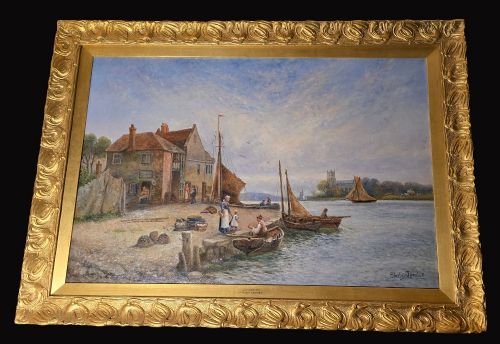
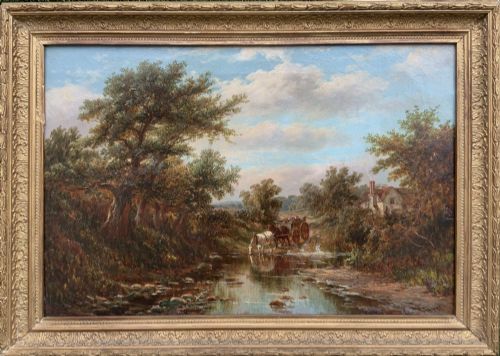
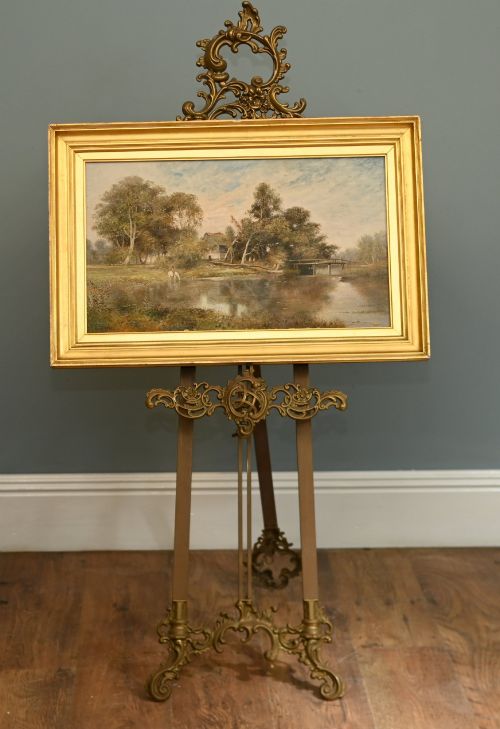
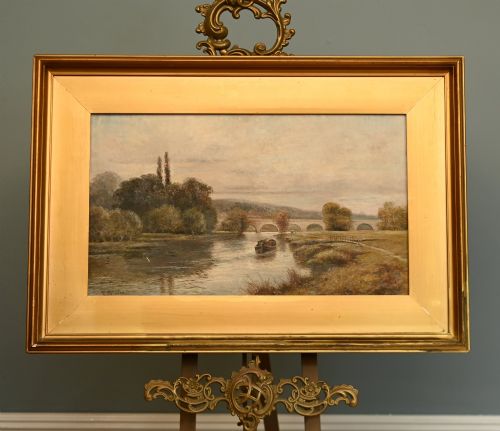
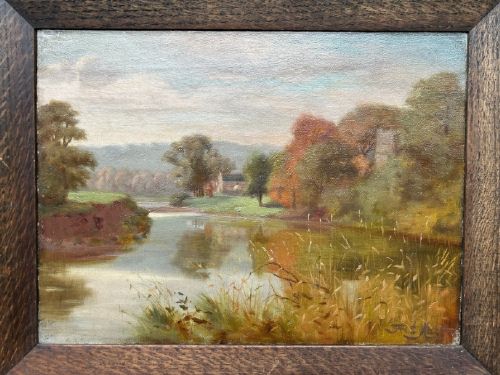
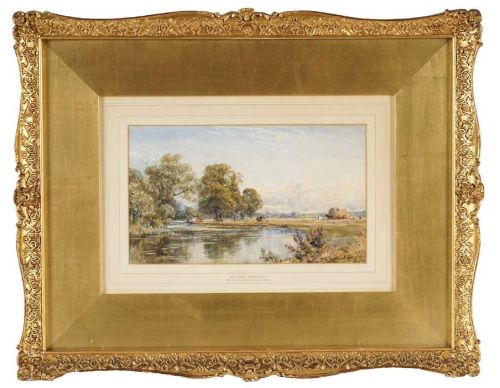
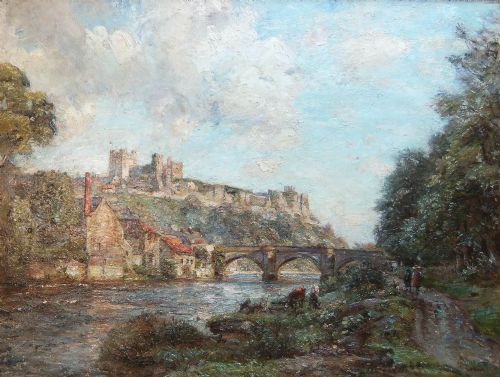
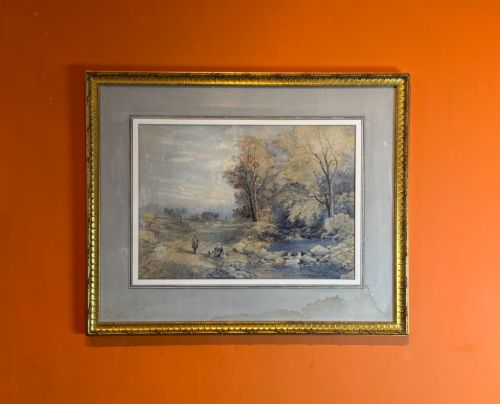
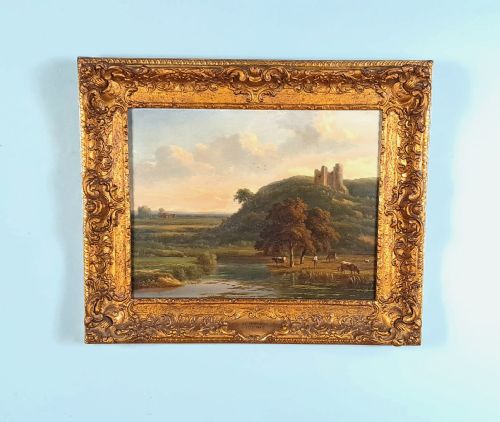
An english river painting depicts rural waterways, locks, and pastoral banks from the nineteenth and early twentieth centuries. These works record identifiable rivers such as the Thames, Severn, and Stour, often populated by figures fishing, grazing cattle, or navigating locks.
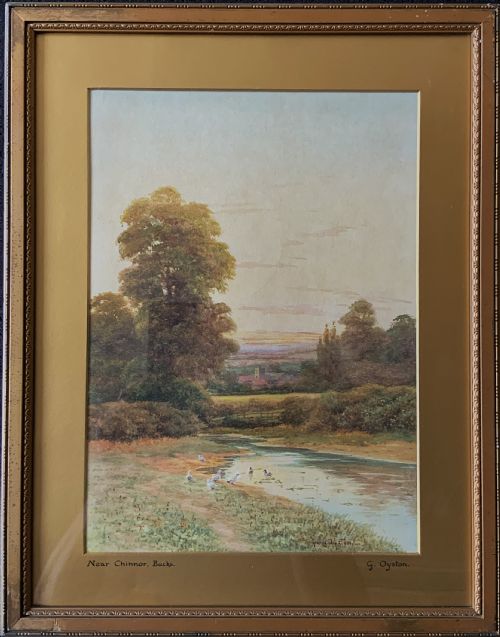
The selections available range from detailed Victorian oils to soft Edwardian watercolours on paper. Buyers frequently encounter framed works signed by regional artists working within British Impressionism and Victorian Realism schools.
How They Were Made
Artists painted primarily with oil paint on canvas, wood panel, and board, or applied watercolour pigments onto paper. Canvas supports were occasionally laid onto board for stability during the nineteenth century.
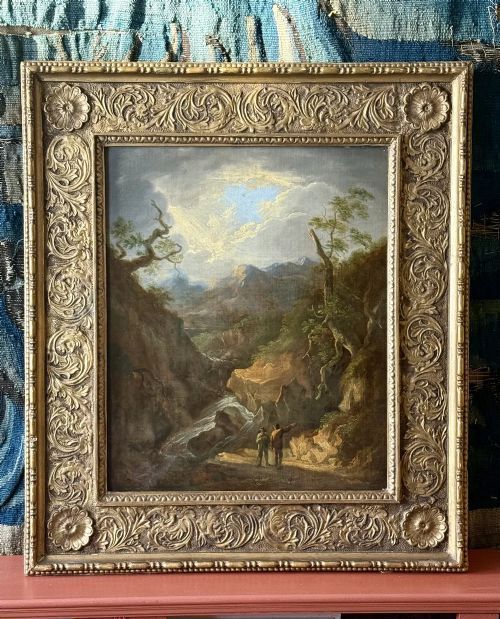
Framing typically involved carved wood and giltwood surrounds that complement the pastoral subject matter. Pigments captured natural light effects along riverbanks through layered brushwork and washes.
English River Painting Retail Price Guide 2026
Typical asking prices for english river painting among the pieces listed under this phrase on Sellingantiques today, from the lower quarter to the upper quarter. They describe what is for sale here now, not the wider market.
Listings feature works from the eighteenth, nineteenth, and twentieth centuries, executed in oil, watercolour, charcoal, and acrylic on canvas, paper, wood, and board.
What Varies in Quality
Quality rests upon the artist's handling of light, atmosphere, and water movement rather than the mere presence of a signature. Superior examples display confident brushwork and accurate perspective in rendering reflections and rural architecture.
The condition of the medium also distinguishes pieces, with stable canvas surfaces and well-preserved watercolours commanding greater interest. Original giltwood frames matching the period of the painting enhance the overall integrity of the work.
Benjamin Barker of Bath·Thomas Thomas·Alfred Young Nutt·Frederick Marriott·Robert Thorne Waite·George Oyston·Herbert Royle·Robert Leslie Howey·Florence Adelina Hess·Henry H Parker·Sydney Yates Johnson·John Horace Hooper·Hubert Wellington·Alfred George Morgan·Sir David Murray·Thomas Baker of Leamington·Arthur Reginald Smith·Henry John Kinnaird·William Sydney Cooper·Thomas Hunn·David Cox Jnr·George Vicat Cole·Robert John Hammond·George Hilditch·William Mellor
The English River Painting Glossary
- Watercolour
- A painting method in which the paints are made of pigments suspended in a water-based solution. These works are typically executed on paper supports and mounted under glass.
- Giltwood
- Wood that has been treated with a thin layer of gold leaf or gilt. This material is frequently found on traditional picture frames housing nineteenth-century canvases.
- Impressionism
- A style of painting that focuses on the accurate depiction of light in its changing qualities. British practitioners applied this to local landscapes and river scenes.
- Panel
- A flat piece of wood used as a support for oil painting instead of canvas. Artists utilised panels for smaller landscape studies during the Victorian period.
English River Painting: Frequently Asked Questions
Where should I hang these artworks?
Display paintings away from direct sunlight and strong heat sources to protect canvas and paper from fading. Stable indoor humidity prevents warping in wood panels and giltwood frames.
Choose interior walls with balanced ambient light to appreciate the fine brushwork. Ensure the hanging hardware securely supports the weight of the original frame.
How do I date a river painting?
Examine the style of clothing worn by figures in the landscape alongside architectural details like bridges and locks. Signatures can often be cross-referenced with artist exhibition records from the nineteenth century.
Backings, stretcher frames, and framing materials also provide clues to the era of creation. Handwritten inscriptions on the reverse of canvases or panels frequently record locations and dates.
What is the difference between oil and watercolour?
Oil paintings utilise pigment bound in drying oils applied to canvas or wood, allowing for rich textures and layered colours. Watercolours use water-soluble pigments on paper, producing lighter, translucent effects.
Watercolours require protection behind glass to prevent atmospheric damage. Oils are more durable but still benefit from secure framing and stable environments.