






English Revival Bookcase
An english revival bookcase brings centuries of historic architectural style into a working room.
English Revival Bookcase
An english revival bookcase represents historical architectural forms reimagined during later nineteenth and early twentieth-century periods. These pieces draw heavily on earlier design idioms, ranging from robust Tudor and Elizabethan styles to lighter Georgian and Sheraton revivals.
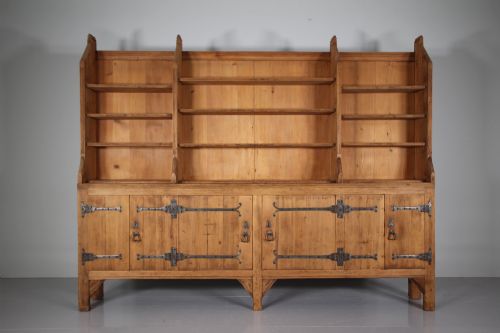
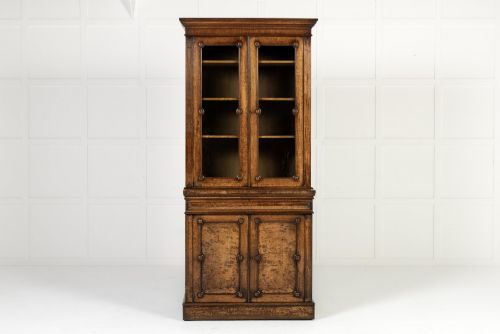
Buyers seeking an english revival bookcase will encounter various practical formats across this selection, including open shelves, glazed display cabinets, and fitted bureau or secretaire variations. Many incorporate lower storage cupboards or carved bases to add weight and presence to the room.
The aesthetic vocabulary spans several distinct revivals, with Gothic and Jacobean influences appearing frequently alongside cleaner Georgian lines. Oak remains the predominant wood of choice, supported by occasional examples in mahogany, pine, and pollard oak.
Materials and construction methods
Cabinet makers relied predominantly on solid oak and mahogany to construct these substantial items, frequently employing brass fittings for handles, hinges, and glazed door surrounds. Timber selection dictated the structural integrity, with dense hardwoods chosen to support heavy libraries.
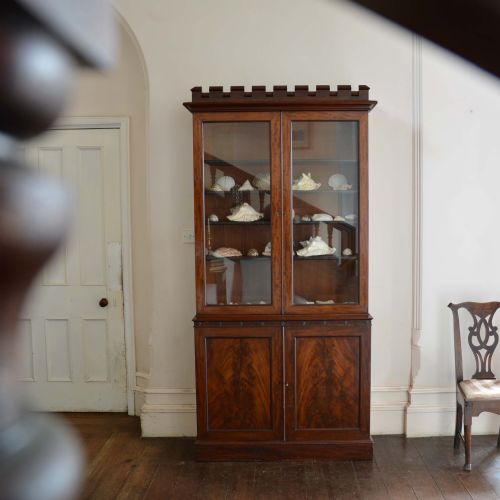
Decorative detailing relies on period-specific techniques such as intricate carving, marquetry inlay, and architectural cornices including crenelated profiles. Glazing bars and wrought iron elements further define the revival styles, mirroring historical joinery methods.
English Revival Bookcase Retail Price Guide 2026
Typical asking prices for english revival bookcase among the pieces listed under this phrase on Sellingantiques today, from the lower quarter to the upper quarter. They describe what is for sale here now, not the wider market.
Several examples feature crenelated cornices, giving your living room library the defiant air of a miniature medieval fortress.
Factors of quality and execution
Superior execution shows in the crispness of carved details, the selection of figured timbers like pollard oak, and the integration of specialised maker hardware. Finer examples maintain structural balance across large breakfront proportions and delicate glazed sections.
The sophistication of the historical revival marks the distinction between standard production and masterwork pieces. Attribution to recognised workshops adds demonstrable weight to the construction standards and internal finish of the cabinet.
Edwards and Roberts·James Winter and Sons·Lamb of Manchester
The English Revival Bookcase Glossary
- Bureau bookcase
- A writing desk with a sloping flap combined with upper shelving for books. This form provides both a working surface and enclosed storage.
- Breakfront
- A piece of furniture where the central section projects forward from the flanking wings. This architectural arrangement creates depth and shadow in large library cabinets.
- Cornice
- The decorative moulding running around the top edge of the bookcase. Revival pieces often feature crenelated or classical architectural profiles.
- Marquetry
- Decorative veneer patterns applied to the surface using contrasting wood types. This technique creates pictorial or geometric designs on the cabinet exterior.
- Secretaire
- A desk disguised as a drawer that pulls down to reveal pigeonholes and small drawers. It combines the utility of a writing cabinet with open book storage above.
English Revival Bookcase: Frequently Asked Questions
How do I date an english revival bookcase?
Dating relies on examining the secondary timbers, construction methods, and stylistic cues present in the revival movement. Makers often utilised period-specific hardware and characteristic joinery that align with nineteenth or early twentieth-century workshops.
Comparing the cornice details and internal shelving adjustments against known dated pieces helps narrow the decade of production. Documentation or maker stamps provide definitive confirmation of the manufacturing era.
What is the difference between open and glazed bookcases?
Open bookcases provide direct, unfettered access to volumes and typically reflect earlier vernacular or country house traditions. They suit frequently handled collections and allow the room to breathe through the exposed shelf backs.
Glazed variants protect delicate or antique bindings from dust and environmental fluctuations while displaying the library behind glass panes. These often feature decorative astragals and lockable doors for enhanced security.
How do I care for solid oak revival furniture?
Solid oak requires stable environmental conditions away from direct heat sources and excessive moisture to prevent timber movement. Regular dusting with a soft, dry cloth preserves the natural grain and finish without chemical buildup.
Occasional application of traditional beeswax feeds the wood and maintains the historical sheen of the polish. Avoid synthetic sprays that can penetrate the pores and degrade older wax finishes.
Where should I place a large breakfront bookcase?
Large breakfront bookcases require a substantial wall with adequate clearance to accommodate their architectural proportions and projecting central sections. Positioning them away from direct sunlight protects both the timber and the bindings of the stored books.
Ensure the floor surface is level to prevent distortion of the tall cabinet doors and internal shelving over time. Adequate ambient lighting helps highlight the carved details and figured wood grains.