
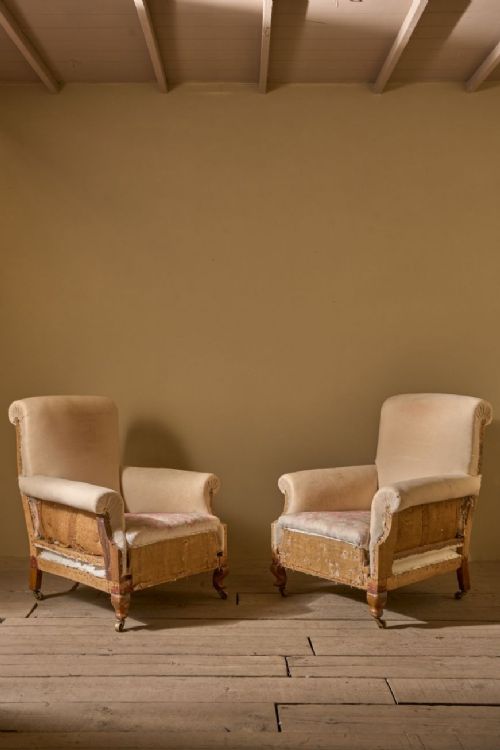
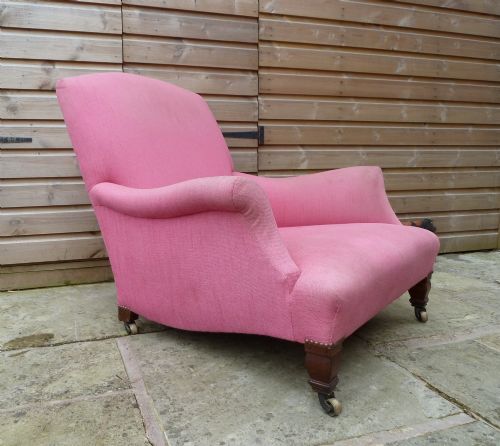
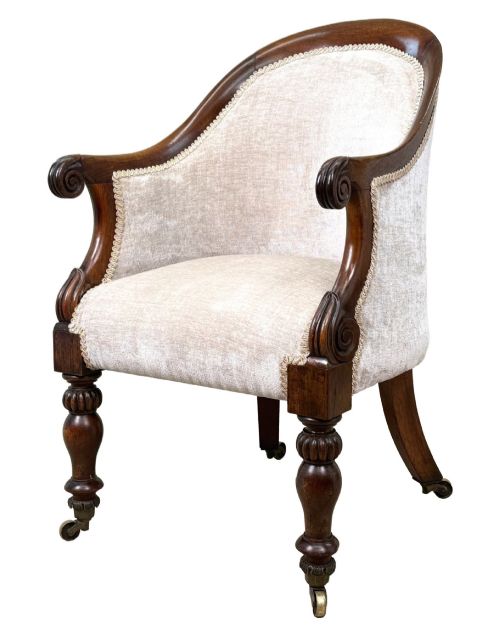
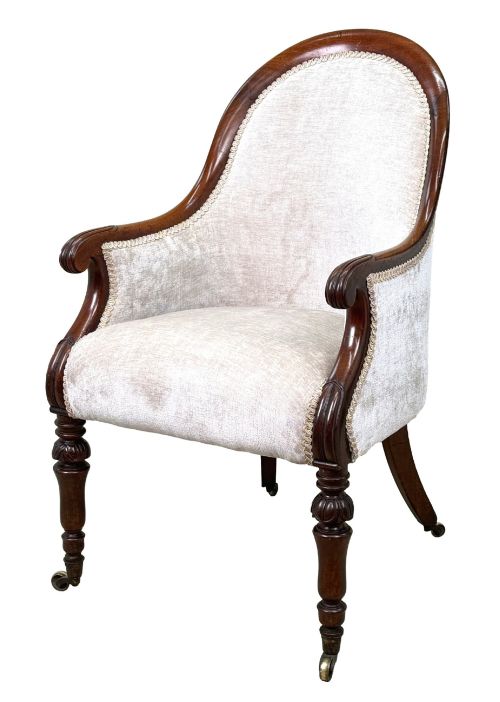
English Reading Chair
An English reading chair provides deep-seated comfort for quiet hours, bringing period craftsmanship and upholstered elegance to a study or drawing room.
English Reading Chair
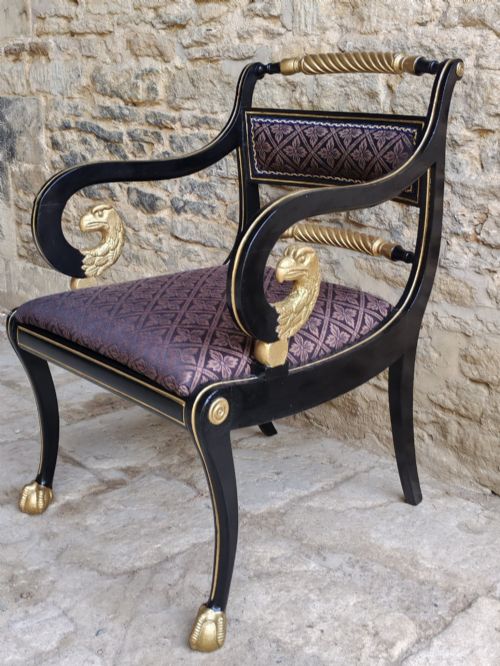
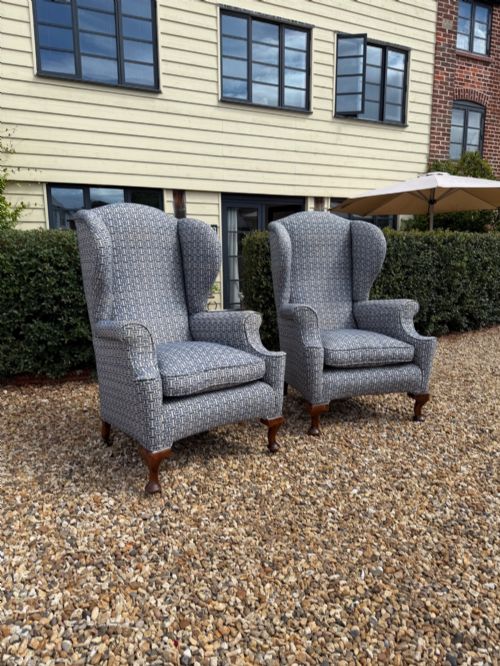
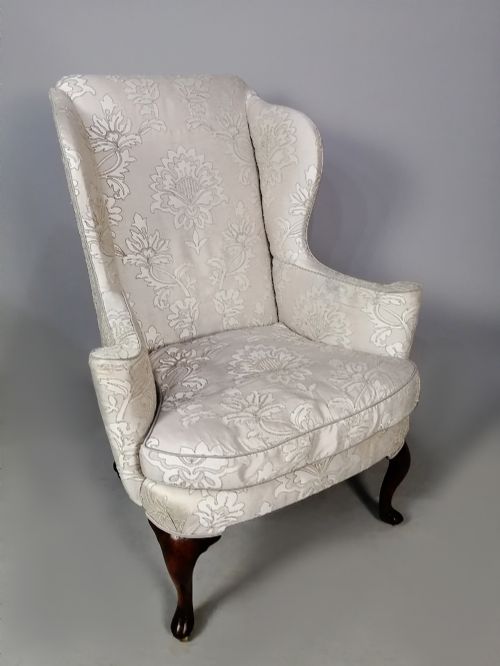
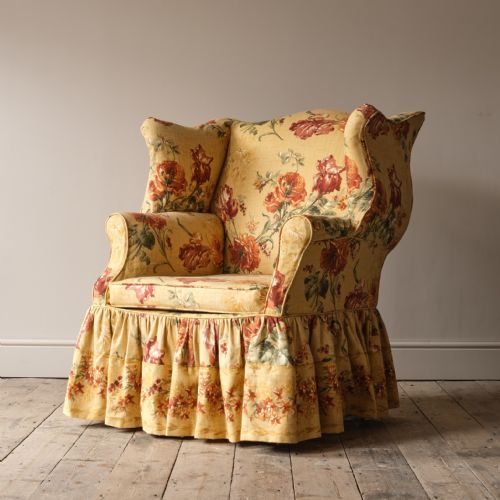
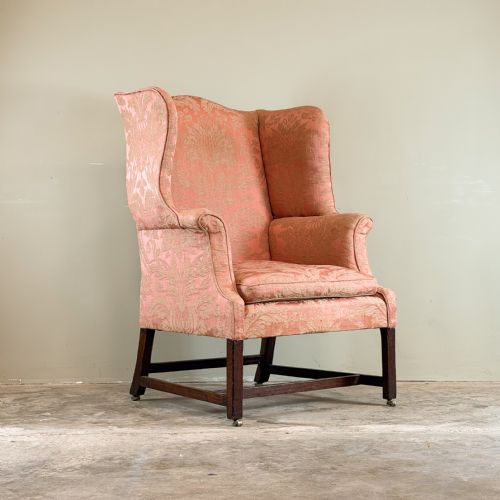
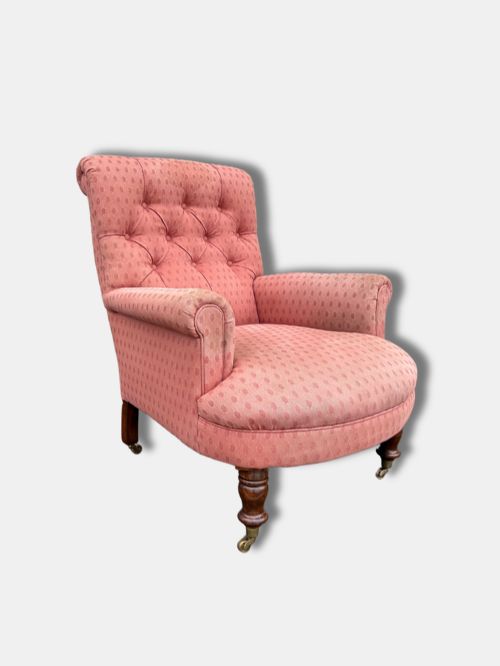
An english reading chair encompasses substantial armchairs and wingbacks designed for extended sitting, spanning periods from the Georgian era through the Victorian and Edwardian decades to the 1930s.
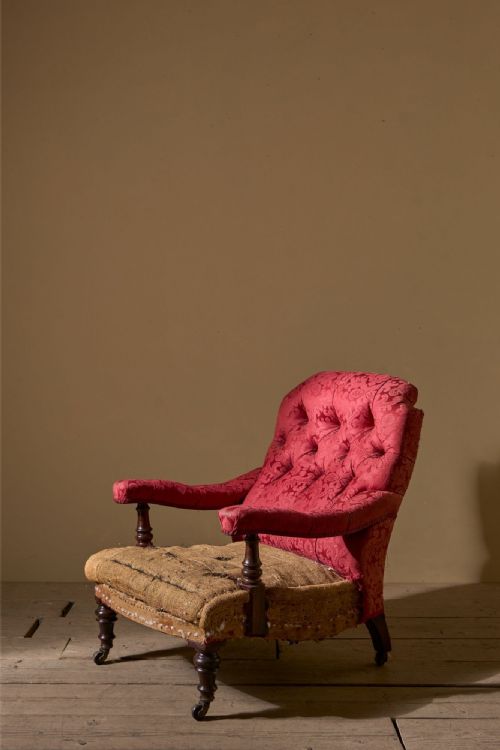
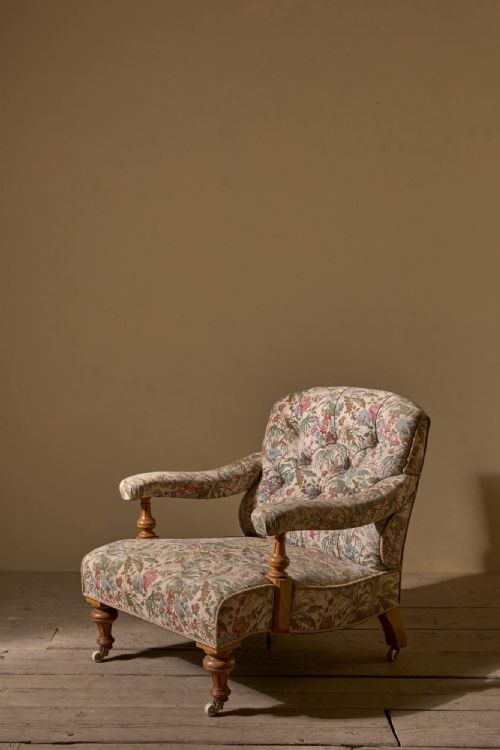
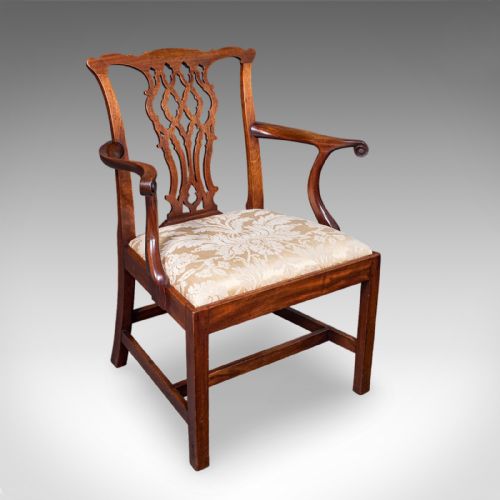
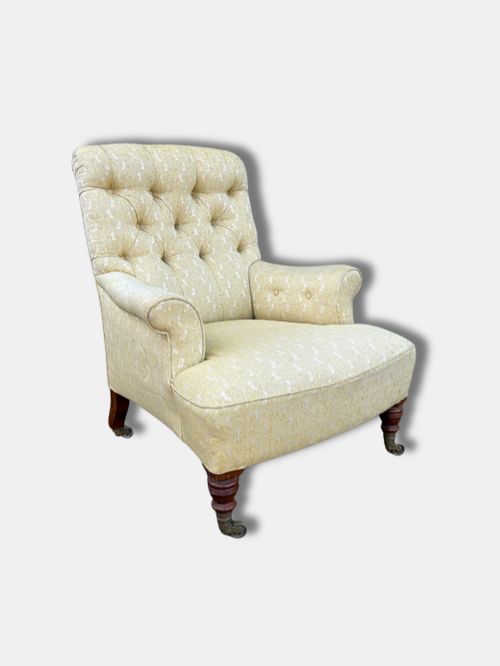
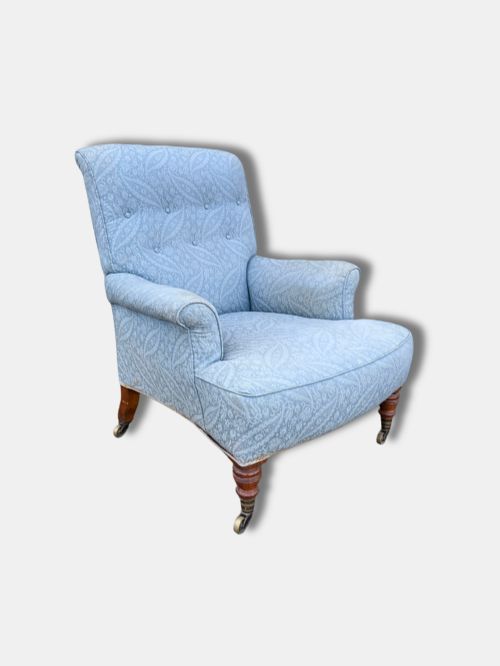
The buyer encounters forms ranging from grand mahogany wing chairs and library armchairs to country house open armchairs and button-backed seats bearing maker influences.
Originating in English workshops and country houses, these pieces reflect the shifting domestic comforts of the nineteenth and early twentieth centuries.
Materials and Construction
Frames are built from sturdy timbers including mahogany, walnut, oak, and general timber, providing structural integrity for large-scale seating.
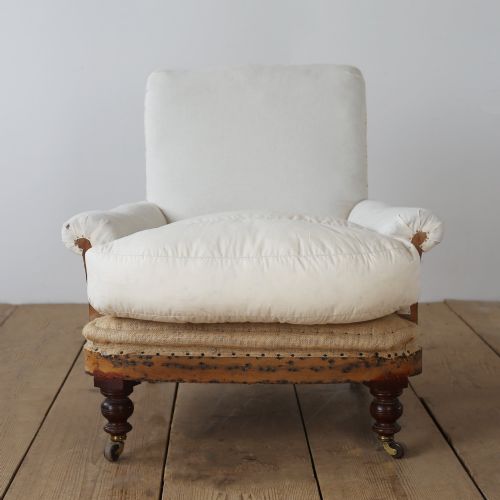
Upholstery relies on traditional coverings such as leather, velvet, calico, fabric, and hessian, often finished with brass details or button-backed detailing.
Internal construction incorporates specialised stuffing like feathers, supporting the deep seats characteristic of library and morning room chairs.
The listings demonstrate craftsmanship spanning the Georgian, Victorian, and Edwardian periods, utilising mahogany, walnut, leather, and traditional feather fillings.
Quality and Proportion
Excellence rests in the integrity of the timber frame, the grace of carved mahogany or walnut details, and the proportional balance of wings, arms, and back height.
Superior examples combine thoughtful upholstery choices with harmonious period styling, distinguishing bespoke maker pieces from standard domestic seating.
Howard and Sons·Gillows·C Hindley and Sons·Mellier and Co
The English Reading Chair Glossary
- Library Chair
- A sturdy seating form tailored for prolonged reading in private studies or institutional libraries. They often incorporate reading arms or sturdy timber frames designed for daily scholarly use.
- Gainsborough Armchair
- A wide, upholstered seat with an open timber frame, short cabriole legs, and padded armrests. Originating in the mid-eighteenth century, it suited the sedentary pursuits of the landed gentry.
- Tub Chair
- An armchair with a continuous curved back and armrest rail forming a rounded enclosure. This compact shape offers snug support while occupying less visual space than a heavy wing chair.
- Button Back
- An upholstery technique where indentations are pulled tight and secured with fabric-covered buttons in a geometric grid. This method keeps the internal stuffing firmly distributed while adding tactile texture.
English Reading Chair: Frequently Asked Questions
What defines an english reading chair?
An english reading chair is a historic upholstered seat designed for comfort during extended periods of study, relaxation, or quiet contemplation. These pieces emphasise deep proportions, supportive backrests, and sturdy timber construction.
They appear across various periods, from Georgian mahogany library chairs to Victorian button-backed styles and Edwardian leather armchairs.
How do I date a reading chair?
Dating relies on examining the timber species, leg shapes, carving styles, and upholstery foundations. Georgian examples often feature mahogany with blind carving, while Victorian pieces show walnut frames and deep buttoning.
Maker stamps, brass castors, and underlying webbing methods also offer clues to the exact decade of manufacture.
Where were these chairs used?
These seats were traditionally placed in private libraries, drawing rooms, morning rooms, and country house studies. They served as primary spots for reading books, newspapers, or correspondence.
Today, they function similarly in domestic interiors, anchoring a reading corner or sitting room with period character.
Are these chairs comfortable for daily use?
Many period reading chairs were built with generous proportions and deep padding specifically for prolonged sitting. Feather fillings and robust internal springing provide substantial ergonomic support.
Buyers often select them for daily living spaces precisely because historical makers prioritized long-term physical ease.